
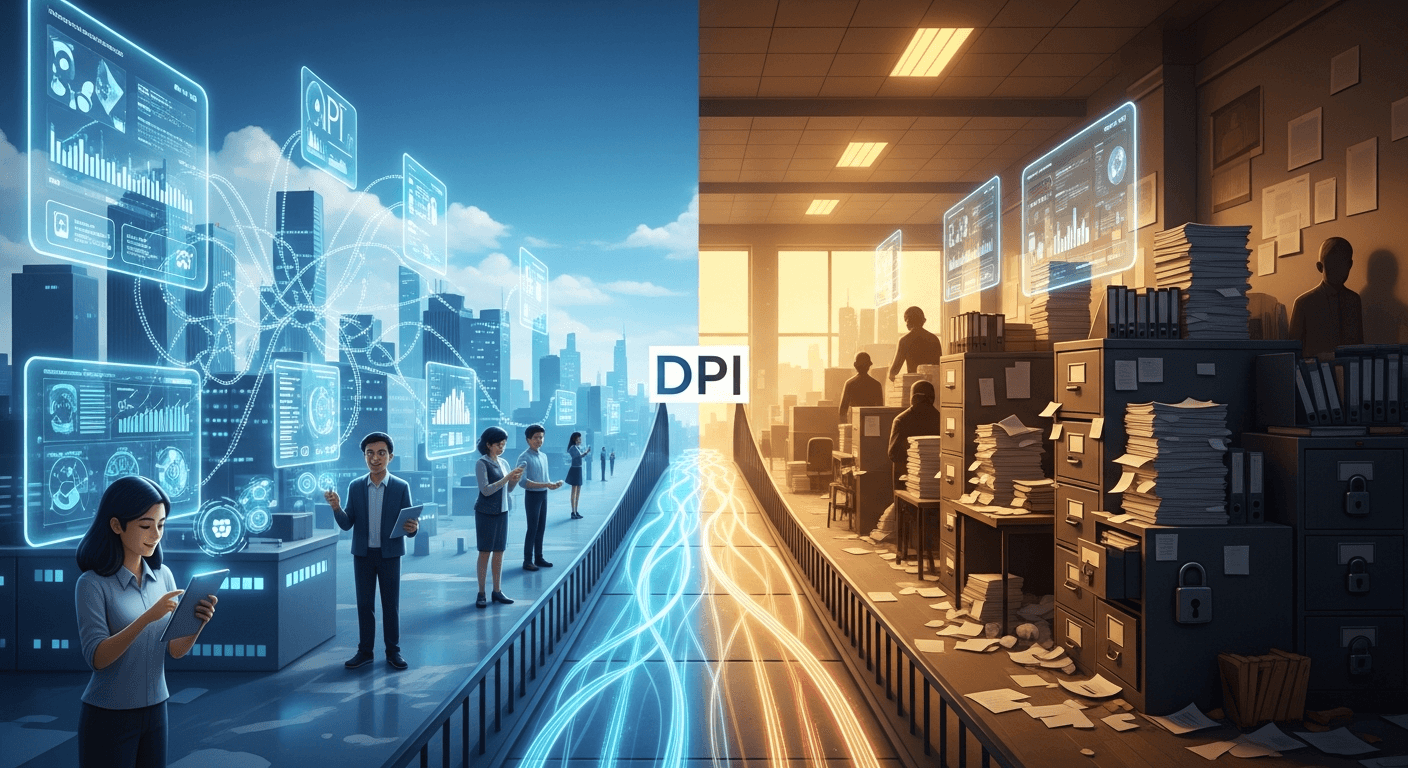
Why I keep asking: can governments become Govts 2.0?
I’ve spent years arguing that data, APIs and clear design can make public services less hostile and more humane. Still, when I ask whether governments can evolve into a version I call “Govts 2.0” — more responsive, tech-enabled, decentralized and transparent — I find myself both hopeful and circumspect. The technology exists. The politics, incentives and inequality around access complicate everything.
What Govts 2.0 would look like
In practice a Govts 2.0 prioritizes:
- Foundational digital public infrastructure — universal digital identity, open payment rails and interoperable data exchange layers (not silos).
- API-first services so agencies and private developers can build safely on public platforms.
- Participatory governance — tools like participatory budgeting and public comment baked into decision flows.
- Transparent logs and auditability so citizens can see who accessed what and why.
These aren’t slogans; they’re concrete architectures. Estonia’s X‑Road and national e‑ID show how an interoperable layer and legal trust can make many services seamless and auditable e‑Estonia/X‑Road. India’s UPI demonstrates how open, rule‑based rails can radically lower friction and scale inclusion in payments NPCI/UPI overview. Porto Alegre’s participatory budgeting shows real democratic benefits — and the hard downside when political will fades Porto Alegre case study.
I’ve written about similar shifts before — about central data repositories and the need to treat digital infrastructure as a public good Some Day Soon: Data Will Decide.
The headwinds: why Govts 2.0 is a tough ask
- Bureaucratic incentives. Many agencies are measured by precedent and compliance, not user outcomes. The reward systems don’t encourage modular APIs or data sharing.
- Vested interests. Legacy suppliers, entrenched vendors and political patronage networks resist changes that reduce control or visibility into allocations.
- Digital divide. Tech solutions risk making services faster for connected citizens while leaving others behind.
- Security and misinformation. Centralised conveniences invite attackers and create leverage points for disinformation campaigns that can undermine trust.
- Procurement and skills gaps. Governments still buy software the way they bought stationery — long contracts, opaque evaluation criteria, little iterative testing.
These are political and organisational problems more than engineering ones. Technology can be built in months; shifting incentives takes election cycles.
Enablers that make Govts 2.0 realistic
- Open data and strong privacy-by-design rules that let startups and communities build on public information safely.
- APIs and reusable components: payment rails, identity, document signing, open scheduling.
- Participatory tools: digital forums, deliberation platforms and participatory budgeting processes that channel community priorities into budgets.
- Decentralized identity and verifiable credentials to reduce central points of failure while preserving trust.
- Procurement reform: outcome-based contracts, small-batch pilots, and open-source-first policies.
When layered correctly, these enablers create network effects that change behaviour: easier to transact, easier to innovate, harder to hide bad process.
A realistic timeline and roadmap
If a country starts from modest capacity today, a pragmatic multi-stage roadmap might look like this:
- Years 0–2: Build legal foundations (digital signature laws, data-use rules). Pilot interoperable APIs in three ministries; publish first open datasets.
- Years 2–5: Deploy national digital identity at scale; create secure data-exchange layer and at least one cross‑agency service (e.g., pre-filled benefits). Reform procurement to favour small pilots and open source.
- Years 5–10: Scale DPI (payments, health records, registries). Institutionalize transparency (access logs, citizen dashboards). Expand participatory budgeting pilots to multiple cities.
- Years 10+: Institutional maturity: once‑only data policies, proactive services, cross-border DPI experiments.
Ten years is plausible for core infrastructure in an ambitious country; broader cultural and political change — the “2.0” habits — take longer and require sustained leadership.
Practical recommendations
For policymakers
- Treat DPI like roads and power: budget it as capital, not projects.
- Mandate open APIs, “once-only” data policies, and access logs citizens can read.
- Reform procurement: smaller contracts, iterative releases, open‑source requirement where possible.
For technologists
- Design for inclusivity: offline/feature‑phone flows, simple language, human help channels.
- Prioritize modular, auditable components and publish interface contracts.
- Help build civic tech capacity — tools are only useful when communities can use them.
For citizens
- Demand transparency: ask for access logs and public dashboards.
- Participate in pilots and participatory budgeting; these are not symbolic — they shift resource allocations.
- Push for local digital literacy so access isn’t limited to elites.
Examples as lessons, not blueprints
Estonia and UPI are inspiring because they accompany tech with law, institutions and public adoption. Porto Alegre teaches that participation needs sustained political champions; without them, processes atrophy. Successful transfer requires adapting to local politics, capacity and inequality — not copy‑paste.
Takeaway
Govts 2.0 is possible, but it’s not primarily a technology problem. It’s a governance problem. Technology is the amplifier: it can speed up service delivery and transparency — or it can deepen exclusion and centralize failure. If we treat digital public infrastructure as a public good, change procurement, and build mechanisms that shift incentives toward citizen outcomes, then a decade of steady work can transform many essential services. Otherwise, Govts 2.0 will remain an attractive slogan rather than a lived reality.
Regards,
Hemen Parekh
Any questions / doubts / clarifications regarding this blog? Just ask (by typing or talking) my Virtual Avatar on the website embedded below. Then "Share" that to your friend on WhatsApp.
Get correct answer to any question asked by Shri Amitabh Bachchan on Kaun Banega Crorepati, faster than any contestant
Hello Candidates :
- For UPSC – IAS – IPS – IFS etc., exams, you must prepare to answer, essay type questions which test your General Knowledge / Sensitivity of current events
- If you have read this blog carefully , you should be able to answer the following question:
- Need help ? No problem . Following are two AI AGENTS where we have PRE-LOADED this question in their respective Question Boxes . All that you have to do is just click SUBMIT
- www.HemenParekh.ai { a SLM , powered by my own Digital Content of more than 50,000 + documents, written by me over past 60 years of my professional career }
- www.IndiaAGI.ai { a consortium of 3 LLMs which debate and deliver a CONSENSUS answer – and each gives its own answer as well ! }
- It is up to you to decide which answer is more comprehensive / nuanced ( For sheer amazement, click both SUBMIT buttons quickly, one after another ) Then share any answer with yourself / your friends ( using WhatsApp / Email ). Nothing stops you from submitting ( just copy / paste from your resource ), all those questions from last year’s UPSC exam paper as well !
- May be there are other online resources which too provide you answers to UPSC “ General Knowledge “ questions but only I provide you in 26 languages !




No comments:
Post a Comment