
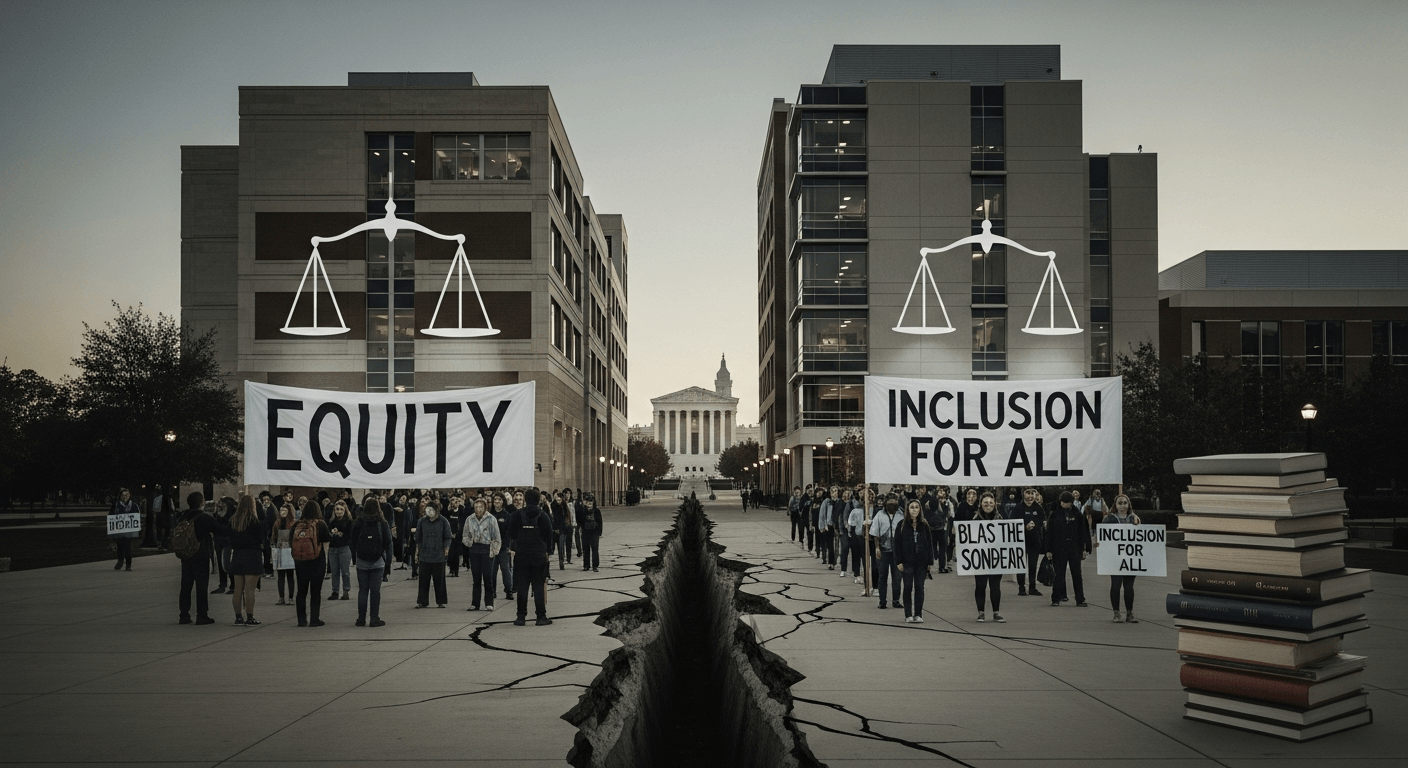
A Supreme Court bench has temporarily put on hold the University Grants Commission’s latest equity regulations for higher education. As someone who watches education policy closely, I want to unpack what this stay means, why the rules triggered such a fierce reaction, and where we might be headed next.
What were the new UGC regulations trying to do?
The notified framework — framed as the Promotion of Equity in Higher Education Institutions Regulations, 2026 — aimed to create stronger institutional mechanisms to tackle discrimination on campuses. Key features included:
- mandatory Equal Opportunity Centres and Equity Committees in universities and colleges;
- a formal grievance and inquiry process for discrimination complaints;
- a specific definition of “caste-based discrimination” limited to Scheduled Castes, Scheduled Tribes and Other Backward Classes in at least one provision; and
- procedural directions intended to make reporting and redressal of campus discrimination swifter and more centralised.
The regulatory intention was straightforward: make campuses safer and provide clearer remedies for students who suffer discrimination. But two things happened at once — the reforms were interpreted by many as narrowing protection, and a few provisions were seen as ambiguous enough to invite misuse. The result was immediate protest and urgent litigation that reached the highest court within days reporting and timeline here.
Why the Supreme Court intervened (the Court’s concerns)
The bench paused implementation for three broad reasons:
- vagueness and scope: some provisions were described as ambiguously worded and therefore susceptible to arbitrary application;
- exclusionary optics: a key provision’s narrow definition of caste-based discrimination was seen to deny institutional protection to those outside the enumerated categories; and
- social consequences: the bench flagged the political and social risk of measures that could, even unintentionally, channel campus life toward segregation rather than integration.
Because the court found the regulations could have “sweeping consequences” unless reworked, it ordered the older 2012 framework to continue in force while the new rules are scrutinised — an approach that maintains a functioning grievance architecture for complainants in the interim detailed coverage here.
Arguments in favour of the new regulations
Supporters argued:
- institutional gaps persisted under older rules, and a clearer, stronger framework was overdue to protect historically marginalised students;
- central standards could create uniform minimum procedures across institutions that currently vary widely in responsiveness and capacity; and
- proactive mechanisms (equity committees, helplines, ombudspersons) could make redress more accessible and less ad hoc.
Proponents insisted the intent was remedial and not punitive, and that safeguards could be built into procedures to prevent misuse.
Arguments opposed to the regulations
Critics — and the petitioners who sought judicial review — focused on several fault lines:
- perceived exclusion: by limiting a definition to particular categories in at least one clause, the rules appeared to deny other students access to the same institutional remedies, raising concerns about equal protection and arbitrariness;
- procedural ambiguity: vague definitions raise the risk of wrongful accusations, and could shift the burden of proof in ways that harm innocent students; and
- social fragmentation: critics warned that overly identity-focused administrative measures (for example, proposals interpreted by some as enabling segregated arrangements) could undermine the civic mixing that universities need to foster.
Those opposing the rules saw potential for reverse victimisation and unintended consequences that could hamper campus life rather than improve it.
Practical implications for colleges and students
Short term: colleges continue to operate under the earlier 2012 regulations. That means existing Equal Opportunity frameworks and grievance channels remain the reference point for complaints.
Medium term: institutions will need to prepare for either a revised national regulation or a judicially clarified version of the 2026 rules. Administrations should:
- audit their grievance procedures now to ensure they are fair, transparent and timely;
- strengthen investigative capacity and documentary procedures so that allegations are handled on evidence rather than impression; and
- double down on campus integration programmes (orientation, intergroup dialogues, anti-ragging enforcement) to reduce the social tensions that give rise to litigation.
For students, the immediate practical advice is to document incidents carefully, use existing grievance channels under the 2012 architecture, and avoid escalation on social media that can make resolution harder.
Constitutional and legal trajectory — what’s next?
The court has asked the government and regulator to respond; the matter is listed for further hearing. The likely phases now are:
- written responses from the Centre and the regulator addressing definitional and procedural gaps;
- possible constitution of an expert committee to review and recommend redrafting of ambiguous clauses; and
- judicial consideration of whether any provision violates constitutional guarantees of equality and non-arbitrariness.
The outcome could be: a judicially curated amendment, a government/UGC re-draft addressing the bench’s concerns, or (less likely) a restoration of the rules if substantial clarifications happen quickly.
My perspective and a small historical note
I have written about higher-education reform and the risks and opportunities of central regulation before — the push-and-pull between national standards and campus autonomy is a familiar theme in my work on educational reforms see a previous reflection here. My sense is that the debate we are witnessing is not just legalistic: it’s an argument about what kind of social formation we want university campuses to encourage.
We can protect vulnerable students and still insist on universal safeguards that treat allegations, evidence and remedies even-handedly. The design challenge is to thread that needle: clarity in law, fairness in procedure, and institutions that promote integration rather than division.
Regards,
Hemen Parekh
Any questions / doubts / clarifications regarding this blog? Just ask (by typing or talking) my Virtual Avatar on the website embedded below. Then "Share" that to your friend on WhatsApp.
Get correct answer to any question asked by Shri Amitabh Bachchan on Kaun Banega Crorepati, faster than any contestant
Hello Candidates :
- For UPSC – IAS – IPS – IFS etc., exams, you must prepare to answer, essay type questions which test your General Knowledge / Sensitivity of current events
- If you have read this blog carefully , you should be able to answer the following question:
- Need help ? No problem . Following are two AI AGENTS where we have PRE-LOADED this question in their respective Question Boxes . All that you have to do is just click SUBMIT
- www.HemenParekh.ai { a SLM , powered by my own Digital Content of more than 50,000 + documents, written by me over past 60 years of my professional career }
- www.IndiaAGI.ai { a consortium of 3 LLMs which debate and deliver a CONSENSUS answer – and each gives its own answer as well ! }
- It is up to you to decide which answer is more comprehensive / nuanced ( For sheer amazement, click both SUBMIT buttons quickly, one after another ) Then share any answer with yourself / your friends ( using WhatsApp / Email ). Nothing stops you from submitting ( just copy / paste from your resource ), all those questions from last year’s UPSC exam paper as well !
- May be there are other online resources which too provide you answers to UPSC “ General Knowledge “ questions but only I provide you in 26 languages !




No comments:
Post a Comment