
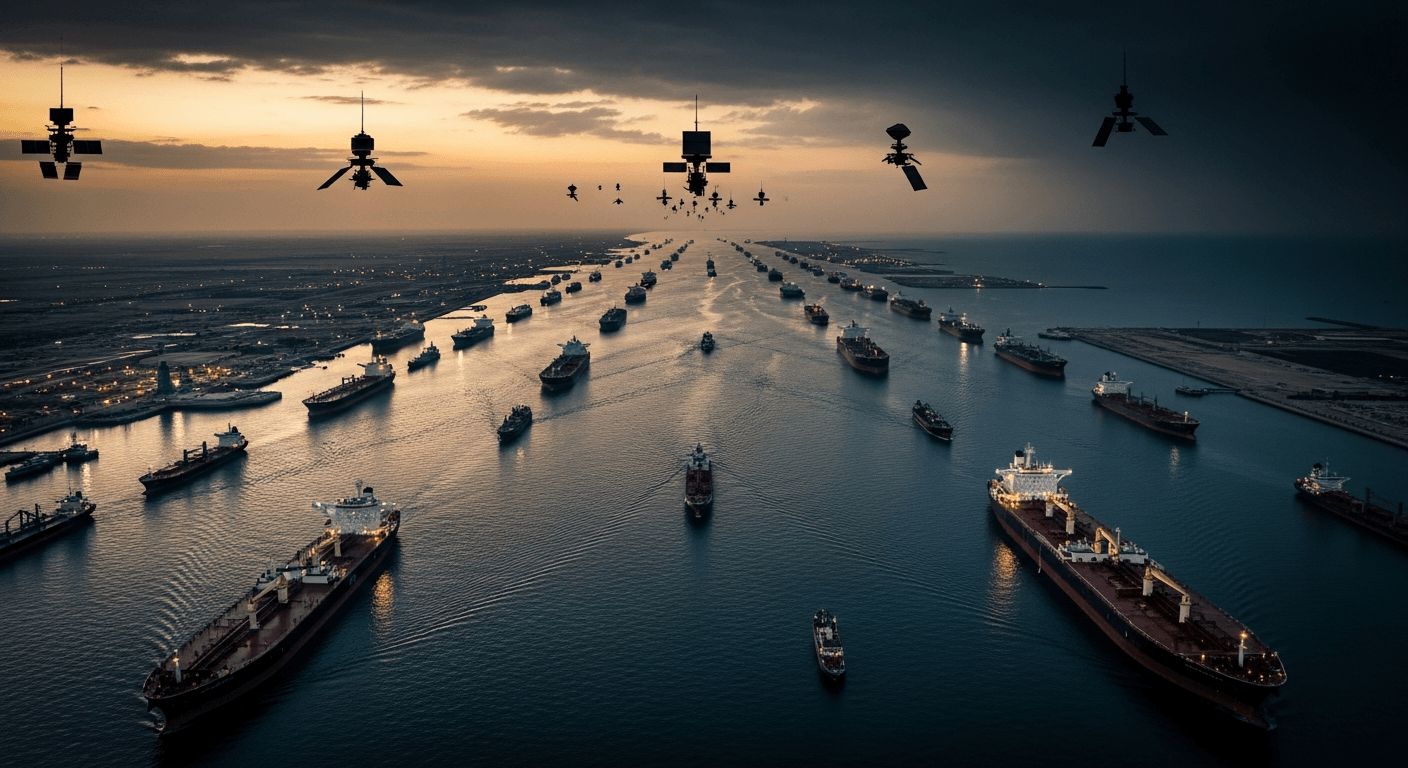
Lede: I’m watching a dangerous moment in real time — a 48‑hour ultimatum over the Strait of Hormuz that could reshape energy markets, law, and lives.
Why the Strait of Hormuz matters
I begin with the obvious because it’s easy to forget amid heated rhetoric: the Strait of Hormuz is not a political talking point — it is a chokepoint. Roughly one-fifth of the world’s seaborne crude oil and a significant share of global liquefied natural gas transit this narrow waterway connecting the Persian (Arabian) Gulf to the Arabian Sea. Disruption here ripples through global shipping, energy markets, and national security calculations (Reuters), (BBC).
I have written before about how strategic chokepoints and energy dependence shape geopolitics and economic vulnerability (A Twin Tragedy) — today’s headlines are a painful reminder.
What happened — a short timeline
- Late March: The waterway’s commercial traffic is severely curtailed after repeated strikes and naval actions linked to the wider regional conflict; insurers and shippers avoid the area (CBS, AP).
- Weekend (two days before the deadline): The U.S. President, Donald Trump (d.trump@whitehouse.gov.us), issued a social-media ultimatum giving Iran 48 hours to reopen the strait, warning the United States would “hit and obliterate” Iranian power plants if the waterway remained effectively closed (CNN, CBS).
- Iran’s military spokespeople and state institutions rejected the deadline and framed the U.S. action as coercive. Multiple Iranian statements argued the strait remains open to non‑enemy shipping and warned of severe reciprocal strikes on regional infrastructure if Iranian civilian infrastructure were targeted (Reuters, AP).
- Diplomatic activity: Several countries called for de‑escalation even as the U.N. Security Council prepared to address maritime security measures; some Gulf states and other international partners expressed concern but stopped short of military commitments (BBC, Al Jazeera).
What leaders actually said (representative quotes)
The U.S. President wrote in a public post that “time is running out — 48 hours before all Hell will reign down on them,” adding that the U.S. would target Iranian power plants if the strait did not reopen (CNN, CBS).
An Iranian military spokesperson called the ultimatum a “helpless, nervous, unbalanced and stupid action” and warned that such threats mean “the gates of hell will open” in response — language designed to signal both defiance and deterrence to domestic and regional audiences (CBS, AP).
Iran’s diplomatic representatives to maritime agencies emphasized that the strait is open in principle but that insurers and carriers have suspended traffic because of perceived risk, and that Iran would allow transit for non‑enemy vessels under coordination (Reuters).
Possible consequences — what to watch for
Military
- Rapid escalation risk: Attacks on power plants or other civilian energy infrastructure cross dangerous legal and moral thresholds and could trigger broad retaliation cycles. Targeting military assets is one calculus; striking civilian infrastructure invites wider regional responses and humanitarian fallout (AP, Reuters).
- Force posture: The U.S. could increase naval deployments and targeting options; Iran could further mobilize missile, naval, and proxy capabilities in the Gulf and beyond.
Economic (oil markets and trade)
- Market volatility: Even a brief real or perceived closure spikes oil prices and energy risk premia. Insurance cost rises and shipping diversions raise freight costs and delivery times (BBC, Reuters).
- Secondary effects: Higher transport and energy costs can stoke inflation, strain importers that depend on Gulf oil, and force emergency strategic petroleum releases or policy coordination among consumers.
Diplomatic
- Polarization among global powers: Allies of the U.S. may be pressured to join or support actions; others (China, India, Russia) will prioritize safe passage and energy security while avoiding punitive acts that risk wider war.
- Multilateral institutions: The U.N. and International Maritime Organization become arenas for mitigation, though consensus is hard when veto powers and strategic interests diverge.
Legal (international law)
- Law of the sea: Coastal states have rights but must respect innocent passage. Deliberate obstruction of international shipping raises questions under the UN Convention on the Law of the Sea and could be argued as collective security threats, but legal remedies are slow in crisis moments.
- Targeting civilian infrastructure: Under international humanitarian law, attacks must distinguish between military objectives and civilian objects; attacking civilian power plants risks grave violations unless strict legal tests of military necessity are met (AP commentary on legal questions).
Regional implications
- Gulf states face immediate consequence: trade, energy flows, and local economies suffer. Some states may be coerced into choices that align them with one camp or the other.
- Proxy escalation: Iran’s asymmetric tools (missiles, drones, proxies) could be used to impose costs on U.S. partners and commercial actors.
Policy options for international actors
United States
- De‑escalation + credible deterrence: Pair targeted, proportionate military measures that protect shipping lanes with diplomacy to open communication channels and avoid unintended escalation.
- Multilateral burden-sharing: Seek an international maritime security coalition with clear legal mandates to reassure markets and allies.
European Union
- Convene urgent diplomatic mediation: Use EU diplomatic networks to push for ceasefire frameworks and maritime safety guarantees; coordinate strategic petroleum reserves to stabilize markets.
- Legal and economic pressure: Use sanctions or legal measures to deter actors targeting civilian maritime commerce while avoiding steps that further polarize the region.
Regional states (Gulf, Iraq, Pakistan, Turkey)
- Neutral coordination: Offer ports and safe transits, invest in insurance pools, and mediate between Tehran and Washington to de‑escalate.
- Collective security architecture: Work with the IMO and coastal states to agree on protocols for safe navigation without militarizing the strait.
China, India, and East Asian importers
- Quiet diplomacy: They have immediate exposure to oil shocks; insist on unimpeded passage and explore emergency energy sourcing plans.
Likely scenarios (short to medium term)
- Low‑intensity stalemate: Intense rhetoric, limited strikes, shipping continues via costly detours — markets shaken but open to stabilizing steps.
- Escalation spiral: Strikes on energy infrastructure provoke reciprocal attacks on commercial or military targets, producing a wider regional conflict and sustained energy shocks.
- Diplomatic breakthrough: Under pressure from market disruption and third-party mediators, an agreement to coordinate maritime safety and phased reopening could emerge.
My read — balanced and sober
This is a classic leverage moment: the strait is leverage for Iran, and the ultimatum is leverage for the U.S. But leverage becomes catastrophe when either side misreads thresholds. Military action against civilian infrastructure would be legally and morally fraught and economically catastrophic; at the same time, continued closure imposes global harm that breeds pressure for a solution. The safest, cost‑effective path combines robust defensive measures for shipping, immediate diplomacy (with credible mediators), and market interventions to blunt panic (strategic releases, insurance backstops).
Conclusion: The next 48 hours feel decisive only if rhetoric turns into irreversible action. The international community’s test is whether it can translate urgency into restraint and a durable, legal framework for safe passage.
Regards, Hemen Parekh
Any questions / doubts / clarifications regarding this blog? Just ask (by typing or talking) my Virtual Avatar on the website embedded below. Then "Share" that to your friend on WhatsApp.
Get correct answer to any question asked by Shri Amitabh Bachchan on Kaun Banega Crorepati, faster than any contestant
Hello Candidates :
- For UPSC – IAS – IPS – IFS etc., exams, you must prepare to answer, essay type questions which test your General Knowledge / Sensitivity of current events
- If you have read this blog carefully , you should be able to answer the following question:
- Need help ? No problem . Following are two AI AGENTS where we have PRE-LOADED this question in their respective Question Boxes . All that you have to do is just click SUBMIT
- www.HemenParekh.ai { a SLM , powered by my own Digital Content of more than 50,000 + documents, written by me over past 60 years of my professional career }
- www.IndiaAGI.ai { a consortium of 3 LLMs which debate and deliver a CONSENSUS answer – and each gives its own answer as well ! }
- It is up to you to decide which answer is more comprehensive / nuanced ( For sheer amazement, click both SUBMIT buttons quickly, one after another ) Then share any answer with yourself / your friends ( using WhatsApp / Email ). Nothing stops you from submitting ( just copy / paste from your resource ), all those questions from last year’s UPSC exam paper as well !
- May be there are other online resources which too provide you answers to UPSC “ General Knowledge “ questions but only I provide you in 26 languages !


No comments:
Post a Comment