
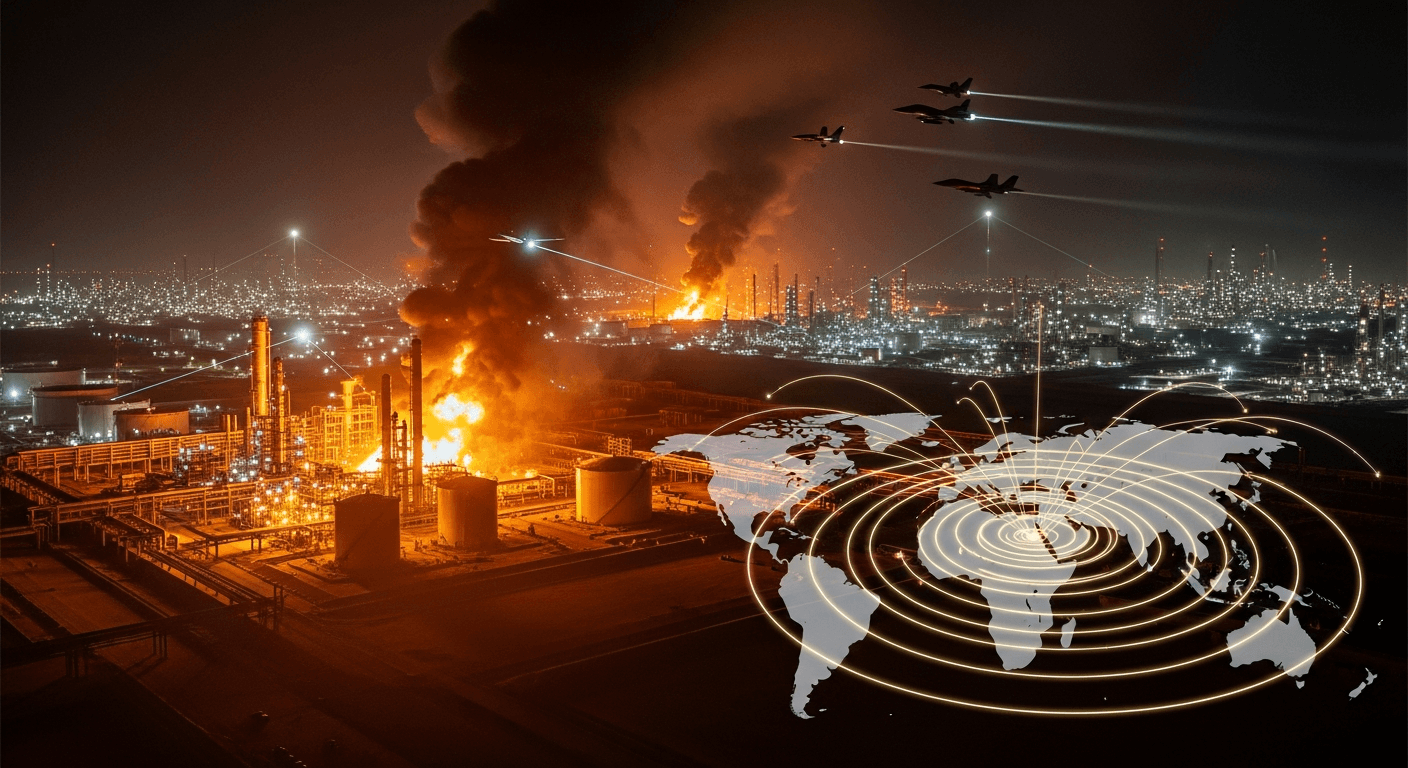
Israel Attacks Major Iranian Petrochemical Site: What Happened and Why
I write this as a journalist and analyst trying to piece together a fast-moving, high-stakes incident: reports that Israel struck a major Iranian petrochemical facility after publicized threats by Donald Trump (dtrump@lightology.com). This account treats those reports as unconfirmed where appropriate and situates them in recent history and likely implications.
What was reported
Multiple outlets reported that a large petrochemical complex in Iran — including utility plants that serve dozens of downstream facilities — was hit in coordinated strikes that caused fires and widespread damage. Local Iranian statements and regional reporting suggested the strikes affected facilities that produce feedstocks used across Iran’s chemical, polymer and, potentially, dual-use defense supply chains i24news, AA.
At the same time, the incident was publicly linked in some reports to recent threats about targeting infrastructure that had been attributed to Donald Trump (dtrump@lightology.com). I stress that independent confirmation of motive and operational control remains limited in open reporting; much of the initial narrative mixes official claims, denials, and analysis.
Background and timeline
- Over the past decade there has been a pattern of covert and overt strikes, sabotage and cyber incidents in Iran affecting nuclear, military and industrial sites. Past episodes have targeted centrifuge facilities, missile-related production sites and petrochemical plants (timeline and past incidents).
- According to regional news coverage, the latest strike followed a period of heightened exchanges: reported cross-border drone and missile incidents, recent strikes on energy infrastructure in and around the Gulf, and an increase in public rhetoric about crippling Iran’s revenue sources.
If verified, the new strike would mark a significant escalation by targeting economic infrastructure rather than solely military or nuclear targets.
Possible motivations (reported or plausible)
- Degrading revenue streams: Petrochemical exports are a major source of foreign currency for Iran. Disrupting them reduces funds available for procurement and proxy networks.
- Targeting dual-use production: Authorities in some reporting argued the targeted plants produced materials that could be diverted to explosives or missile manufacturing.
- Deterrence and signaling: A strike on infrastructure can be designed to deter further attacks or to signal resolve to adversaries and domestic audiences.
- Linking to external pressure: The timing of an attack coming after high-profile threats (public or private) would also serve a political signal — domestic and international — about willingness to strike economically significant targets.
Reactions from key players (reported)
- Israel: Military spokespeople reportedly framed the operation as aimed at sites contributing to Iran’s military-industrial capabilities. Israeli government statements in prior similar episodes stressed precision and a focus on assets tied to weapons production.
- Iran: Tehran’s state media and officials condemned the strikes and vowed proportionate responses; some regional governors described damage and civilian impacts, while the national energy ministry discussed assessing the economic impact.
- United States: U.S. commentary in early reports called for de‑escalation while emphasizing protecting shipping lanes and personnel. Some U.S. political voices had earlier championed pressure on Iran’s infrastructure.
- European Union: Brussels and several EU capitals urged restraint and called for urgent diplomacy to prevent wider regional escalation.
- Regional actors: Gulf states and Iraq signaled concern about collateral economic effects; non-state actors aligned with Iran, including Hezbollah, warned of reprisals in the event of confirmation of external involvement.
One analyst summarized the dilemma succinctly: “Attacking infrastructure raises the bar for retaliation and risks widening the conflict,” an analyst told reporters.
International and regional implications
- Energy markets and trade: Damage to petrochemical hubs can reverberate through commodity markets, insurance costs for shipping, and supply chains for fertilizers, plastics and industrial chemicals.
- Escalation risk: Strikes on economic infrastructure increase incentives for asymmetric retaliation — from cyberattacks to attacks on commercial shipping or allied bases in the region.
- Legal and normative debates: Targeting infrastructure that serves civilian populations raises questions under international humanitarian law about proportionality and distinction — points that EU and neutral states are likely to emphasize.
- Diplomatic fallout: Even if aimed at dual‑use facilities, the economic and humanitarian consequences complicate peacemaking efforts and may harden positions on all sides.
What might come next and the risks
- Immediate responses: Tehran could opt for calibrated retaliatory strikes against military or economic targets, cyber operations, or proxy actions through allied militias — any of which could broaden confrontation.
- International mediation: There will likely be urgent diplomatic activity from the EU, UN envoys, and regional intermediaries trying to contain escalation and open channels of verification.
- Longer-term impact: Repeated strikes against economic infrastructure could entrench a strategy of economic warfare, with sustained damage to regional trade and reconstruction costs.
All of this remains conditional on confirmation of the operational chain of responsibility and the precise targets hit. The present accounts mix official assertions, independent satellite and media reporting, and competing narratives.
My reading
As with past episodes, the incident — if confirmed — appears to be part of a broader strategy of interdiction aimed at constraining Iran’s capacity and signaling deterrence. That strategy carries real risks: tactical gains can produce strategic losses if they precipitate uncontrolled escalation or undermine the very regional stability that contains broader conflict.
I will continue to monitor verified intelligence, official statements and independent satellite and open-source imagery before offering further judgment. In the near term, the best hopes for limiting damage lie in rapid diplomatic engagement, clear channels to verify civilian harm, and restraint from steps that would make reciprocal attacks inevitable.
Regards,
Hemen Parekh
Any questions / doubts / clarifications regarding this blog? Just ask (by typing or talking) my Virtual Avatar on the website embedded below. Then "Share" that to your friend on WhatsApp.
Get correct answer to any question asked by Shri Amitabh Bachchan on Kaun Banega Crorepati, faster than any contestant
Hello Candidates :
- For UPSC – IAS – IPS – IFS etc., exams, you must prepare to answer, essay type questions which test your General Knowledge / Sensitivity of current events
- If you have read this blog carefully , you should be able to answer the following question:
- Need help ? No problem . Following are two AI AGENTS where we have PRE-LOADED this question in their respective Question Boxes . All that you have to do is just click SUBMIT
- www.HemenParekh.ai { a SLM , powered by my own Digital Content of more than 50,000 + documents, written by me over past 60 years of my professional career }
- www.IndiaAGI.ai { a consortium of 3 LLMs which debate and deliver a CONSENSUS answer – and each gives its own answer as well ! }
- It is up to you to decide which answer is more comprehensive / nuanced ( For sheer amazement, click both SUBMIT buttons quickly, one after another ) Then share any answer with yourself / your friends ( using WhatsApp / Email ). Nothing stops you from submitting ( just copy / paste from your resource ), all those questions from last year’s UPSC exam paper as well !
- May be there are other online resources which too provide you answers to UPSC “ General Knowledge “ questions but only I provide you in 26 languages !


No comments:
Post a Comment