
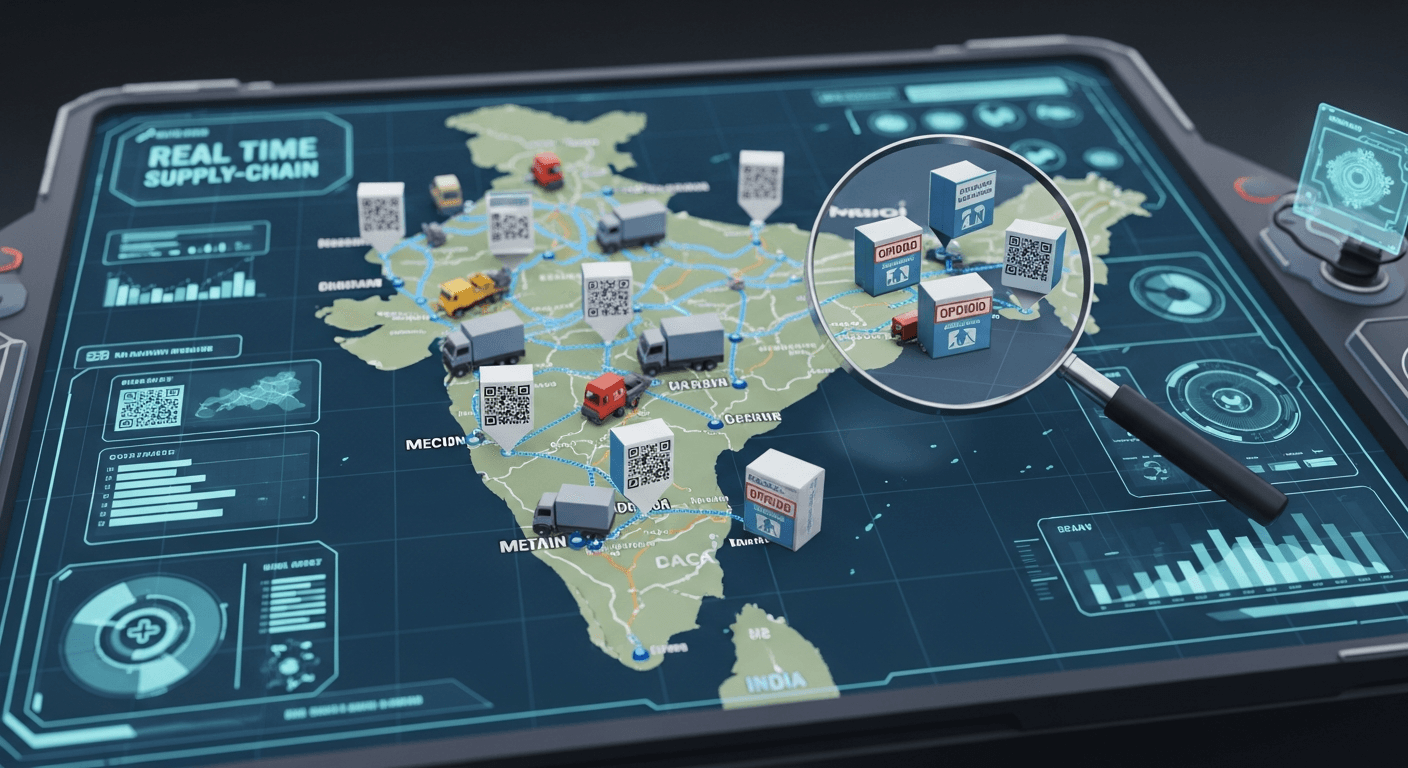
Why a national portal matters — from my point of view
I read the recent announcement that the Centre will soon build a centralised digital portal to track narcotic and psychotropic drugs end-to-end — from manufacture or import through distribution, stock management and sale — and I felt a mix of relief and impatience.
Relief because this is long overdue: regulators and enforcement agencies have for years pointed to the absence of a unified tracking system as a major vulnerability in preventing diversion of controlled medicines. Impatience because the promise of digital solutions is rarely enough without deliberate care in design and rollout.
The reporting that the Drug Consultative Committee (DCC) has approved the proposal and asked the CDSCO to coordinate with agencies such as the Central Bureau of Narcotics confirms a real will to act (Centre to soon set up a digital portal to track narcotic drugs).
What this portal can realistically deliver
If implemented well, a unified portal can deliver tangible public-good outcomes:
- Real-time visibility of sensitive drug flows — making it far harder to siphon opioids, sedatives and other controlled medicines into illicit channels.
- Inventory discipline across manufacturers, wholesalers and pharmacies via QR codes and invoice uploads — reducing pilferage and counterfeit entry points.
- Faster, evidence-backed enforcement actions because disparate data sources are joined into searchable, auditable records.
- Better clinical safety: clinicians and pharmacists can detect suspicious prescribing or dispensing patterns earlier.
This is not a radical idea for me. I have advocated similar digital-first structures before — for instance in discussions about a national digital database of pharma manufacturers and in my earlier piece on a “Digital Delivery of Drugs” model (3D - Digital Delivery of Drugs ?). The principles repeat: traceability, authenticated actors, and data that serves both service and oversight.
The hard trade-offs we must name now
Digital tracking is powerful — and it is not a silver bullet. A few immediate problems can blunt its impact if not addressed up front:
- Privacy and patient rights: tracking systems that log patient-level dispensation must be governed by strict privacy rules. Aggregate analytics are useful; personally identifiable health data requires explicit legal safeguards.
- Technology burden on small chemists and rural hospitals: mandating real-time uploads without subsidised devices, connectivity support and training will create friction, evasion, or exclusion.
- Interoperability and vendor lock-in: the portal must expose standards and open APIs so existing systems (hospital ERPs, wholesale software, e-pharmacies) can integrate securely — otherwise we create islands of data.
- Enforcement drift: a portal that becomes primarily a policing tool risks discouraging legitimate providers and patients unless its benefits for care and supply reliability are apparent.
Practical design suggestions I’d offer
From where I sit, the following practical measures can increase the chance of success:
- Phased rollout: pilot the portal with a subset of NDPS-scheduled medicines and with a few states before national scale.
- Low-cost onboarding: provide a lightweight mobile app and QR label kits for small pharmacies; offer training and temporary financial support for upgrades.
- Data governance framework: publish rules on retention, access tiers (who can see what), and independent audits to protect patient privacy and prevent misuse.
- Interoperability first: mandate open API standards and support mappings to existing registries (CDSCO registries, Narcoord/NIDAAN, CCTNS/evidence portals) to avoid duplication.
- Analytics for care, not just control: dashboards should help public health (shortage alerts, consumption trends) as much as enforcement.
- Transparent redress and support: when anomalies are flagged, local regulators should be able to help resolve supply-chain problems quickly — not simply issue punitive notices.
Broader institutional context — why coordination matters
This portal cannot be built in a vacuum. There are already useful government platforms and initiatives in the drugs and law-enforcement ecosystem — from CDSCO’s registries to enforcement-oriented systems. The DCC’s suggestion to align work with the Central Bureau of Narcotics and to provide access to concerned agencies is the right instinct. But coordination must include state drug authorities, pharmacy associations, clinicians and patient-rights advocates too.
My concluding hope (and caution)
A national portal to track narcotic drugs can save lives and protect medicines that are critical for medical care. I’ve long argued for digitising the drug supply chain not just to police it, but to improve access, safety and trust. The promise today is real; the work ahead is institutional, technical and ethical.
If the project is treated as a collaboration — built with low-friction tools for small providers, strict data governance, open standards and a clear timetable for improvement — India can set an example for how technology protects both public health and civil liberties. If it becomes a compliance-only exercise with high cost and poor usability, we will only move the problem into new corners.
I will watch the pilots closely and write more as design and implementation choices emerge. For now, I welcome the intention — and urge us to build for people, not just for records.
Regards,
Hemen Parekh
Any questions / doubts / clarifications regarding this blog? Just ask (by typing or talking) my Virtual Avatar on the website embedded below. Then "Share" that to your friend on WhatsApp.
Get correct answer to any question asked by Shri Amitabh Bachchan on Kaun Banega Crorepati, faster than any contestant
Hello Candidates :
- For UPSC – IAS – IPS – IFS etc., exams, you must prepare to answer, essay type questions which test your General Knowledge / Sensitivity of current events
- If you have read this blog carefully , you should be able to answer the following question:
- Need help ? No problem . Following are two AI AGENTS where we have PRE-LOADED this question in their respective Question Boxes . All that you have to do is just click SUBMIT
- www.HemenParekh.ai { a SLM , powered by my own Digital Content of more than 50,000 + documents, written by me over past 60 years of my professional career }
- www.IndiaAGI.ai { a consortium of 3 LLMs which debate and deliver a CONSENSUS answer – and each gives its own answer as well ! }
- It is up to you to decide which answer is more comprehensive / nuanced ( For sheer amazement, click both SUBMIT buttons quickly, one after another ) Then share any answer with yourself / your friends ( using WhatsApp / Email ). Nothing stops you from submitting ( just copy / paste from your resource ), all those questions from last year’s UPSC exam paper as well !
- May be there are other online resources which too provide you answers to UPSC “ General Knowledge “ questions but only I provide you in 26 languages !




No comments:
Post a Comment