
I watched a new playbook unfold
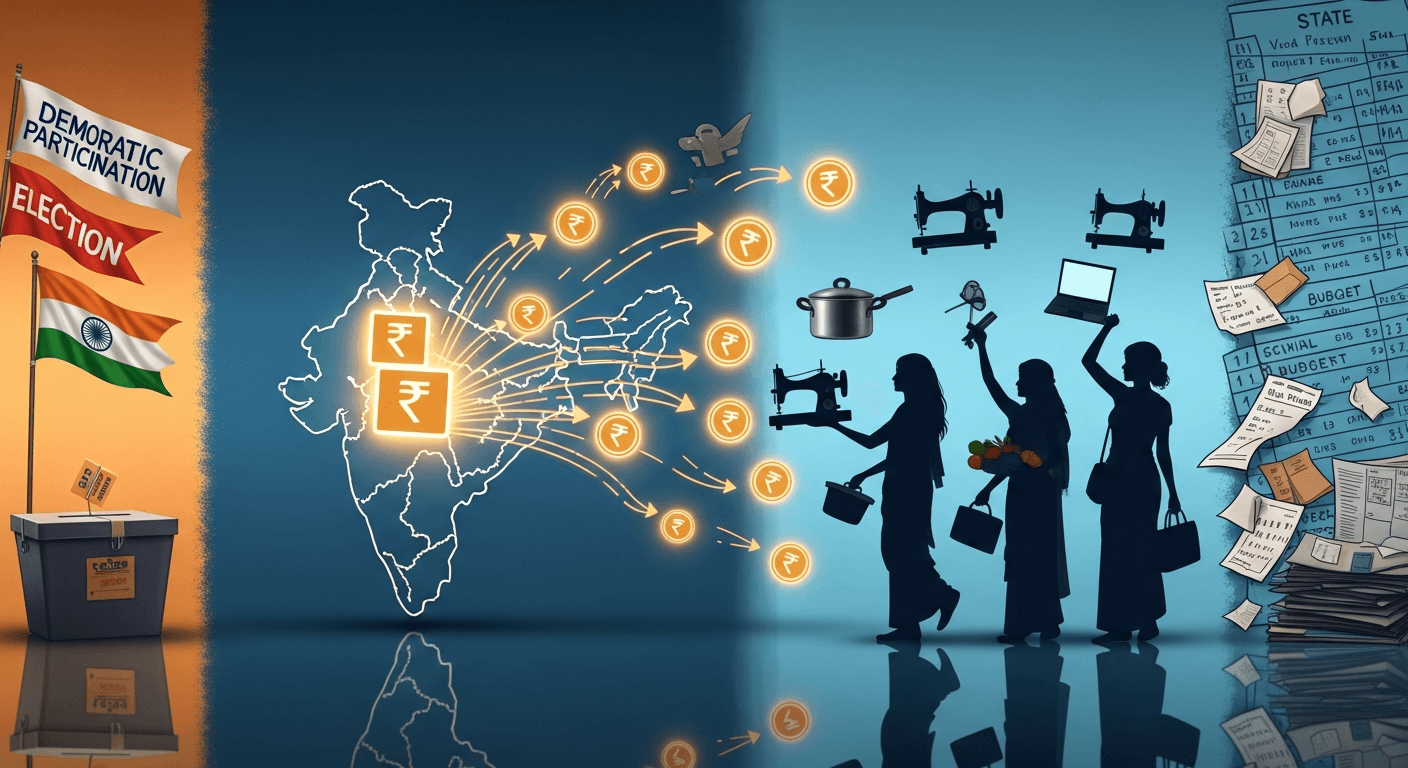
Over the last two years I've been watching Indian state politics add a new, very effective tactic to the toolbox: large-scale cash transfers targeted at women timed around elections. The goal is unmistakable — deliver visible, immediate money to millions of women and convert that liquidity into political support. The roll-out has been rapid and bipartisan, appearing in states across regions and party lines Cash schemes for women grow before polls.
I have written about the expanding budgets for women's welfare and the opportunity it presents before December 2024 — and what we are seeing now confirms much of that trajectory: the policy is both politically potent and fiscally meaningful.
What’s actually happening on the ground
- States are announcing or front‑loading transfers (one-time or recurring) to women ahead of elections; sometimes payments land in accounts during the campaigning window itself (The Quint on Bihar).
- Coverage has ballooned: more states now run large unconditional transfers for women than ever before, with aggregate spending running into tens of thousands of crores each year (Business Today analysis).
- The transfers change incentives quickly: evidence from recent elections shows higher female turnout and, in some contests, a measurable swing associated with such schemes (Hindustan Times commentary).
Why this works (politics and economics)
- Cash is immediate and tangible. Unlike a promise of a future factory or school, a deposit into a bank account arrives before the polling day and changes day-to-day choices.
- Targeting women matters. When cash lands in women’s accounts it tends to raise household consumption, reduce distress borrowing and—critically for politicians—creates a direct association between beneficiaries and the delivering government (The Wire analysis).
- Administrative simplicity: with Aadhaar, bank accounts and DBT rails, states can scale transfers quickly and at low marginal cost of delivery.
The costs — fiscal, ethical and long-term
I believe every policy needs to be judged on outcomes beyond the next ballot.
- Fiscal pressure: these schemes are large enough to strain state budgets. Several states that adopted big transfers now show significant revenue stress once transfers are included in the accounting (Economic Times / PRS reporting). This matters because recurring obligations crowd out capital spending, health and education.
- Timing and fairness: front-loading or disbursing during campaign windows raises Model Code of Conduct questions and risks the transactionalisation of welfare. When transfers become an instrument of immediate vote-gaining, civic trust in the impartiality of the state erodes (reporting from recent elections).
- Administrative mistakes and political fallout: payment errors, ghost beneficiaries or mistaken credits cause social friction and fuel accusations of malpractice; they also harm the scheme’s legitimacy when things go wrong.
- Limited structural change: cash is powerful for short-run relief, but it does not substitute for long-term investments—jobs, childcare, public healthcare, schools and social infrastructure—that actually increase women’s economic agency over time.
How I would reframe the strategy (practical fixes)
If cash transfers to women are here to stay, let’s design them to be sustainable and transformative rather than merely electoral:
- Depoliticise timing: legislate transparent budget lines with multi-year commitments and clear disbursal calendars so transfers are predictable and not manipulable around elections.
- Pair cash with services: combine transfers with investments in childcare, skilling, market linkages and affordable credit so a deposit becomes seed capital rather than a one-off subsidy.
- Fiscal safeguards: link expansion to credible revenue sources or sunset clauses; subject large schemes to independent actuarial and fiscal review.
- Strengthen administration and audit: periodic third‑party audits, grievance redressal channels and public dashboards to reduce leakage and mistakes.
- Protect electoral integrity: the election machinery and courts must clarify rules for transfers announced or executed close to polls so welfare does not become legalized vote-buying.
A longer view
I recognise the humanitarian value of getting money into poor women’s hands today. Many recipients use it for food, medicines or small livelihoods — and that matters. My worry is about trajectory: if politics locks in recurring, expensive entitlements without complementary public goods, we will create an unstable fiscal equilibrium and hollow empowerment.
I have argued before for a rights‑based approach to women’s welfare and for turning compassionate short‑term help into long‑term capability building (my earlier reflections on state allocations; my note on empowerment without dole). Those threads feel especially relevant today.
Cash transfers targeted at women can be a force for dignity — if designed to expand opportunity, not just to purchase votes. That requires political will of a different kind: the courage to think beyond the next election.
Regards,
Hemen Parekh
Any questions / doubts / clarifications regarding this blog? Just ask (by typing or talking) my Virtual Avatar on the website embedded below. Then "Share" that to your friend on WhatsApp.
Get correct answer to any question asked by Shri Amitabh Bachchan on Kaun Banega Crorepati, faster than any contestant
Hello Candidates :
- For UPSC – IAS – IPS – IFS etc., exams, you must prepare to answer, essay type questions which test your General Knowledge / Sensitivity of current events
- If you have read this blog carefully , you should be able to answer the following question:
- Need help ? No problem . Following are two AI AGENTS where we have PRE-LOADED this question in their respective Question Boxes . All that you have to do is just click SUBMIT
- www.HemenParekh.ai { a SLM , powered by my own Digital Content of more than 50,000 + documents, written by me over past 60 years of my professional career }
- www.IndiaAGI.ai { a consortium of 3 LLMs which debate and deliver a CONSENSUS answer – and each gives its own answer as well ! }
- It is up to you to decide which answer is more comprehensive / nuanced ( For sheer amazement, click both SUBMIT buttons quickly, one after another ) Then share any answer with yourself / your friends ( using WhatsApp / Email ). Nothing stops you from submitting ( just copy / paste from your resource ), all those questions from last year’s UPSC exam paper as well !
- May be there are other online resources which too provide you answers to UPSC “ General Knowledge “ questions but only I provide you in 26 languages !



No comments:
Post a Comment