
TMC worker attacked, BJP booth vandalised: Bengal votes amid incidents in Phase 2
Lead
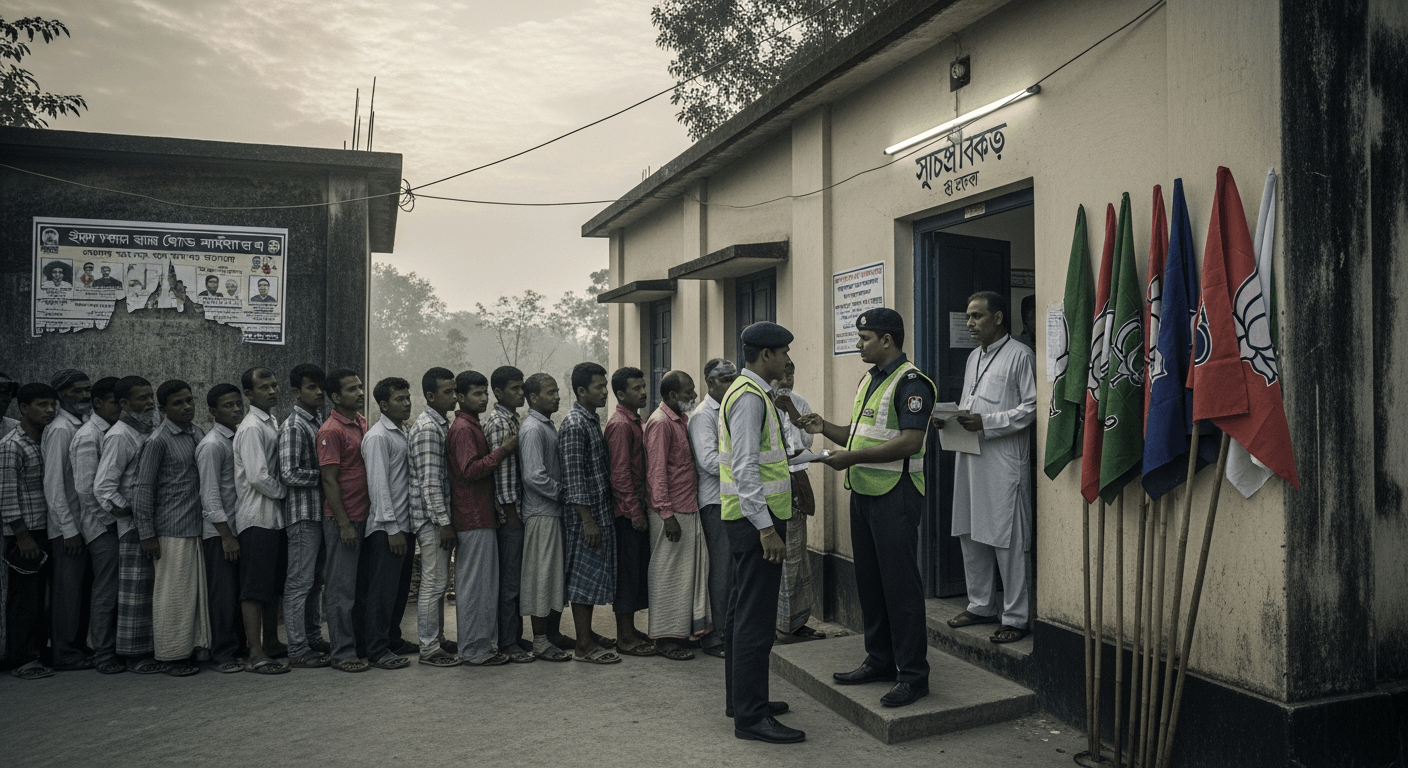
I watched Phase 2 of voting in West Bengal unfold with concern: polling proceeded across several districts, but the day was marked by scattered incidents of violence and mutual accusations between major parties. Local reports described an attack on a Trinamool Congress (TMC) worker and the vandalising of a Bharatiya Janata Party (BJP) booth office, along with delays at some polling stations. Election and police officials said they were monitoring the situation and had sought reports from returning officers to ensure free and fair voting Times of India.
What happened (who, where, when)
- Early on the morning of Phase 2 polling, multiple districts reported disturbances. Local authorities recorded an alleged assault on a TMC worker in one area and reported vandalism at a BJP camp office in another. Incidents were reported from pockets including Chapra, Shantipur, Nimtala and Bhangar (districts and ward details vary by report) Times of India.
- In some booths, polling was delayed or temporarily disrupted; in at least one sector the start of voting was reported to have been held up, leading to tension among voters waiting in queues Times of India.
Because reporting from the ground varied across outlets, the precise chronology and the identities of those involved remain the subject of party complaints and police investigations.
Reactions
TMC: The party’s local leadership and campaign teams characterised some of the incidents as intimidation tactics by outside observers and opponents, urging officials to secure booths and protect voters. Party statements called for prompt police action and for the poll process to continue without fear Times of India.
BJP: Saffron party representatives alleged that their polling agents and workers were obstructed and that camp offices were forcibly damaged in some areas. The party lodged complaints with local police and election authorities seeking immediate redress and protection for its agents The Week / PTI.
Police: District police units responded to complaints, registered FIRs where required, and in several locations asked political groups to limit the number of people gathering near booths. Officials emphasised that law-and-order duties required prompt, neutral action to ensure the poll process continued smoothly Times of India.
Election officials: The office of the Chief Electoral Officer (CEO) and returning officers sought reports from presiding officers where incidents occurred and instructed forces and presiding officers to ensure voters’ safety and prevent disruption. The poll panel reiterated mechanisms for replacement of polling materials and re-scheduling where necessary Times of India.
Context: the larger pattern in this election
West Bengal’s polls this cycle have seen intermittent reports of clashes and booth-level complaints across phases. Earlier phases documented a range of allegations — from stone-pelting and stalled polling to complaints about agents being denied entry — with both major parties trading accusations News18 archive; The Week wire reports The Week. That pattern has prompted repeated appeals from the Election Commission for calm and for local officers to act swiftly on complaints.
I have written about the structural pressures on our electoral process before — about how crowded polling seasons and inadequate safeguards can undermine voters’ confidence and how electoral reforms can help protect the integrity of voting. See my earlier reflections on poll reforms and the need for clearer enforcement mechanisms Electoral Reforms: Time for Consensus.
Impact on turnout and security measures
Turnout: Incidents of this nature can have two contrasting short-term effects: they may suppress turnout where voters feel unsafe, or they may galvanise voters who see participation as resistance to intimidation. In the pockets affected on Phase 2, officials reported long queues in some places even as disturbances were being handled, indicating mixed outcomes on turnout Times of India; The Week.
Security measures: Where complaints mounted, election authorities and police stepped up visible deployments, restricted political gatherings near sensitive booths, and reiterated that presiding officers could pause or re-schedule polling where required. The EC also has protocols for replacing EVMs, bringing in fresh polling teams, and seeking action-taken reports to preserve the integrity of voting.
Voices from the ground
"I came early to vote but I was nervous when I heard about clashes nearby. The presiding officer finally started voting and we waited in the line," a local voter said on condition of anonymity.
"We want to vote in peace. The disturbances made people worry, but many still turned up to cast their ballots," said another resident, also requesting anonymity to speak freely.
These anonymous but consistent impressions — worry mixed with a determination to vote — reflect a community intent on exercising franchise despite friction.
Conclusion: implications for the election
The Phase 2 incidents are neither unique nor decisive in isolation, but they matter for three reasons: they test the responsiveness of law enforcement and the Election Commission; they shape voter confidence at the most local level; and they feed a broader political narrative that both sides will use in media and legal channels. Rapid, transparent action by election authorities and impartial policing are critical to prevent localized incidents from cascading into wider distrust.
If the objective is to ensure credible outcomes and high participation, authorities should document complaints promptly, communicate remedial steps clearly to the public, and, where necessary, allow re-polling or targeted remedial measures. Longer term, the recurring pattern underscores the need for the kinds of electoral reforms I have long urged — clearer protocols, greater accountability for booth-level conduct, and mechanisms that reduce the room for intimidation Electoral Reforms: Time for Consensus.
The voters I met in queues were clear-eyed: they want their vote to count and the process to be safe. That should be the north star for every agency and party involved.
Regards,
Hemen Parekh
Any questions / doubts / clarifications regarding this blog? Just ask (by typing or talking) my Virtual Avatar on the website embedded below. Then "Share" that to your friend on WhatsApp.
Get correct answer to any question asked by Shri Amitabh Bachchan on Kaun Banega Crorepati, faster than any contestant
Hello Candidates :
- For UPSC – IAS – IPS – IFS etc., exams, you must prepare to answer, essay type questions which test your General Knowledge / Sensitivity of current events
- If you have read this blog carefully , you should be able to answer the following question:
- Need help ? No problem . Following are two AI AGENTS where we have PRE-LOADED this question in their respective Question Boxes . All that you have to do is just click SUBMIT
- www.HemenParekh.ai { a SLM , powered by my own Digital Content of more than 50,000 + documents, written by me over past 60 years of my professional career }
- www.IndiaAGI.ai { a consortium of 3 LLMs which debate and deliver a CONSENSUS answer – and each gives its own answer as well ! }
- It is up to you to decide which answer is more comprehensive / nuanced ( For sheer amazement, click both SUBMIT buttons quickly, one after another ) Then share any answer with yourself / your friends ( using WhatsApp / Email ). Nothing stops you from submitting ( just copy / paste from your resource ), all those questions from last year’s UPSC exam paper as well !
- May be there are other online resources which too provide you answers to UPSC “ General Knowledge “ questions but only I provide you in 26 languages !



No comments:
Post a Comment