
Guarding AI's Crown Jewels
Lede
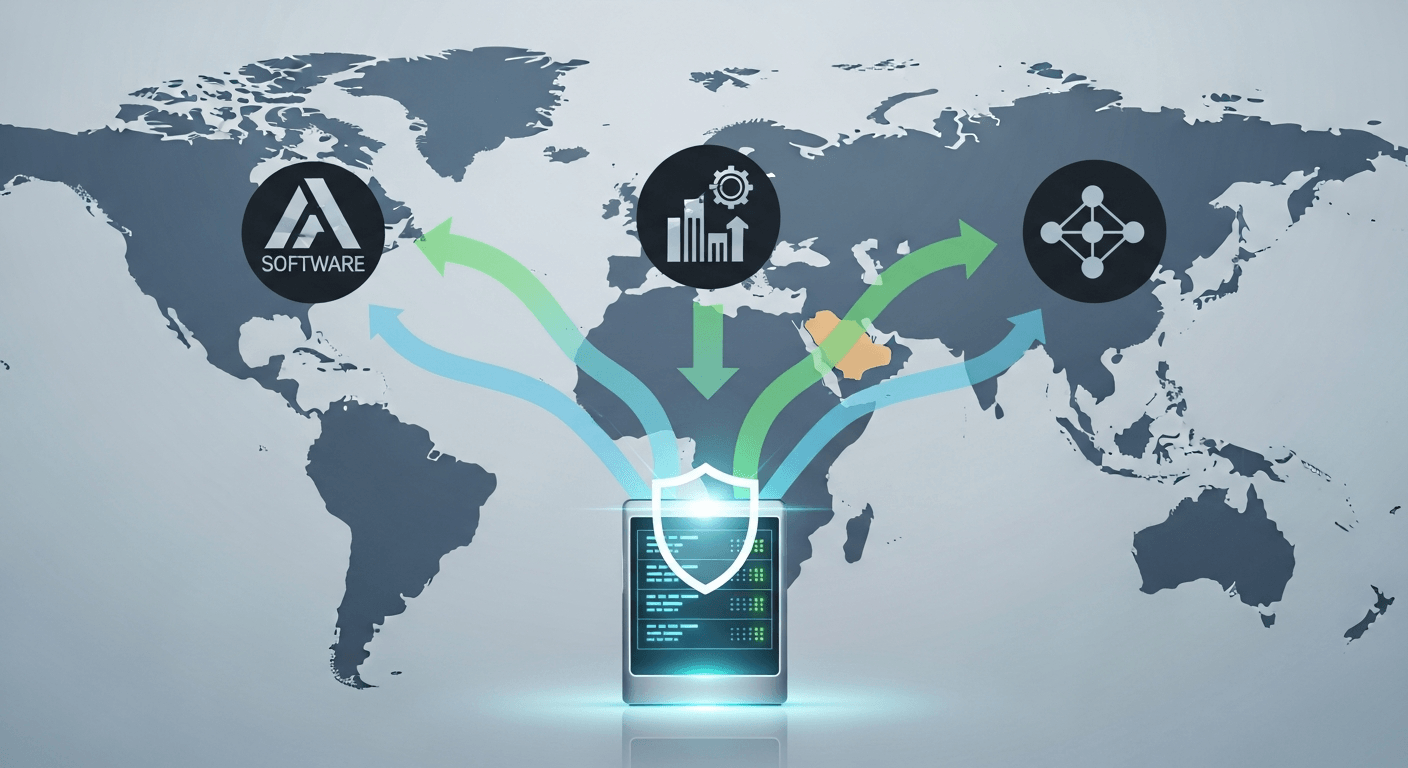
I write this as someone who thinks deeply about how technology and institutions co-evolve. Recent reporting describes a rare tactical alignment between OpenAI, Anthropic, and Google to share signals and defend against large-scale attempts to copy frontier models — a practice often called adversarial distillation source. I will treat the public reports as a prompt for analysis: some details are reported but may remain incomplete or unconfirmed, and where I speculate I will label it clearly.
Background: what is model copying and why it matters
At a technical level, model copying (often framed as "distillation" when a student model is trained on outputs from a teacher model) is a long-standing ML technique. The concern in recent coverage is about adversarial distillation: third parties issuing very large volumes of queries to a high-capability host model to generate training data that reproduces its behavior without investing in the original research, compute, or safety work.
Why does this alarm companies and policymakers?
- Economic: reproducing high-performing behavior at much lower cost can undercut the original lab’s market and recoup billions in value built on expensive compute and data.
- Safety: copies created from scraped outputs may lack the guardrails — alignment work, safety mitigations, content filters — intentionally engineered by the original lab.
- Strategic: large-scale, automated extraction can be used to shortcut investments in capability while concentrating risks in jurisdictions with weaker governance.
(Reported incidents and named actors in the press are treated here as claims; I do not assert beyond what sources say.)
Possible joint technical measures
A coordinated industry response can borrow from cyber threat intelligence practices while adapting to ML specifics. Options include:
- Shared indicators and telemetry: exchange indicators of adversarial query patterns (high-volume, repeated prompt kernels, synchronized payment patterns) through a neutral forum. (This is what reporters suggest companies are beginning to do.)
- Adaptive API defenses: dynamic rate limits, fingerprinting of automated clients, per-request subtle output changes that reduce usefulness for downstream training (e.g., adding noise to non-essential tokens).
- Watermarking and provenance: develop robust, hard-to-remove provenance markers in outputs that downstream models could learn to recognise (research-level, currently partial).
- Red-teamed detection models: joint development of classifiers that spot extraction workflows at scale and flag suspicious account clusters.
- Standardized logging & audit tooling: common schemas to permit cross-provider correlation without revealing proprietary model internals.
Possible legal and policy measures
- Terms-of-service enforcement: clearer contractual prohibitions against bulk extraction and automated scraping, coupled with more aggressive account/IP enforcement.
- Copyright and trade-secret strategies: seek legal clarity on whether outputs and behaviors enjoy protection (this area is evolving and often unsettled).
- Government-facilitated information-sharing: an ISAC-like mechanism backed by regulatory guidance to reduce antitrust exposure when competitors share defensive signals.
- Export controls and sanctions: targeted trade tools to limit specialised compute or services used to enable large-scale extraction (this is politically sensitive and may be only partially effective).
Geopolitical and business implications
If the reports of cross-company cooperation are accurate, this is a pragmatic alignment driven by shared economic and safety interests. The move has several implications:
- Competitive dynamics shift: companies that once competed fiercely may accept tactical cooperation when a shared external threat materially damages all incumbents.
- Cross-border tensions rise: framing adversarial distillation as a China-specific problem (as some coverage does) risks hardening tech blocs and could accelerate decoupling in compute, models, and standards.
- Policy momentum: coordinated industry asks for legal clarity could push legislatures to act on IP, export controls, or sanction authorities — with unpredictable downstream effects on innovation and research collaboration.
Likely challenges and counterarguments
- Economics of evasion: the incentive to copy remains strong if student models sell for a fraction of the price. Attackers can iterate around defensive measures using proxies, synthetic accounts, and distributed scraping. Technical defenses are arms races, not one-time fixes.
- Legal ambiguity: courts and regulators are still working out how (and whether) model outputs or behavior are protected. Enforcement strategies that depend on murky legal grounds risk reversals.
- Antitrust and coordination risk: the very act of rival firms sharing data can invite scrutiny absent clear governance and safe harbors.
- Collateral damage: aggressive blocking and geofencing can harm legitimate research, international collaboration, and users in affected regions.
Where I’ve written about related themes
I have long argued that models need embedded controls and human-feedback loops to reduce harms — themes I explored earlier in my Parekh's Law reflections on chatbots and safety mechanisms my post. Those ideas map neatly to the present debate: protecting IP and protecting safety are often aligned, but they require careful engineering and policy design.
Conclusion and recommendations
Reports of OpenAI, Anthropic, and Google coordinating defensive signals are plausible and illuminate a hard policy problem at the intersection of economics, safety, and geopolitics. If elements remain unconfirmed, policymakers and practitioners should avoid binary framing and favour layered responses.
Recommended actions (practical and proportional):
- Short term: establish neutral, minimal-sharing channels for indicators of extraction patterns and fund joint defensive R&D (rate-limiting techniques, provenance research).
- Medium term: pursue legal clarity on permissible information sharing and on protection for high-value model artifacts, while avoiding blanket export or block measures that fragment research.
- Long term: invest in public-good research (watermarking, provenance, robust safety toolkits) and multilateral governance frameworks so defensive cooperation does not become de facto market coordination.
These steps are not silver bullets. Defensive engineering, legal reform, and diplomacy must proceed together — with humility about what is hypothetical and what is verified. In that spirit, I welcome a wider, evidence-based conversation about how to keep innovation sustainable while reducing asymmetric risks.
Regards,
Hemen Parekh
Any questions / doubts / clarifications regarding this blog? Just ask (by typing or talking) my Virtual Avatar on the website embedded below. Then "Share" that to your friend on WhatsApp.
Get correct answer to any question asked by Shri Amitabh Bachchan on Kaun Banega Crorepati, faster than any contestant
Hello Candidates :
- For UPSC – IAS – IPS – IFS etc., exams, you must prepare to answer, essay type questions which test your General Knowledge / Sensitivity of current events
- If you have read this blog carefully , you should be able to answer the following question:
- Need help ? No problem . Following are two AI AGENTS where we have PRE-LOADED this question in their respective Question Boxes . All that you have to do is just click SUBMIT
- www.HemenParekh.ai { a SLM , powered by my own Digital Content of more than 50,000 + documents, written by me over past 60 years of my professional career }
- www.IndiaAGI.ai { a consortium of 3 LLMs which debate and deliver a CONSENSUS answer – and each gives its own answer as well ! }
- It is up to you to decide which answer is more comprehensive / nuanced ( For sheer amazement, click both SUBMIT buttons quickly, one after another ) Then share any answer with yourself / your friends ( using WhatsApp / Email ). Nothing stops you from submitting ( just copy / paste from your resource ), all those questions from last year’s UPSC exam paper as well !
- May be there are other online resources which too provide you answers to UPSC “ General Knowledge “ questions but only I provide you in 26 languages !


No comments:
Post a Comment