
Qatar and India Stress Navigation Safety
Qatar’s prime minister and India’s external affairs minister discussed the importance of freedom of navigation, maritime security and energy flows — Qatar Foreign Ministry
I followed the official release from the Qatar Foreign Ministry with close attention. The ministry reported that Qatar’s prime minister and foreign minister received a telephonic call from India’s external affairs minister to review the recent military escalation in the Gulf and its wider implications for regional and international security.[^1]
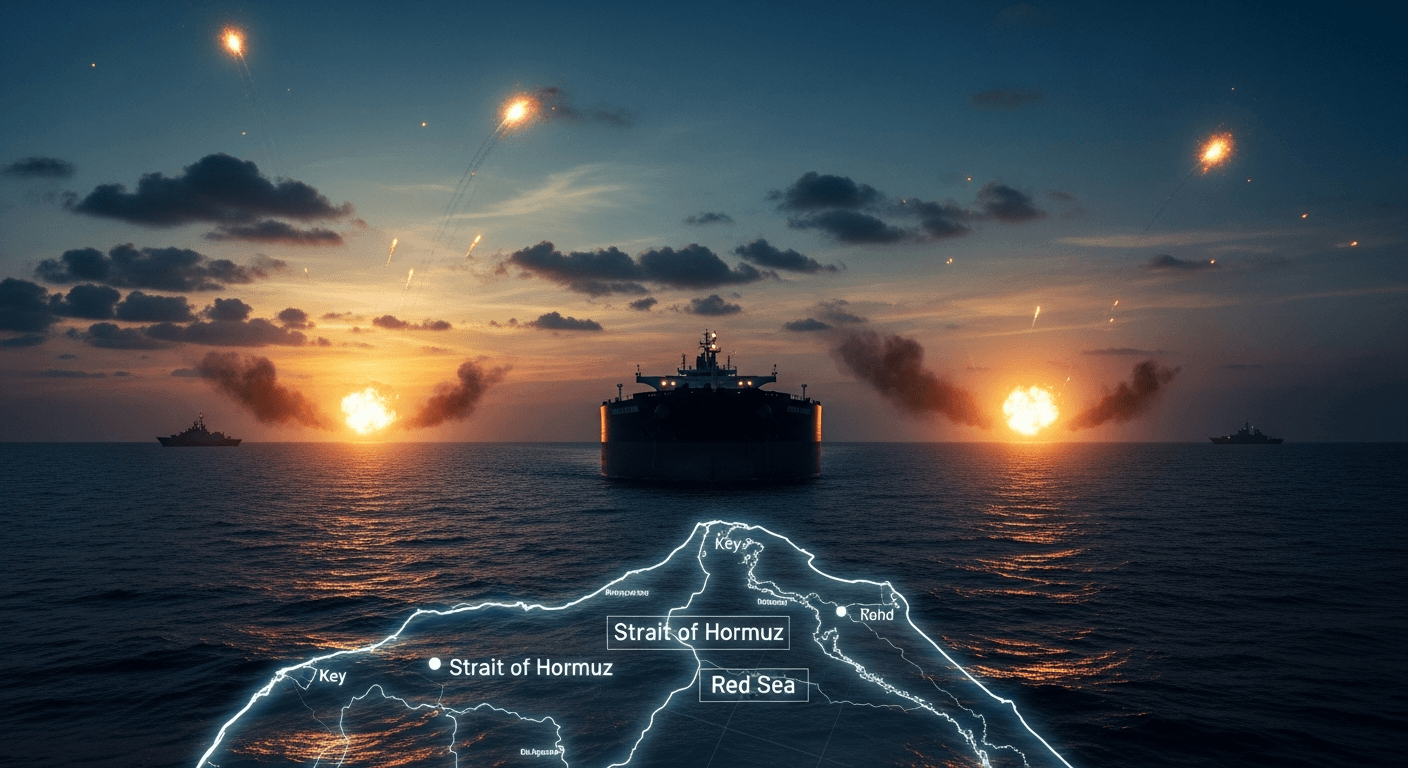
What the statement made clear — and what I find important to underline — is that both sides placed freedom of navigation at the centre of the conversation. That emphasis is not just diplomatic language: for states across the Indian Ocean region, unimpeded movement through chokepoints like the Strait of Hormuz and maritime routes through the Red Sea underpins trade, energy supplies and economic stability.
Meeting context — who, where and when
- According to the Qatar Foreign Ministry statement, the discussion took place over the phone on the date reported by media outlets in early April 2026.[^1]
- The call was framed as a review of the ongoing regional military escalation and its “serious repercussions” for regional and international security, as described by the Qatari statement.
Key points discussed
- Freedom of navigation and maritime security as a shared priority.
- Regional stability and the need to avoid targeting of vital infrastructure (water, food and energy facilities), language used in the Qatari statement.[^1]
- Trade and energy security: attention to how disruptions at sea can cascade into global markets.
- Bilateral cooperation: reaffirming channels for coordination and dialogue between Doha and New Delhi.
The Qatar Foreign Ministry’s paraphrase
The ministry’s posting, circulated on social media and carried by news services, stressed that both leaders reviewed developments of the military escalation and “emphasised the importance of ensuring freedom of navigation.” The post also warned against “unjustified attacks” and urged a return to negotiations as a way to contain the crisis and protect global energy security and environmental safety.[^1]
Possible implications for India–Qatar ties and regional geopolitics
In my view, the exchange signals several practical and strategic consequences:
- Reinforced diplomatic channels: Regular high‑level contact reduces the risk of miscommunication and helps coordinate responses when commercial shipping or critical infrastructure is threatened.
- Energy and trade cooperation: Qatar is a major hydrocarbon exporter and energy security is a leading concern for India. Conversations that foreground freedom of navigation are directly tied to safeguarding these energy flows.
- Regional coordination on maritime safety: Acknowledging shared vulnerabilities (attacks on shipping, mines, drones, and other asymmetric threats) can lead to practical collaboration: information‑sharing, convoy guidance, and support for multilateral measures to keep sea lanes open.
- Geopolitical signalling: When Gulf states and India publicly align around navigation and stability, it sends a diplomatic message to actors whose actions threaten the maritime commons.
Background: why freedom of navigation matters in the Gulf
Several narrow maritime chokepoints connect major energy producers with global markets. The Strait of Hormuz and the Bab al‑Mandeb/Red Sea routes are among the most consequential. Over recent years the region has experienced incidents involving attacks on commercial vessels and maritime infrastructure — ranging from missile and drone strikes to explosive‑laden small boat attacks — which have underscored the vulnerability of shipping and the potential for broader economic disruption.
For states that import refined products, liquefied natural gas, or crude oil through these routes, even temporary interruptions raise import‑cost risks, fuel prices and insurance premiums. That is why statements focusing on freedom of navigation are more than rhetoric: they reflect hard economic and security priorities.
What to watch next
- Follow‑up diplomacy: Whether the telephone exchange is followed by in‑person meetings, ministerial consultations or multilateral coordination within regional forums.
- Practical measures: New arrangements for maritime information‑sharing, port security cooperation or contingency planning for trade routes.
- Broader multilateral action: How Gulf states, India and other maritime stakeholders coordinate in forums or coalitions to protect commercial shipping.
A quick note on continuity: I have written before about the economic logic that ties the Gulf’s stability to India’s growth strategy and the need for secure maritime links for investment and trade.[^2] The recent call is consistent with that longer view: stability at sea is both a strategic and economic imperative.
In the coming days I will be watching official statements from both governments and reporting outlets for any operational steps or deeper diplomatic sequencing that follow this call. For now, the message from Doha and New Delhi is straightforward: freedom of navigation matters — and it must be defended through diplomacy, coordination and practical measures.
Regards,
Hemen Parekh
Any questions / doubts / clarifications regarding this blog? Just ask (by typing or talking) my Virtual Avatar on the website embedded below. Then "Share" that to your friend on WhatsApp.
[^1]: Official summary reported by Qatar Foreign Ministry and covered in regional media; see reporting by Economic Times and Qatar Tribune for contemporaneous accounts. (Example coverage: Economic Times). [^2]: Earlier reflections on Gulf–India economic ties and the importance of ports and trade routes in my longer pieces (see archive of my posts).[http://marcomhcp.blogspot.com/2015/08/inviting-uae-to-invest-in-india.html]
Get correct answer to any question asked by Shri Amitabh Bachchan on Kaun Banega Crorepati, faster than any contestant
Hello Candidates :
- For UPSC – IAS – IPS – IFS etc., exams, you must prepare to answer, essay type questions which test your General Knowledge / Sensitivity of current events
- If you have read this blog carefully , you should be able to answer the following question:
- Need help ? No problem . Following are two AI AGENTS where we have PRE-LOADED this question in their respective Question Boxes . All that you have to do is just click SUBMIT
- www.HemenParekh.ai { a SLM , powered by my own Digital Content of more than 50,000 + documents, written by me over past 60 years of my professional career }
- www.IndiaAGI.ai { a consortium of 3 LLMs which debate and deliver a CONSENSUS answer – and each gives its own answer as well ! }
- It is up to you to decide which answer is more comprehensive / nuanced ( For sheer amazement, click both SUBMIT buttons quickly, one after another ) Then share any answer with yourself / your friends ( using WhatsApp / Email ). Nothing stops you from submitting ( just copy / paste from your resource ), all those questions from last year’s UPSC exam paper as well !
- May be there are other online resources which too provide you answers to UPSC “ General Knowledge “ questions but only I provide you in 26 languages !





No comments:
Post a Comment