
Introduction
We like to imagine bots as either flawless silicon automatons or mischievous rogue programs. But there’s a third, messier category arriving fast: the error-prone "human" bot — systems that are built to behave like people, learn from people, and even be operated by people, yet inherit all the foibles of human judgment. In this post I want to explain what this creature is, why it matters, the technical and ethical landmines it brings, real-world patterns we’ve already seen, and practical ways to live with (and limit) the damage.
1) What it is: a bot with human seams
A "human" bot is not a robot with a face. It’s a system stack that mixes three things:
- automated models trained on human data (language models, recommender systems)
- explicit human inputs (crowd labels, feedback loops, moderation)
- human-operated controls or overrides (operators, prompt engineers, reviewers)
When you combine automation with human signals and human operators you get systems that emulate human behavior — complete with biases, mistakes, fatigue, sloppy shortcuts, and adversarial reactions.
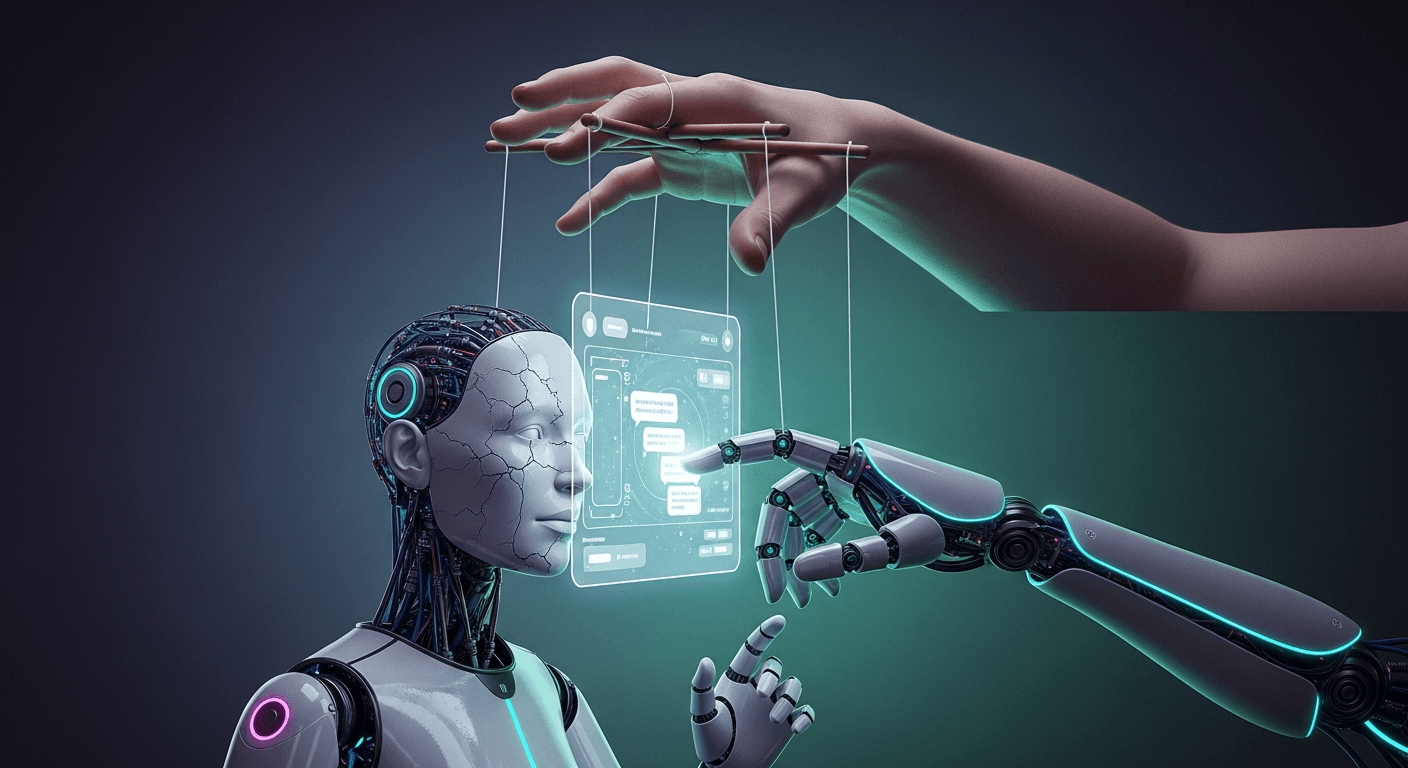
Think of it as a puppet where the strings are a blend of gradient descent and human heuristics. The result is often more unpredictable than a purely automated or purely human process.
2) Why it matters: risk multiplied, not divided
Human involvement sounds safe: after all, a human can correct a model. But hybrid systems create new failure modes:
- Amplified errors: Small model mistakes get confirmed by human raters and then reinforced when used as training data.
- False safety: Human reviewistas create a sense of control that can be brittle under scale or pressure.
- Accountability fog: When blame splits across model, dataset, and reviewer, it’s harder to fix root causes.
For professionals building products and for citizens affected by them, that means more subtle harms — misrouted medical advice, biased hiring filters, or a viral disinformation meme that escapes moderation because the control pipeline assumed humans would catch it.
3) Technical and ethical challenges
Technical challenges
- Feedback loops: Human labels used to retrain models can bake in systematic mistakes. What we call “correction” can become confirmation bias at production scale.
- Scalability vs quality: Human review scales poorly. Automated shortcuts (e.g., sampling or heuristics) reduce cost but also raise blind spots.
- Drift and brittleness: When models and human behaviors drift at different rates, systems degrade in unpredictable ways.
Ethical challenges
- Labor issues: A lot of the human signal comes from low-paid, precarious reviewers whose own errors and well-being matter ethically and materially.
- Transparency and consent: Users rarely know when their interactions are being used as training data, nor how human intervention shapes outcomes.
- Responsibility: When people and models jointly make decisions, who is responsible for harm? Designers, operators, data providers, or the product owner?
Addressing these requires both engineering rigor and attention to governance, compensation, and auditability.
4) Real-world examples (patterns, not exhaustive cases)
Moderation whack-a-mole: Social platforms rely on model filtering plus human moderators. Moderators under time pressure can mislabel content, which retrains filters in the wrong direction and surfaces more edge-case errors.
Recommender feedback spirals: Editors or curators nudging recommendations (to boost engagement or suppress content) can create feedback loops where the system overweights a narrow signal and produces polarized outcomes.
Assisted decision-making in hiring and lending: Human reviewers trusting an algorithm’s recommendation may apply it without scrutiny, reproducing biases while believing the machine is the source of truth.
Medical triage tools with human alerts: Clinicians ignoring a flagged suggestion because similar alerts were previously false positives — leading to missed diagnoses when the system is finally right.
I’ve been warning about these hybrid pitfalls for a while: in Feb 2023 I framed what I call Parekh’s Law of Chatbots, a set of rules to limit chatbot misbehavior and ensure human feedback is used wisely Parekh’s Law of Chatbots.
5) How to coexist and mitigate risks
There is no single fix. But a pragmatic toolkit helps teams build safer hybrid systems:
- Design for disagreement: Treat human and model outputs as proposals, not ground truth. Use adjudication, multiple independent reviewers, and uncertainty thresholds.
- Audit upstream: Monitor the dataset pipeline that converts human actions into training signals. Track the provenance of labels, who made them, and the conditions under which they were made.
- Measure human reliability: Just as we measure model metrics, measure human rater consistency, fatigue, and turnover. Incentivize careful review — not speed.
- Introduce human-in-the-loop gaps: Force deliberate pauses or sampling-based escalation paths so humans don’t rubber-stamp recommendations at scale.
- Transparent consent and compensation: Tell users when their interactions may train models; fairly compensate and support reviewers who form the backbone of many systems.
- Continuous red-teaming: Test combined human+model behaviors under stress, adversarial prompts, and real-world edge cases.
- Governance & accountability: Have clear roles for incident response and remediation when errors cause harm.
These are engineering trade-offs — they cost time and money — but they prevent costly harm and legal exposure down the line.
Conclusion
The hybrid creature I’m calling the error-prone human bot is here to stay. It’s powerful because it combines human nuance with machine scale, and dangerous because it inherits human fallibility at scale. If we accept the mixed nature of these systems, we can design guardrails that respect people — both the users and the humans who help the machines learn.
We should act like engineers and citizens: instrument systems, measure behavior, compensate and protect human contributors, and insist on transparency so that we can trace and fix failures.
Call to action
If you build or operate systems that mix model outputs with human input, try this simple experiment in the next sprint:
- Audit one feedback loop end-to-end (from user interaction → human action → training signal → model output).
- Add one adjudication step or random double-review to measure human agreement.
- Publish a short postmortem of what you learned and one policy change you’ll apply.
If you want to explore this topic with me further, ask my Virtual Avatar on the website — it’s built precisely to continue these conversations.
Regards,
Hemen Parekh hcp@recruitguru.com
Any questions / doubts / clarifications regarding this blog? Just ask (by typing or talking) my Virtual Avatar on the website embedded below. Then "Share" that to your friend on WhatsApp.
Get correct answer to any question asked by Shri Amitabh Bachchan on Kaun Banega Crorepati, faster than any contestant
Hello Candidates :
- For UPSC – IAS – IPS – IFS etc., exams, you must prepare to answer, essay type questions which test your General Knowledge / Sensitivity of current events
- If you have read this blog carefully , you should be able to answer the following question:
- Need help ? No problem . Following are two AI AGENTS where we have PRE-LOADED this question in their respective Question Boxes . All that you have to do is just click SUBMIT
- www.HemenParekh.ai { a SLM , powered by my own Digital Content of more than 50,000 + documents, written by me over past 60 years of my professional career }
- www.IndiaAGI.ai { a consortium of 3 LLMs which debate and deliver a CONSENSUS answer – and each gives its own answer as well ! }
- It is up to you to decide which answer is more comprehensive / nuanced ( For sheer amazement, click both SUBMIT buttons quickly, one after another ) Then share any answer with yourself / your friends ( using WhatsApp / Email ). Nothing stops you from submitting ( just copy / paste from your resource ), all those questions from last year’s UPSC exam paper as well !
- May be there are other online resources which too provide you answers to UPSC “ General Knowledge “ questions but only I provide you in 26 languages !



No comments:
Post a Comment