
Introduction
I read the recent coverage about Maharashtra’s consumer panels — a slow-moving system where ordinary complaints meant to be decided in months are instead lingering for years. The Times of India reported that tens of thousands of consumer cases are pending in state and district consumer dispute redressal bodies, and that delays now run into many hundreds of days for resolution Over 50,000 Cases Pending In Maha Consumer Panels.
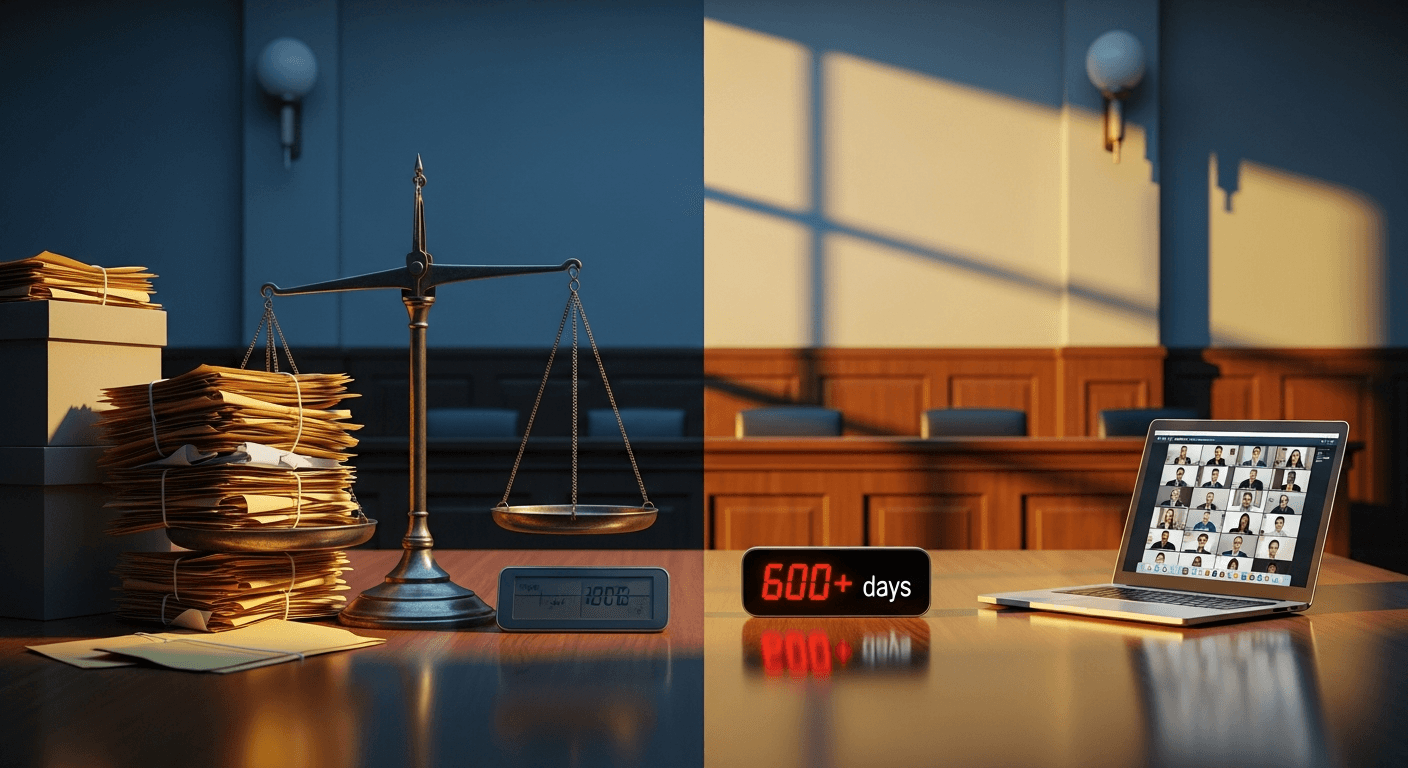
This is personal to me as someone who believes institutions must serve citizens quickly. When consumer justice takes 600-plus days on average, the promise of “simple, speedy and inexpensive” redress — the founding idea of our consumer law — rings hollow.
The scale: data and reality
- Times of India coverage notes 50,000-plus pending matters across Maharashtra’s state and district commissions.
- Nationally, independent trackers and recent reports show average consumer-case disposal is running well into the 600s of days (the Consumer Justice Report and related analyses cite averages around 640–650 days in many forums), which aligns with the experience described in Maharashtra Consumer Justice Report / analysis.
- Official targets under the Consumer Protection Act (2019) are far shorter — 3 months (no testing) and up to 5 months (if testing is required) — but practice is very different.
Why cases take so long
Several structural and operational problems compound to produce these delays:
- Vacancies and staffing gaps: many commissions lack presidents, judicial members and support staff; retirements without timely replacements widen the gap.
- Infrastructure shortages: shared courtrooms, cramped registry spaces and broken IT equipment slow hearings and filing.
- Administrative bottlenecks: examination results or appointment stays, procedural delays in declaring recruitment outcomes, and inadequate budgets stall recruitments and resources.
- Adjournment culture and case-management failures: frequent adjournments, repeated listing without meaningful progress, and low incentives to enforce timelines prolong matters.
- Incomplete digitisation and uneven e-filing/hearing capacity: while e-filing exists, inconsistent availability of stable video-hearing facilities and case-tracking slows throughput.
- Pandemic backlog: COVID-era interruptions amplified existing backlogs and exposed gaps in virtual-justice readiness.
These are not abstract problems; they are the day-to-day obstacles that convert a three- to five-month legal remedy into multi-year uncertainty.
Impact on consumers
When justice is delayed:
- Financial pain becomes acute — delayed refunds, unpaid claims and stalled compensation harm low- and middle-income households and small businesses who cannot absorb long cash-flow interruptions.
- Trust erodes — consumers stop trusting formal redressal, preferring informal settlements or abandoning claims, which weakens public faith in institutions.
- Remedies become symbolic — the relief awarded after years is often worth less in practical terms than what an on-time order would have delivered.
- Access inequality grows — those with time, resources and legal know-how are better positioned to pursue belated claims, disadvantaging the most vulnerable.
What stakeholders are saying (paraphrased)
- Consumer activists point to the cascading effect of vacancies and call it a failure of political priority — cases that ought to be resolved in months are stretching into years.
- Legal commentators note that the statutory timeline in the 2019 Act is being ignored in practice; they blame weak administrative follow-through and procedural inertia.
- Officials (state-level administrators) acknowledge the backlog and point to recruitment and infrastructure constraints — and to legal stays or technical issues that have delayed appointment processes in some districts.
These perspectives converge on one truth: delays are systemic and fixable, but only with concerted administrative will.
Practical solutions I believe can work
Rapid recruitment and interim strategies: prioritise filling vacancies for presidents and members; where delays are unavoidable, engage retired judges and experienced members on short-term retainer to clear old files quickly.
Dedicated funding and infrastructure: allocate targeted funds for courtroom space, dedicated registries, and modern recording/streaming hardware so physical limits don’t throttle hearings.
Digital-first redesign: make e-filing, e-summons, and virtual hearings the default, backed by reliable bandwidth and standardised protocols. I argued for a virtual-courts approach years ago and the same principles apply here — virtual capacity multiplies available hearing-room slots without expensive brick-and-mortar expansion my earlier reflections on virtual benches.
Case triage and alternative dispute resolution: use front-end triage to route simple claims to mediation or settlement tracks (National Consumer Helpline and Lok Adalats), reserving full adjudication for contested matters.
Enforce time-bound case management: mandate and monitor target hearings per case, limit adjournments, and require written reasons for delays with accountability metrics tied to commission performance.
Transparency and public tracking: dashboards showing age-wise pendency, disposal rates and next-listing dates (CONFONET-like dashboards made public) will create pressure for corrective action.
Citizen support and legal-aid outreach: expand legal-aid clinics and pro bono panels to help under-resourced complainants present their cases efficiently, reducing procedural adjournments caused by missing documents or absent parties.
Conclusion
Consumer justice is a measure of how a society values ordinary citizens’ rights in everyday transactions. When panels take 600-plus days, the law’s promise is diminished. The fixes are neither magical nor unaffordable — they are administrative, technological and political. If Maharashtra can prioritize targeted recruitment, infrastructure, digital capacity and strong case-management, the backlog can be cut dramatically.
I have long argued for creative, tech-enabled ways to shrink judicial delay. The same imagination that builds thriving digital services can be applied to justice — if we choose to act.
Regards,
Hemen Parekh
Any questions / doubts / clarifications regarding this blog? Just ask (by typing or talking) my Virtual Avatar on the website embedded below. Then "Share" that to your friend on WhatsApp.
Get correct answer to any question asked by Shri Amitabh Bachchan on Kaun Banega Crorepati, faster than any contestant
Hello Candidates :
- For UPSC – IAS – IPS – IFS etc., exams, you must prepare to answer, essay type questions which test your General Knowledge / Sensitivity of current events
- If you have read this blog carefully , you should be able to answer the following question:
- Need help ? No problem . Following are two AI AGENTS where we have PRE-LOADED this question in their respective Question Boxes . All that you have to do is just click SUBMIT
- www.HemenParekh.ai { a SLM , powered by my own Digital Content of more than 50,000 + documents, written by me over past 60 years of my professional career }
- www.IndiaAGI.ai { a consortium of 3 LLMs which debate and deliver a CONSENSUS answer – and each gives its own answer as well ! }
- It is up to you to decide which answer is more comprehensive / nuanced ( For sheer amazement, click both SUBMIT buttons quickly, one after another ) Then share any answer with yourself / your friends ( using WhatsApp / Email ). Nothing stops you from submitting ( just copy / paste from your resource ), all those questions from last year’s UPSC exam paper as well !
- May be there are other online resources which too provide you answers to UPSC “ General Knowledge “ questions but only I provide you in 26 languages !



No comments:
Post a Comment