
The standoff in one paragraph
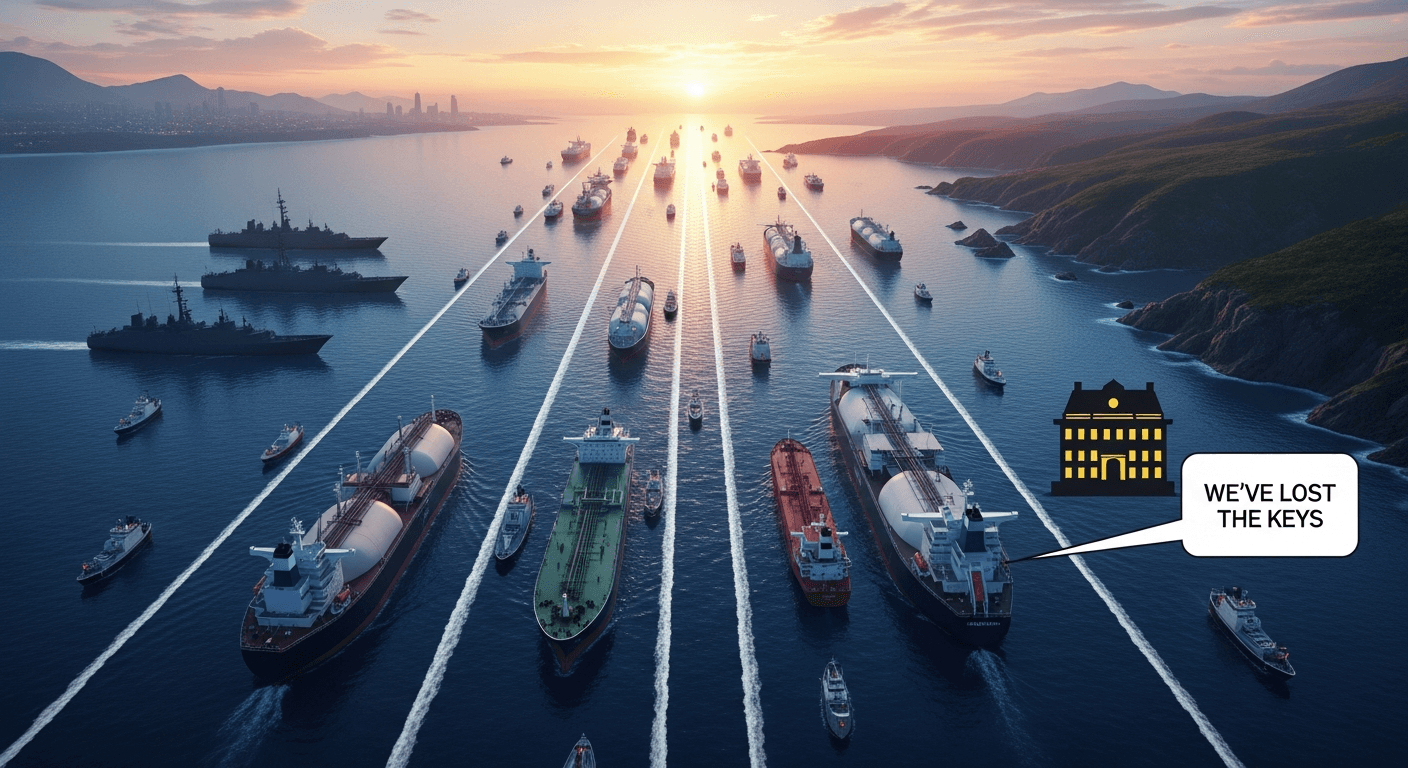
I have been watching events around the Strait of Hormuz with growing concern: Washington set a hard deadline for Tehran to reopen the waterway to commercial shipping and warned of strikes on energy infrastructure if it did not comply, and Tehran — through public messaging and diplomatic posts — answered with a mix of defiance and mockery, even joking that it had “lost the keys.” The exchange is more than rhetoric. The Strait is a global oil chokepoint, and any sustained disruption touches markets, navies and the wider diplomacy of the region.
Why Hormuz matters: a quick primer
- The Strait of Hormuz links the Persian Gulf to the Arabian Sea. At its narrowest point it is only a few dozen kilometres wide and has two narrow shipping lanes.
- Roughly one‑fifth of the world’s petroleum liquids consumption — about 20 million barrels per day in recent years — transits the Strait, and more than 80% of that volume heads to Asian markets. That concentration makes a closure or serious disruption a major global shock EIA analysis.
- There are limited pipeline bypasses: even the largest alternative routes can carry only a fraction of normal Hormuz flows, so rerouting cannot quickly replace lost sea transit capacity.
(If you want background on energy choke points and how states use supply leverage, I explored related themes earlier in my writing on national natural‑resource policy and energy dependence.)Needed: Policy for Natural resources
What Washington said — and how Tehran replied
In a public, time‑bound message from the U.S. President, Washington demanded that Tehran “fully reopen” the Strait within a short deadline and warned of strikes on key Iranian energy infrastructure if the demand was not met. The tone was explicit: reopening the Strait was presented as a precondition for avoiding military action. Several international outlets covered the ultimatum and the looming deadline.
Tehran’s response combined diplomatic posturing and public ridicule — including sarcastic posts from Iranian missions — with a clear strategic line: Iran said it would defend its interests and suggested that any external strikes on its infrastructure could lead to the Strait’s closure until damage was repaired. Iranian authorities also signalled they might prioritise transit for friendly or partner countries while restricting others.
(For contemporaneous reporting of the exchange and Tehran’s public messaging, see press coverage summarising the ultimatum and the embassy posts.)Hindustan Times coverage
Strategic implications for oil flows and markets
- Immediate market volatility: Even the threat of closure raises insurance costs, diverts ship routing, and pushes benchmark oil prices higher. Markets react not only to physical shortages but to increased risk premia.
- Asia is exposed: China, India, Japan and South Korea take the lion’s share of Gulf crude and would bear most of the economic pain from long disruptions. Alternate supplies take time and come at cost.
- Limited structural alternatives: Existing pipelines and the occasional increased flows through longer maritime routes (e.g., around Africa’s Cape of Good Hope) cannot quickly replace Hormuz capacity; the global supply system would face tightness until new flows were arranged.
Diplomatic and military scenarios to watch
- De‑escalation through mediation
- Gulf neighbours and secondary powers can offer quiet diplomacy and shuttle talks to defuse the deadline. Oman, other regional actors or third‑party mediators typically play roles in opening communications channels.
- Limited kinetic strikes and calibrated retaliation
- A targeted strike campaign against specific energy nodes could be intended to coerce reopening while trying to limit wider escalation. Iran’s posture suggests it would treat attacks on civilian energy infrastructure as a red line, increasing the risk of broad retaliation.
- Maritime interdiction and convoying
- A coalition naval presence could escort commercial traffic; that lowers some risk but also raises the prospect of incidents at sea (collisions, misidentification, mine warfare) and a broader international military footprint.
- Gradual economic squeeze and legal measures
- States might expand sanctions, impose shipping restrictions, or apply insurance and port restrictions to pressure parties — steps that can bite over weeks and months rather than hours.
- Widening regional spillover
- Attacks on adjacent chokepoints or regional infrastructure (e.g., pipeline terminals, ports, or the Bab el‑Mandeb corridor) would broaden the economic and security fallout and further strain markets.
What I’m watching next — key indicators
- Maritime traffic and insurance notices: shipping advisories, AIS vessel patterns, and insurance premiums (whenever insurers issue “war risk” updates).
- Tactical moves at sea: any convoying, interdiction, mine reports or attacks on commercial vessels.
- Official diplomatic messages: statements from the U.S., regional capitals, and neutral mediators; quiet channels are often the best early sign of de‑escalation.
- Energy market signals: Brent and other benchmarks, strategic stock releases, and reports from agencies such as the IEA and EIA.
- Humanitarian and legal constraints: strikes on dual‑use or civilian infrastructure raise serious legal and humanitarian questions that will shape international responses.
Final thought
This is a classic example of how geography, economics and politics intersect. A narrow waterway gives disproportionate leverage to the state that controls access, and in an era of complex supply chains that leverage can ripple worldwide. My hope is that cooler heads and quiet diplomacy find a way to reopen safe passage quickly — because the real victims of a prolonged shutdown will be ordinary consumers and businesses far from the Strait itself.
Regards,
Hemen Parekh
Any questions / doubts / clarifications regarding this blog? Just ask (by typing or talking) my Virtual Avatar on the website embedded below. Then "Share" that to your friend on WhatsApp.
Get correct answer to any question asked by Shri Amitabh Bachchan on Kaun Banega Crorepati, faster than any contestant
Hello Candidates :
- For UPSC – IAS – IPS – IFS etc., exams, you must prepare to answer, essay type questions which test your General Knowledge / Sensitivity of current events
- If you have read this blog carefully , you should be able to answer the following question:
- Need help ? No problem . Following are two AI AGENTS where we have PRE-LOADED this question in their respective Question Boxes . All that you have to do is just click SUBMIT
- www.HemenParekh.ai { a SLM , powered by my own Digital Content of more than 50,000 + documents, written by me over past 60 years of my professional career }
- www.IndiaAGI.ai { a consortium of 3 LLMs which debate and deliver a CONSENSUS answer – and each gives its own answer as well ! }
- It is up to you to decide which answer is more comprehensive / nuanced ( For sheer amazement, click both SUBMIT buttons quickly, one after another ) Then share any answer with yourself / your friends ( using WhatsApp / Email ). Nothing stops you from submitting ( just copy / paste from your resource ), all those questions from last year’s UPSC exam paper as well !
- May be there are other online resources which too provide you answers to UPSC “ General Knowledge “ questions but only I provide you in 26 languages !




No comments:
Post a Comment