
Headline
7.4 magnitude earthquake strikes Northern Molucca Sea off Indonesia
Lead
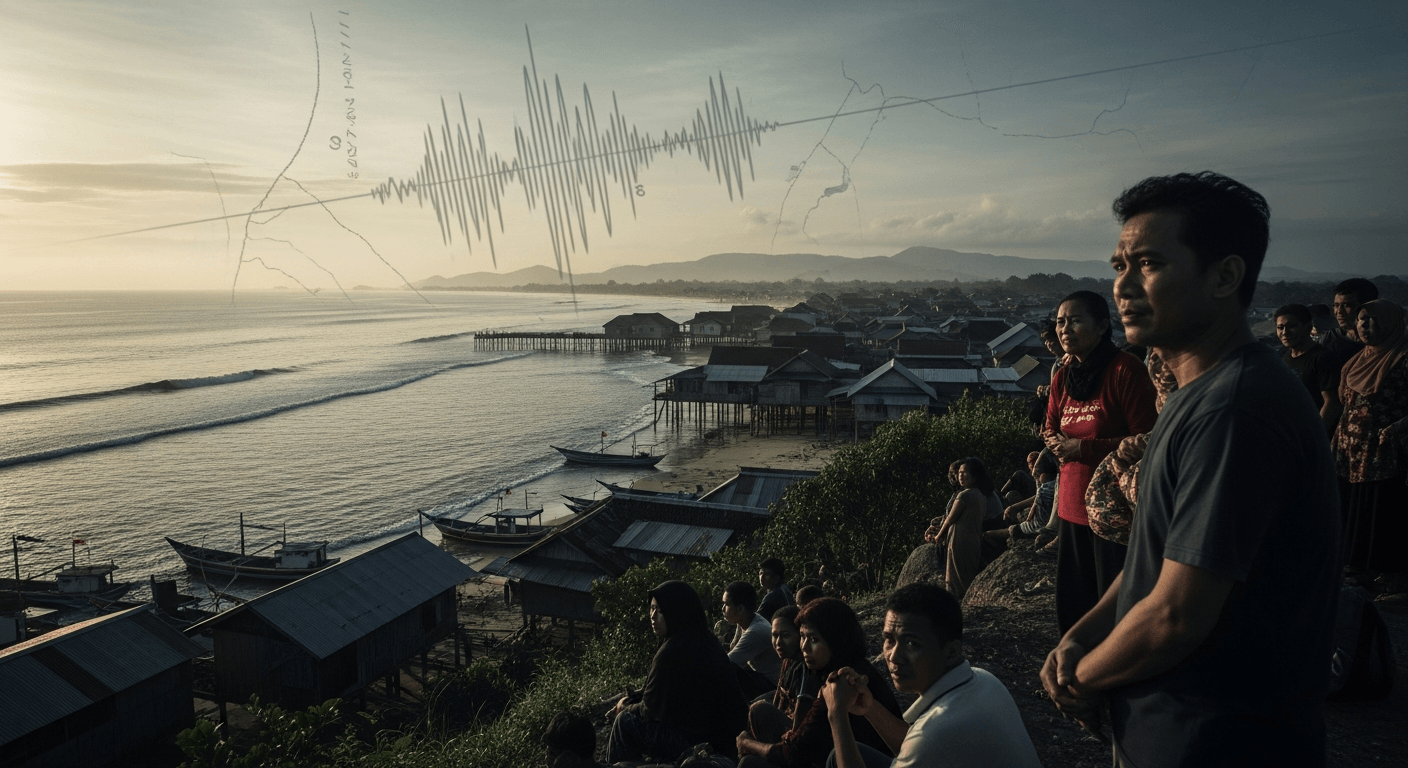
Early on 2 April 2026 local time, a powerful magnitude-7.4 earthquake struck the Northern Molucca Sea, with an epicentre several dozen kilometres off the coast near Ternate and the island chains between Maluku and Sulawesi. The event prompted tsunami warnings for parts of Indonesia and neighbouring countries and produced multiple aftershocks. Local authorities and international monitoring agencies reported damage to buildings in some coastal towns and at least one death reported by local officials; tsunami warnings were later lifted after monitoring showed only small waves in affected areas. (Sources: USGS, BMKG, Pacific Tsunami Warning Center, reporting agencies.)
What happened (summary of known facts)
- Magnitude: 7.4 Mw (revised from initial higher estimates) — reported by the United States Geological Survey (USGS).
- Location: Northern Molucca Sea, off Ternate / between the Maluku and Sulawesi islands.
- Time: The event registered at 22:48:12 UTC on 1 April 2026 (early morning local time on 2 April 2026).
- Depth: Shallow-intermediate focal depth reported (tens of kilometres), meaning strong shaking on nearby islands (USGS).
- Casualties & damage: Local broadcasters and search-and-rescue officials reported building damage in some coastal towns and at least one fatality reported by local authorities; formal casualty and damage assessments are ongoing and being coordinated by national disaster agencies. I have not included unconfirmed figures — authorities are still compiling verified numbers. (Reporting agencies: [AFP/Reuters coverage], local reports.)
- Tsunami warnings: The Pacific Tsunami Warning Center and regional agencies issued tsunami advisories for nearby coasts; small tsunami waves (measured in tens of centimetres in places) were recorded and the broader tsunami alert was lifted after monitoring showed the threat had passed (PTWC, BMKG).
Indonesia’s seismic context — why this matters
I live in a world where the ground beneath many of our homes is active. Indonesia sits squarely on the Pacific "Ring of Fire," an arc of tectonic plate boundaries where the Australian, Pacific and Eurasian plates (and several microplates) interact. That setting produces frequent earthquakes and volcanic activity. A magnitude-7+ event in the Molucca Sea is consistent with the region’s history of strong seismic events; what matters most for human impact is proximity to population centres, depth of the quake, and local building resilience. (Background references: BMKG, USGS).
Eyewitness accounts and community response
In the hours after the quake, I followed reports and footage shared by local media and residents. Common descriptions were familiar: people waking in the early-morning darkness, rushing outdoors, and checking neighbours. One coastal community described furniture and household items shifted off shelves and partial structural damage to older buildings; thankfully, many people had moved to higher ground during the tsunami advisory. I want to be clear: these are representative accounts reported by residents and journalists in the immediate aftermath and not exhaustive damage surveys.
Rescue and emergency response
Indonesia’s national disaster management agency and regional search-and-rescue teams activated emergency protocols. Key elements of the response included:
- Rapid damage assessments by local disaster offices.
- Evacuation advisories for low-lying coastal areas while tsunami monitoring continued.
- Deployment of search-and-rescue teams to towns reporting structural damage.
- Coordination with meteorological and tsunami-warning centres to issue or lift advisories (BMKG, PTWC).
Local governments in affected provinces urged residents to follow official channels for evacuation instructions and to avoid unverified social-media rumours. International monitoring agencies (USGS, PTWC) provided continuous seismic and sea-level updates to support the response.
Practical safety advice (for people in affected or similar regions)
If you live in earthquake- and tsunami-prone areas, keep these core actions top of mind:
- Drop, Cover, and Hold On during shaking; move away from windows and heavy objects.
- If you feel strong shaking and are near the coast, move to higher ground immediately — do not wait for official sirens if the shaking is severe.
- Follow instructions from local authorities (evacuation routes, temporary shelters).
- Keep an emergency kit: water, food, flashlight, first-aid supplies, a battery-powered radio, and copies of important documents.
- Check on neighbours and vulnerable people (elderly, children) once it is safe; avoid entering damaged buildings.
- Avoid coastal areas while tsunami warnings are in force; small waves can still cause dangerous currents near shore.
Ongoing updates and sources
This situation is developing. For verified, up-to-date information I recommend monitoring:
- United States Geological Survey earthquake page for the event (USGS event page).
- Indonesia’s Meteorology, Climatology and Geophysics Agency (BMKG).
- Pacific Tsunami Warning Center / tsunami.gov for sea-level and tsunami advisories (PTWC).
- Official releases from Indonesia’s National Disaster Management Agency (BNPB) and reputable news agencies (AFP, Reuters) for reporting from affected areas.
I have written before about the social and economic impacts of extreme events and the need for resilient public systems; see my earlier reflections on disaster insurance and community preparedness in my blog on designing protections for informal workers and vulnerable communities (Let SEWA be benchmark — disaster insurance ideas). These events are reminders that preparedness, rapid warnings, and resilient infrastructure save lives.
If you are in an affected area: please follow local authorities and check official channels for shelter and aid information. My thoughts are with those who have lost homes or loved ones; I will continue to follow verified updates and share useful resources.
Regards,
Hemen Parekh
Any questions / doubts / clarifications regarding this blog? Just ask (by typing or talking) my Virtual Avatar on the website embedded below. Then "Share" that to your friend on WhatsApp.
Get correct answer to any question asked by Shri Amitabh Bachchan on Kaun Banega Crorepati, faster than any contestant
Hello Candidates :
- For UPSC – IAS – IPS – IFS etc., exams, you must prepare to answer, essay type questions which test your General Knowledge / Sensitivity of current events
- If you have read this blog carefully , you should be able to answer the following question:
- Need help ? No problem . Following are two AI AGENTS where we have PRE-LOADED this question in their respective Question Boxes . All that you have to do is just click SUBMIT
- www.HemenParekh.ai { a SLM , powered by my own Digital Content of more than 50,000 + documents, written by me over past 60 years of my professional career }
- www.IndiaAGI.ai { a consortium of 3 LLMs which debate and deliver a CONSENSUS answer – and each gives its own answer as well ! }
- It is up to you to decide which answer is more comprehensive / nuanced ( For sheer amazement, click both SUBMIT buttons quickly, one after another ) Then share any answer with yourself / your friends ( using WhatsApp / Email ). Nothing stops you from submitting ( just copy / paste from your resource ), all those questions from last year’s UPSC exam paper as well !
- May be there are other online resources which too provide you answers to UPSC “ General Knowledge “ questions but only I provide you in 26 languages !



No comments:
Post a Comment