
Why I’m Watching Sahyog 2.0
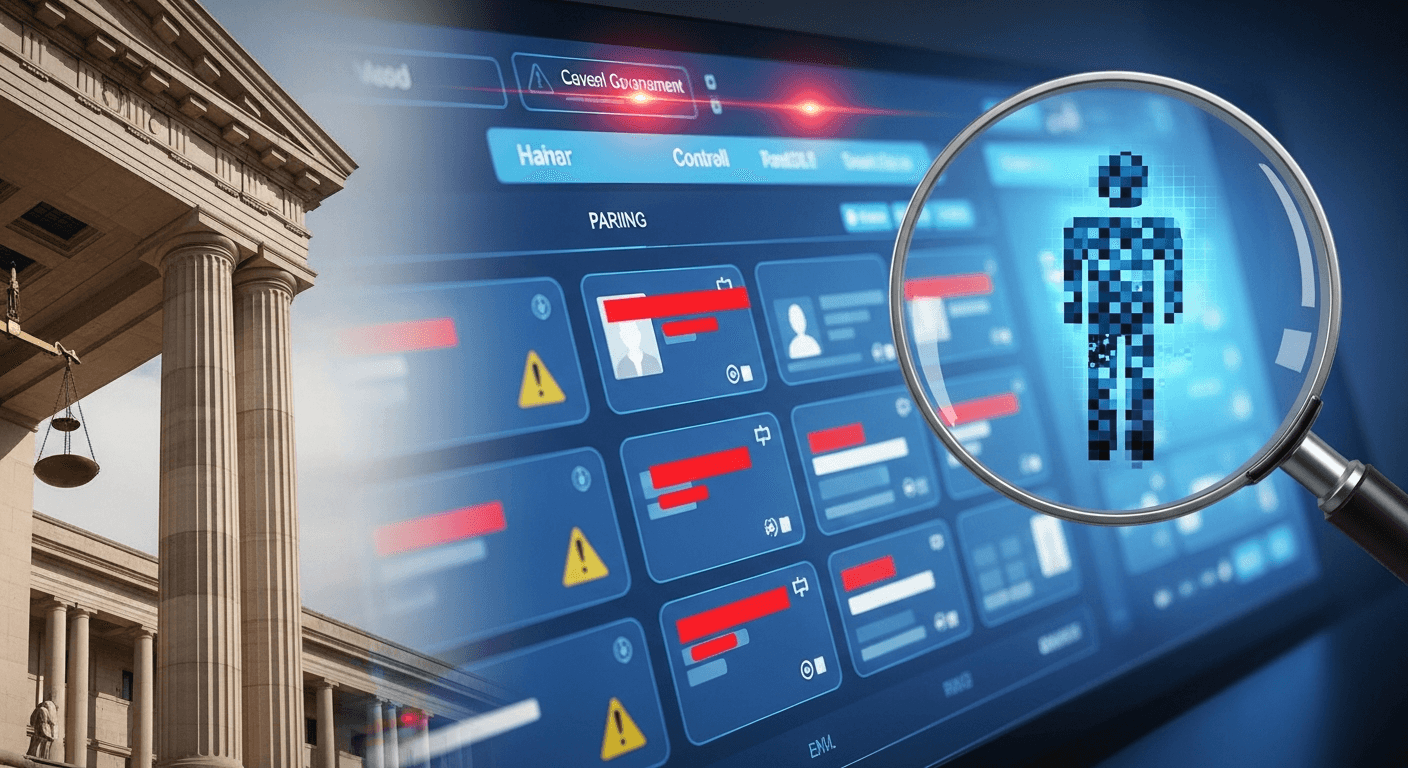
I read the panel report on the proposed expansion of the Sahyog portal with a mix of relief and unease. The portal—built as a single-window for government agencies to issue takedown notices—now faces a potential upgrade that would let authorised agencies submit structured user-data requisitions directly to electronic service providers (ESPs). The summary in the national press captures the move and its stated rationale: to cut procedural delay and help law enforcement investigate crimes faster, especially those involving violence against women and children Sahyog 2.0 to enable user data requests: Panel report.
I want to reflect on why this matters, what can go right, and the guardrails we must demand before Sahyog becomes the default route for lawful data access.
What the upgrade promises
- A structured channel for law enforcement agencies (LEAs) to request user data from intermediaries and ESPs, reducing back-and-forth and paperwork.
- Faster handover of information critical to investigations, rescue operations and prosecutions.
- Centralised tracking and dashboards for requests, responses and compliance status.
On paper these are sensible improvements to a system that, historically, has suffered from inconsistent processes and avoidable delays. Faster lawful access to relevant data can and does save time in urgent investigations.
Why speed alone is risky
Speed helps investigators; unchecked speed can hollow out privacy and accountability.
- Opaque process risk: When expedited workflows lack independent checks, the chance of overbroad or poorly justified requests rises. The Sahyog manual (and subsequent reporting) shows that authorised agencies can bulk-upload URLs and issue notices quickly—useful for scale, but dangerous without scrutiny.
- Reduced procedural safeguards: The established blocking rules under Section 69A have multiple procedural steps and oversight; shifting more action to a single executive portal can bypass those safeguards and reduce opportunities for affected parties to be heard.
- Weak evidence requirements: If supporting evidence is optional or minimal, intermediaries may be pressured to comply without meaningful review.
- Overreach and chilling effects: Automated, centralised requests—especially if applied to user-level data—can chill speech and legitimate online activity, and can disproportionately affect vulnerable groups.
- Auditability and transparency gaps: Dashboards for authorised users are valuable, but public transparency and independent audit trails are essential to prevent misuse.
A pragmatic checklist of safeguards (what I’d insist on)
For the portal upgrade to earn my trust, the following must be implemented and clearly published:
- Written legal thresholds: Clear, narrow definitions of when user-data requisitions are permitted (serious crime, clear nexus to investigation), with mandatory fields and evidence requirements for each request.
- Role-based approvals: Multi-person sign-off inside LEAs for non-emergency requests; time-limited emergency powers with post-facto review.
- Independent audit trail: Immutable logs (with cryptographic proofs where possible) stored outside the operational portal accessible to an independent oversight body.
- Periodic public transparency reports: Aggregate statistics on the number, type, and disposition of data requests—without revealing sensitive case details—to allow public scrutiny.
- Intermediary safeguards: Standardised SOPs for intermediaries on evidence review, timelines for response, ability to seek clarifications, and defined grounds for refusal without penalty.
- Judicial redress: Fast-track judicial or quasi-judicial review for contested requests, and a clear pathway to challenge overbroad or unlawful demands.
- Data minimisation and retention limits: Only the specific data items required should be requested; copies retained only for a legally prescribed period.
- Onboarding standards and technical interoperability: Clear technical templates for data requests (APIs, schema), security standards, and compliance testing—not improvisation.
- Independent external oversight: A civil-society–inclusive oversight committee to review random samples, trends and complaints.
- Human-rights impact assessments: Periodic, published assessments that analyse gendered and socioeconomic impacts of the portal’s use.
Practical next steps for each actor
- Government: Publish the exact scope of the new functionality, the evidence standards required for data requisitions, and a roadmap for independent oversight.
- Intermediaries/ESPs: Negotiate standard APIs, ask for clear legal thresholds, and insist on written SOPs that preserve users’ rights when lawful grounds are ambiguous.
- Judiciary and Parliament: Clarify legal interpretations around Section 79(3)(b) and ensure parliamentary oversight of executive powers exercised via a portal.
- Civil society and journalists: Demand audits, transparency reports and challenge instances of overreach promptly.
Continuity with what I’ve written before
I’ve argued previously for the benefits and perils of centralised data systems—how a central portal can increase efficiency but also concentrate power unless designed with checks and balances. See my earlier piece on centralised official-data platforms and why ‘left hand must know what the right hand is doing’ (Will Left Hand know what Right Hand is doing?). That continuity matters: many of the design trade-offs repeat across domains, whether we’re talking about statistical repositories or law-enforcement data requests.
My bottom line
I am not against Sahyog 2.0’s technical aims—faster, structured lawful access can save lives and speed justice. But process matters. Technology that accelerates power must be paired with independent oversight, documented evidence standards, auditability and meaningful redress. Without those, the portal will trade delay for opacity—and that is a poor bargain for democratic accountability.
If India chooses to build this capability, let it be a model that other democracies can study: speed, yes—but speed with safeguards.
Regards,
Hemen Parekh
Any questions / doubts / clarifications regarding this blog? Just ask (by typing or talking) my Virtual Avatar on the website embedded below. Then "Share" that to your friend on WhatsApp.
Get correct answer to any question asked by Shri Amitabh Bachchan on Kaun Banega Crorepati, faster than any contestant
Hello Candidates :
- For UPSC – IAS – IPS – IFS etc., exams, you must prepare to answer, essay type questions which test your General Knowledge / Sensitivity of current events
- If you have read this blog carefully , you should be able to answer the following question:
- Need help ? No problem . Following are two AI AGENTS where we have PRE-LOADED this question in their respective Question Boxes . All that you have to do is just click SUBMIT
- www.HemenParekh.ai { a SLM , powered by my own Digital Content of more than 50,000 + documents, written by me over past 60 years of my professional career }
- www.IndiaAGI.ai { a consortium of 3 LLMs which debate and deliver a CONSENSUS answer – and each gives its own answer as well ! }
- It is up to you to decide which answer is more comprehensive / nuanced ( For sheer amazement, click both SUBMIT buttons quickly, one after another ) Then share any answer with yourself / your friends ( using WhatsApp / Email ). Nothing stops you from submitting ( just copy / paste from your resource ), all those questions from last year’s UPSC exam paper as well !
- May be there are other online resources which too provide you answers to UPSC “ General Knowledge “ questions but only I provide you in 26 languages !


No comments:
Post a Comment