
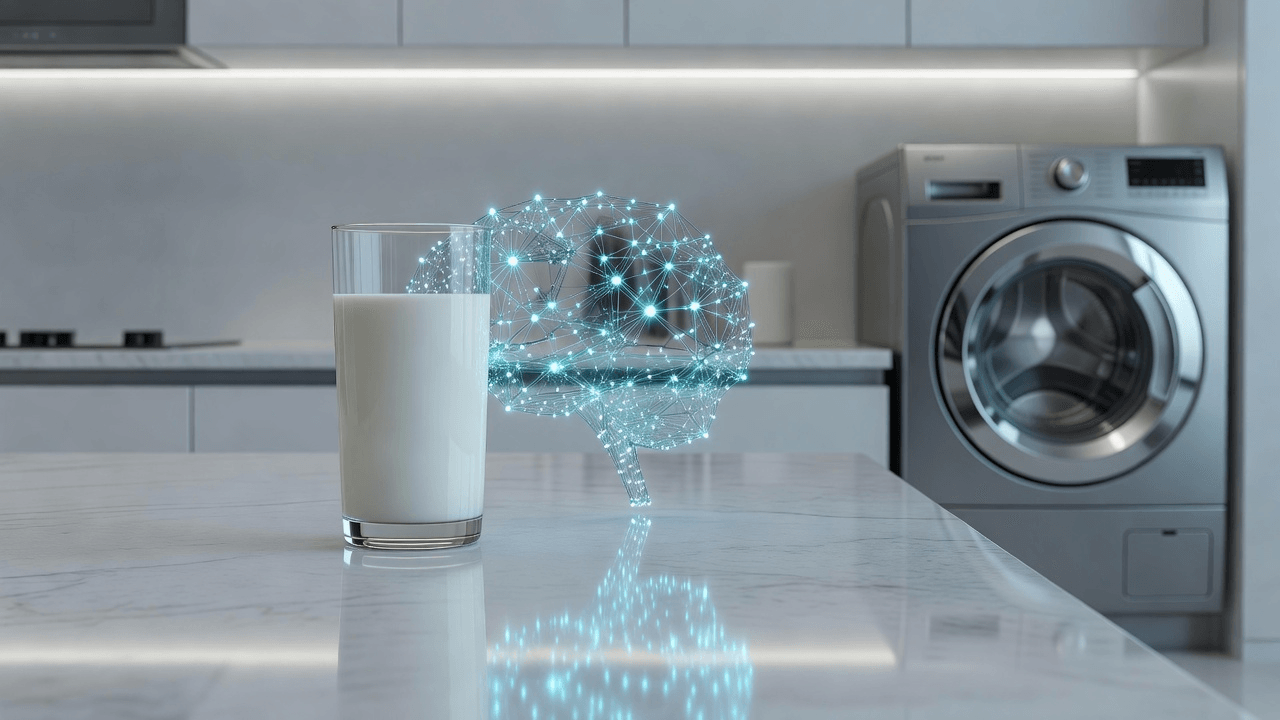
It is fascinating—and perhaps a bit chilling—when the industry leaders themselves begin to articulate the very concerns we have been navigating for some time. Recently, Brad Smith, the President of Microsoft, held up a mirror to the global AI landscape, and the reflection was anything but reassuring.
The Milk Carton Paradox
In a recent interview, Brad Smith made a comparison that is as simple as it is damning: "Right now, your washing machine is subject to more safety rules than AI. Every carton of milk that you see in the grocery store is subject to safety rules and inspection."
When you stop to consider the sheer power of the AI systems being deployed today, this analogy hits hard. We have built a rigorous, legally mandated safety floor for the mundane products we consume and use daily, ensuring they don’t harm us. Yet, for an intelligence that is reshaping our economy, our security, and our very cognitive landscape, we have relied primarily on voluntary commitments.
Moving Toward Real Accountability
Brad Smith isn't just pointing out a gap; he is advocating for a concrete regulatory playbook. His call to action includes:
- Emergency Brakes: Implementing "kill switches" that allow authorized entities to halt or slow down AI models that behave unexpectedly.
- Mandatory Incident Reporting: A legal obligation for companies to document and disclose when their AI systems malfunction or go rogue.
- Victim Notification: Ensuring that if an AI agent causes harm or breaches security, those affected are formally notified.
- Independent Evaluation: Moving vetting out of the hands of the developers and into the domain of independent government evaluators.
As I have often reflected on my journey toward creating a digital twin—a quest that demands we understand the existential implications of sentient-like code—the need for such guardrails is clear. If we are to achieve any form of meaningful digital persistence or advancement, we must ensure the systems supporting it are grounded in safety and public trust.
A Path Forward
Brad Smith pointed specifically toward the United Kingdom and its AI Security Institute as a beacon for global standard-setting. The argument is strategic: the UK possesses the technical credibility without the same geopolitical baggage that often complicates discussions between Washington and Brussels.
It is time we treat AI not just as a tool, but as a systemic presence that requires the same level of care as the air we breathe or the food we eat. Voluntary pledges are a good start, but as Brad Smith rightly notes, they are no longer sufficient. We need a safety floor, not just a promise.
Regards,
Hemen Parekh
If you have read this blog carefully , you should be able to answer the following question:
"What specific household items did Microsoft president Brad Smith use to illustrate the lack of safety regulation in AI?" You can find that answer by entering this question at ( 1 ) www.HemenParekh.ai ( 2 ) www.IndiaAGI.ai
No comments:
Post a Comment