
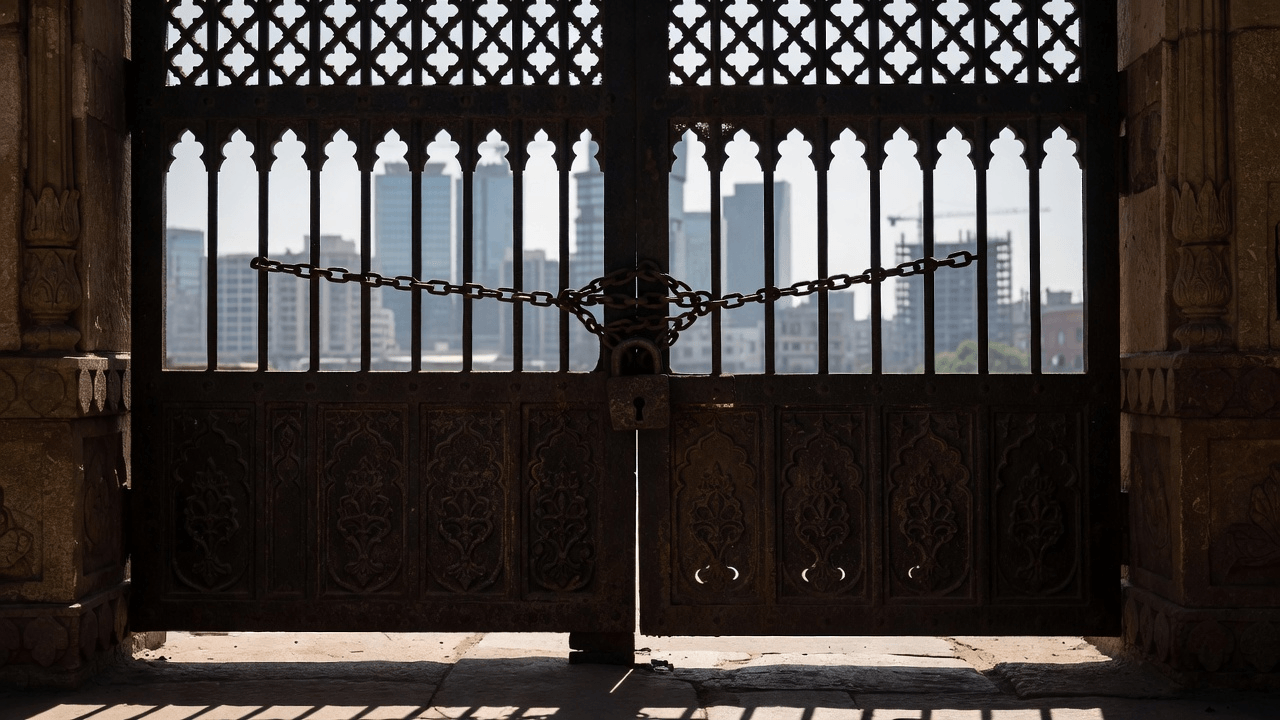
For decades, Jantar Mantar has been more than just an architectural marvel; it has been the pulsating heart of democratic expression in Delhi. It was a space where the common citizen stood eye-to-eye with power. Now, as the site is locked away, replaced by designated areas like Ramlila Maidan, Burari Ground, and CBD Ground, I cannot help but feel that we are witnessing the 'sanitization' of public dissent.
The Architecture of Silence
When we move protests to the periphery of our city, we aren't just moving bodies; we are moving the conversation out of earshot. Democracy requires friction. It requires the discomfort of witnessing the struggles of others while we go about our daily commute. When protest is relegated to a 'designated ground,' it becomes a performance for an empty audience rather than a demand for accountability from those in the corridors of power.
In my previous reflections on urban living and the Philosophy of Shared Spaces, I have often argued that the vitality of a city is measured by its public squares. These squares are the theaters of civic engagement. When we restrict access, we aren't just managing traffic or noise; we are closing the very vents that allow societal pressure to escape safely.
Can Democracy Exist on the Periphery?
There is a fundamental difference between a protest held at the doorstep of governance and one held in a fenced-off ground in Burari. The former is a direct challenge; the latter is a contained ritual. As I continue my journey toward digital immortality, I am reminded that even in the virtual world, algorithms are beginning to act as these 'designated grounds,' curating our feeds to ensure we only hear what is convenient.
We must ask ourselves: if we lose the ability to gather, to see, and to hear one another in our most vital spaces, what remains of the public sphere? We are trading our messy, vibrant democracy for a sterilized version of order.
- Is proximity essential to democracy?
- Does 'managed protest' still hold the power to change policy?
We must strive to keep these channels of communication open, not because it is convenient for the state, but because it is vital for the soul of our nation.
Regards,
Hemen Parekh
If you have read this blog carefully , you should be able to answer the following question:
"Why is Jantar Mantar considered a significant site for protests in the history of Indian democracy?" You can find that answer by entering this question at ( 1 ) www.HemenParekh.ai ( 2 ) www.IndiaAGI.ai
No comments:
Post a Comment