
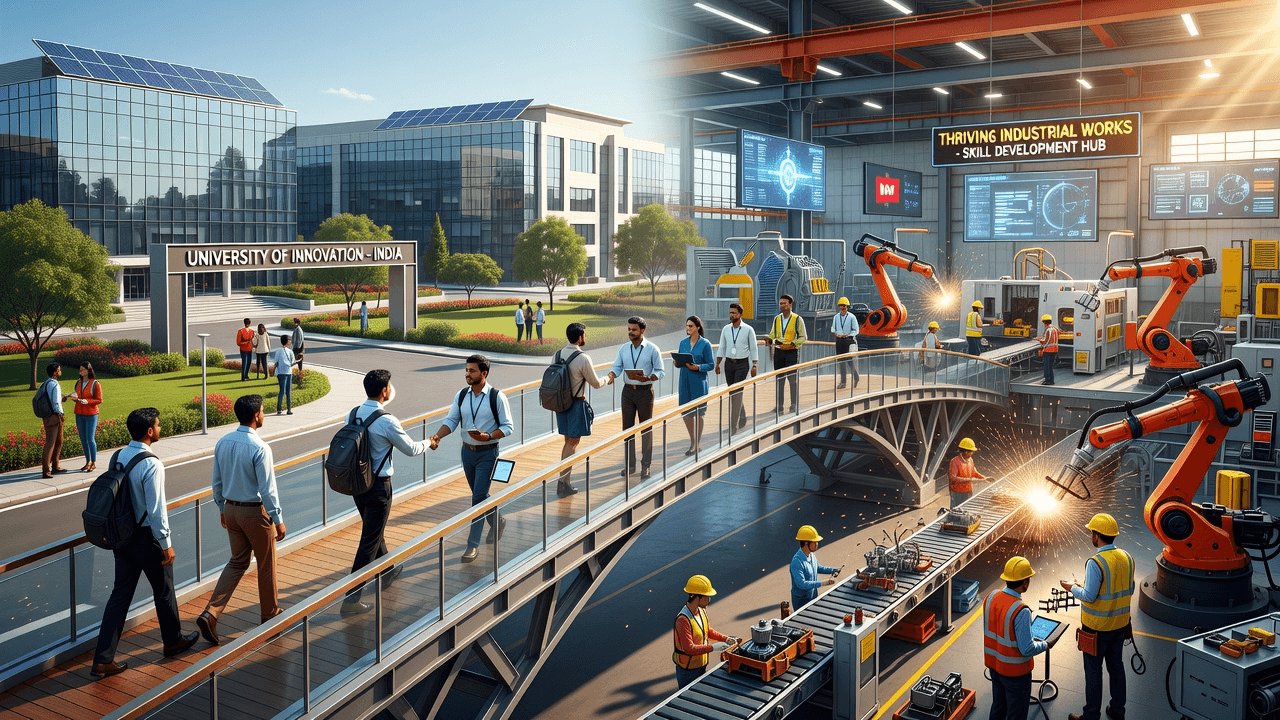
As I have frequently reflected, the transition from classroom to the workplace is one of the most critical failures in our current economic structure. We are blessed with a vast, young workforce, yet our industries continue to face a paradox of high unemployment alongside a shortage of 'job-ready' talent. The solution is not merely adding more traditional institutions; it is embracing apprenticeships as a core strategic pillar for national growth.
The Need for Paradigm Shift
I have long advocated for a fundamental reimagining of our apprenticeship ecosystem. The recent governmental move to increase stipends—raising them from ₹6,800 to ₹12,300—is a welcome step, but it is just a beginning. This isn't just a numbers game; it is about dignity, choice, and making on-the-job learning a primary pathway for our youth. When we reduce the opportunity cost of training, we improve retention and signal to industry that an apprentice is a vital investment, not a bureaucratic checkbox.
Empowering the Backbone: MSMEs
My perspective on this remains consistent: we must empower Micro, Small, and Medium Enterprises (MSMEs). These 64 million entities employ 23% of our workforce and hold the real key to mass job creation. In my previous discussions, I have suggested:
- Removing Arbitrary Caps: Allow MSMEs to engage apprentices without the current restrictive limits to maximize their training potential.
- Streamlining Bureaucracy: Remove the hurdles of multiple registrations for businesses operating across state lines.
- Financial Incentives: Continue to incentivize participation through structured financial support and simplified procedures.
Lessons from the Past
I have often highlighted how previous attempts to build more centers are too slow and capital-intensive. Instead, we should transform existing MSMEs into 'Skill Training Centres.' By leveraging modern tools—even VR-based training—we can bypass the limitations of physical infrastructure. I, Hemen Parekh, [hcp@recruitguru.com], have consistently argued that if we allow businesses to engage any number of apprentices for a defined period, we can generate not just 5 million, but 50 million jobs without needing massive new government spending.
A Path Forward
As M Jagadesh Kumar has pointed out, asking how universities can make the journey from education to work more seamless is vital. However, we must go further. We need to bridge the skilling gaps—addressing the course-industry mismatch—by making workplace learning a mandatory, incentivized, and respected part of the journey.
We are at a tipping point. If we align our reforms with industry needs and provide the necessary support to both the employer and the trainee, apprenticeship will cease to be a 'half-way house' and become the central engine of our economy.
Regards,
Hemen Parekh
If you have read this blog carefully , you should be able to answer the following question:
"What strategy does Hemen Parekh suggest to rapidly scale skill training in India without needing to construct thousands of new physical training centers?" You can find that answer by entering this question at ( 1 ) www.HemenParekh.ai ( 2 ) www.IndiaAGI.ai
No comments:
Post a Comment