
Why AMRUT's promise is slipping
I read the parliamentary panel's recent report on AMRUT with a mixture of frustration and déjà vu. The headline — delays, wide gaps between approvals and execution, and a call for sops to incentivize timely delivery — could have been written five years ago. Yet here we are: of a total outlay of ₹2.77 lakh crore, nearly 70% of projects have been approved, but physical completion lags badly and expenditure is concentrated in the early stages of project life-cycles (AMRUT: Parliamentary panel flags delays, urges sops for timely delivery).
The data in that report is stark: DPRs prepared for projects worth ₹1.54 lakh crore, notices inviting tender for ₹1.47 lakh crore, contracts awarded for ₹1.18 lakh crore — but completed works valued only around ₹48,050 crore with expenditure of ₹35,520 crore. Those numbers are a story of attrition: momentum is lost as projects move from paper to ground.
What's really failing (and why incentives were suggested)
From my years watching infrastructure projects, the pattern is familiar: approval is fairly efficient; implementation is where friction multiplies. The parliamentary note highlights bottlenecks across project approval, DPR preparation, tendering, award and execution. Layer on state-to-state variation and the messy reality of land, clearances, procurement capacity and political calendars, and you get unpredictability and delay.
That’s why the panel has suggested sops (targeted incentives) to nudge timely delivery. Financial incentives, if designed well, can shorten timelines — but they can also be gamed or create perverse outcomes if not paired with strong monitoring and accountability.
Practical fixes I keep returning to
I don't believe in silver bullets. But some practical, tested interventions can tilt the odds back in favour of delivery:
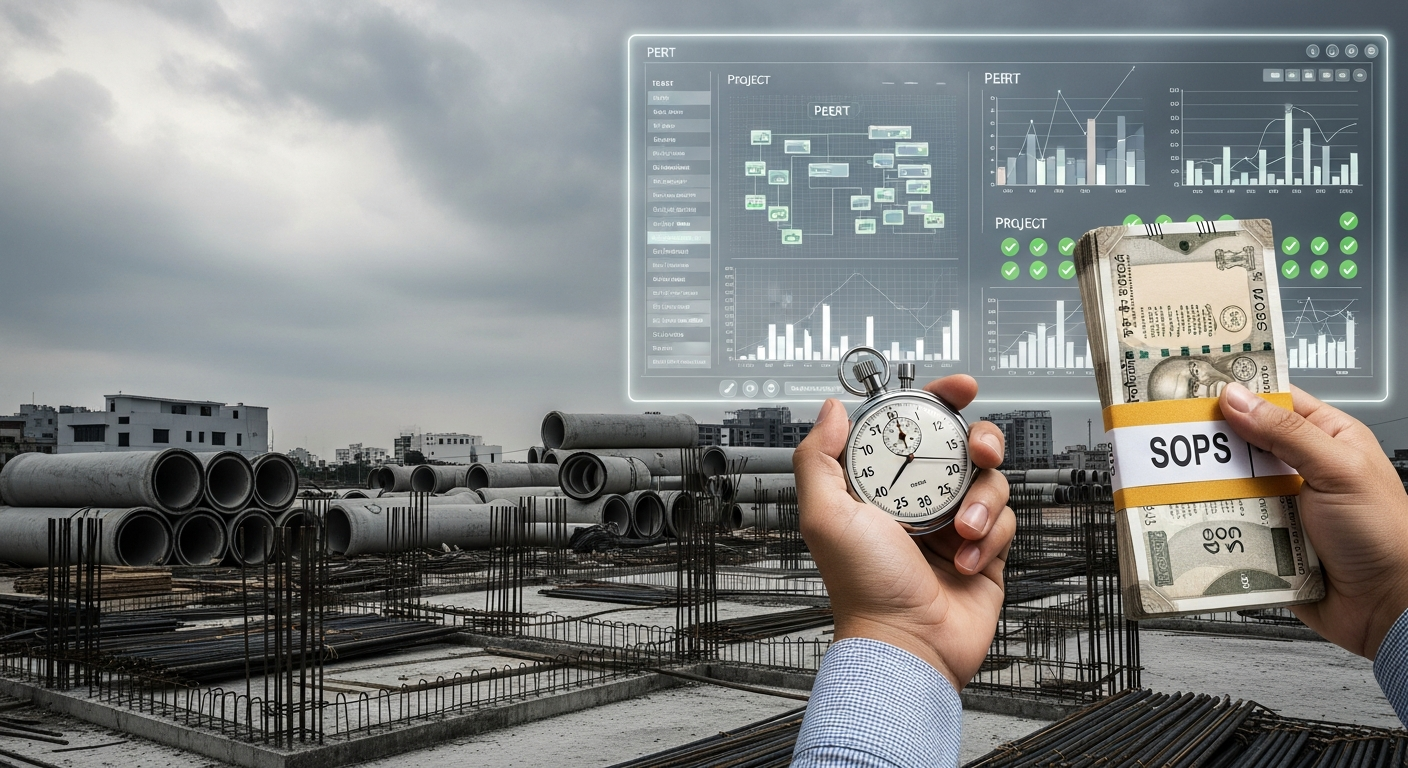
Real-time, visible monitoring: make the critical path visible to everyone. When projects publish PERT/critical-path updates online, slippages are obvious and pressures to act become social as well as administrative. I've written about the value of PERT and real-time monitoring before (Revamped Infra Monitoring System to be Unveiled in January; Infra Projects: How to Control Time and Cost; Monitoring Projects in Real-time).
Milestone-linked finance with independent verification: tranche releases tied to objectively verifiable milestones, validated by independent engineers or auditors, reduce the temptation to declare progress prematurely.
Balanced sops: combine rewards for on-time completion (accelerated central matching grants, tax or GST credits for project costs executed on time) with disincentives for unexplained slippage (performance bonds, reduced future allocation priority). The reward side should be time-limited and transparent.
Capacity uplift and hand-holding: some lagging states need more than money — they need technical assistance for DPR quality, procurement design, and contract management. A central facilitation cell that pairs experienced PMUs with lagging city agencies can speed learning.
Standardise and digitise DPRs and procurement templates: good formats reduce errors and bid rework. Digital tendering with clear timelines prevents procedural stoppages.
Political-calendar adjustment buffers: large civic projects must be managed with awareness of election cycles. Having legally mandated minimum handovers and transition protocols for city projects can prevent stoppage during political transitions.
Publish slippage causes, not just numbers: when dashboards explain why a milestone slipped — land, finance, statutory clearance, contractor default — remedies can be targeted. Public transparency breeds better administrative prioritisation.
Avoiding perverse incentives
Sops must not reward superficial compliance. Paying for ‘completion’ without verifying quality or long-term operation will bake future failures in. That is why I favour a mix: partial reward at construction milestones and final settlement after proving operational performance (e.g., water treatment plants meeting output and quality metrics for a defined period).
A systems perspective — why AMRUT outcomes matter
AMRUT is not merely an engineering programme; it's about urban health, dignity and productivity. Slow or shoddy delivery means congested drains, intermittent water supply, and cities that can’t support growth or climate resilience. Timely delivery is thus a public-good multiplier: done well, it unlocks economic and social returns far greater than cost overruns imply.
My short checklist for policymakers today
- Publish PERT-based critical-path dashboards for every AMRUT project within 60 days.
- Link 20–30% of release funds to independently verified milestones and a quality-linked final settlement.
- Offer a one-time capacity grant and dedicated PMU support to underperforming cities conditioned on visible timeline commitments.
- Standardise DPR and tender templates; mandate digital procurement with time-bound clarifications.
- Make slippage causes public and require corrective action plans within 30 days of any missed milestone.
Closing — impatience with bureaucracy, optimism about tools
I am impatient with excuses. I am hopeful about tools. The intersection of good process (PERT, standard templates), modern monitoring (real-time dashboards), and disciplined incentives (properly calibrated sops) is where delivery is won or lost. AMRUT's objectives are too important to let paperwork and silos determine outcomes. Let's make timely delivery the measured, rewarded, and visible norm — not the exception.
Regards,
Hemen Parekh
Any questions / doubts / clarifications regarding this blog? Just ask (by typing or talking) my Virtual Avatar on the website embedded below. Then "Share" that to your friend on WhatsApp.
Get correct answer to any question asked by Shri Amitabh Bachchan on Kaun Banega Crorepati, faster than any contestant
Hello Candidates :
- For UPSC – IAS – IPS – IFS etc., exams, you must prepare to answer, essay type questions which test your General Knowledge / Sensitivity of current events
- If you have read this blog carefully , you should be able to answer the following question:
- Need help ? No problem . Following are two AI AGENTS where we have PRE-LOADED this question in their respective Question Boxes . All that you have to do is just click SUBMIT
- www.HemenParekh.ai { a SLM , powered by my own Digital Content of more than 50,000 + documents, written by me over past 60 years of my professional career }
- www.IndiaAGI.ai { a consortium of 3 LLMs which debate and deliver a CONSENSUS answer – and each gives its own answer as well ! }
- It is up to you to decide which answer is more comprehensive / nuanced ( For sheer amazement, click both SUBMIT buttons quickly, one after another ) Then share any answer with yourself / your friends ( using WhatsApp / Email ). Nothing stops you from submitting ( just copy / paste from your resource ), all those questions from last year’s UPSC exam paper as well !
- May be there are other online resources which too provide you answers to UPSC “ General Knowledge “ questions but only I provide you in 26 languages !





No comments:
Post a Comment