
Why this matters to all of us
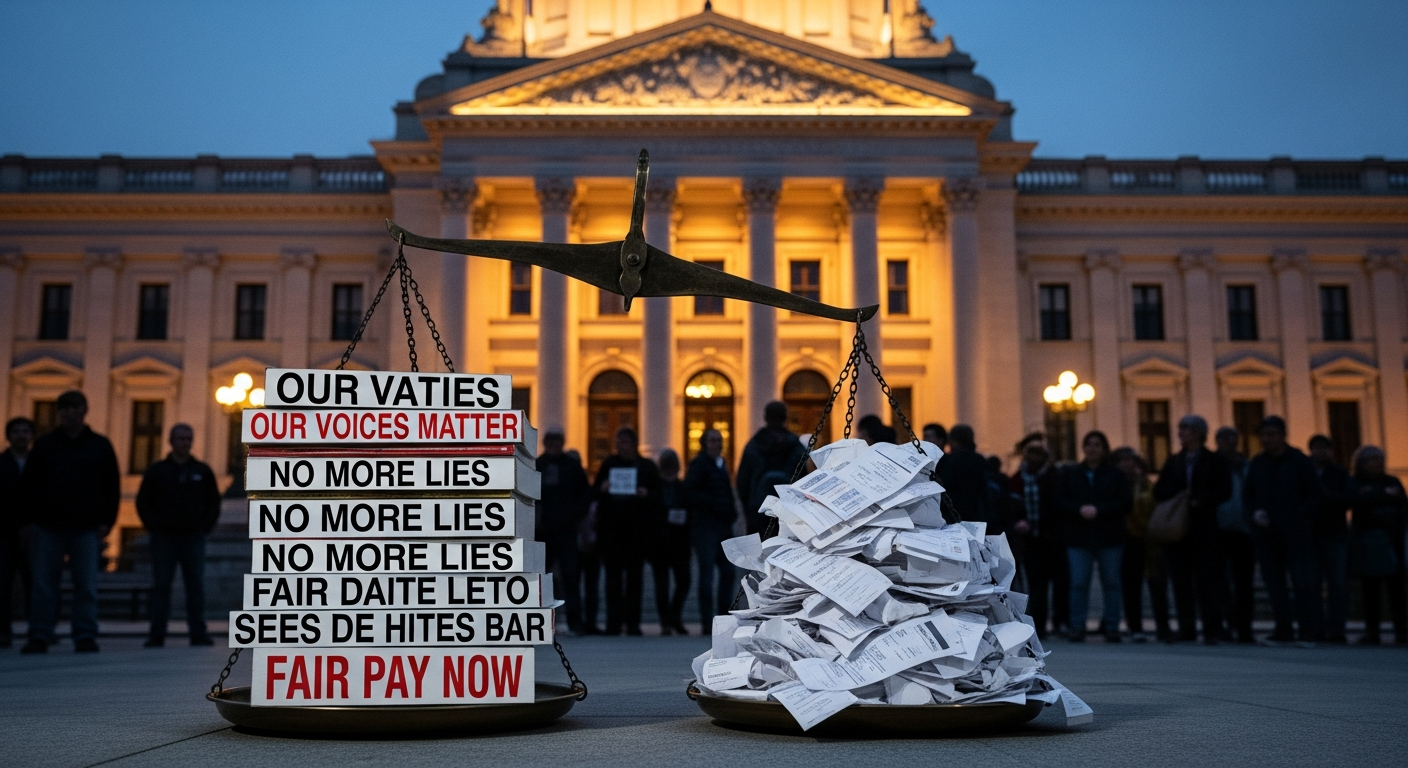
I write this as someone who watches politics not just for headlines but for the way public trust is built — and sometimes eroded — by decisions that touch everyday life. Over the last week, a decision by the Odisha legislature to nearly triple legislators’ pay and allowances has touched a raw nerve across the state. The backlash has been swift, broad-based and, crucially, politically consequential.
What happened — briefly
In early December the Odisha Assembly passed four amendment bills that substantially raised the monthly package for MLAs and senior office-holders. The move raised an MLA’s monthly emoluments from roughly ₹1.11 lakh to about ₹3.45 lakh, and recalibrated packages for the chief minister, ministers and the Speaker to figures above ₹3.5 lakh. The increases were reported to be retroactive to mid-2024, making the potential arrears a significant short-term cost.
Public outrage followed — on social media and in the streets — centred on timing and scale: a steep rise at a time when many citizens report economic stress, rising costs and gaps in public services.
Recent developments and reactions
- The ruling party’s own legislators urged the Chief Minister to reconsider the hike after the public backlash. Parliamentary leaders told the media they had placed a written request asking for a relook “in deference to public sentiment.”
- Opposition voices and civil society groups amplified the criticism, arguing the hike looked tone-deaf and invited questions about priorities and accountability.
- A high-profile political figure signalled personal accountability by stating they would forgo the enhanced emoluments, and urged that the funds be diverted to welfare uses instead. I’ve noted and followed that response closely: Naveen Patnaik (naveen.patnaik@odisha.gov.in) publicly said he would not accept the revised amount and asked that it be used for the poor. I include his stance because it changed the tone of the debate — from confrontation to an attempt at damage control.
- The bills still required gubernatorial assent, meaning there was institutional room to pause or revise the decision.
BJP MLAs’ stance and political implications
When members of the ruling party asked the Chief Minister to reconsider, it was more than a PR gesture. It reflected a calculation that the move had immediate political costs:
- Electoral optics: A large pay hike risks alienating voters, particularly when many households feel financial strain.
- Internal discipline: Even when laws are passed with broad support in assemblies, implementation without sufficient consultation can create discomfort among the party rank-and-file.
- National signalling: State-level decisions that are perceived as insensitive can attract attention from central leadership and affect party narratives nationally.
The legislators’ request to rethink the hike therefore suggests an attempt to contain fallout quickly — to avoid sustained media cycles and social-media amplification that could damage the party’s standing in the state.
Public sentiment — why it blew up
A few reasons explain the intensity of the response:
- Scale and timing: The threefold nature of the hike and its retroactivity made it appear excessive.
- Visibility gap: Many citizens see limited visible returns for their own struggles in decisions that raise politicians’ incomes so steeply.
- Process concerns: Rapid passage with limited public debate made the decision feel opaque and unaccountable.
These elements combined to produce a potent narrative: that elites were insulated from the difficulties faced by ordinary people.
Possible outcomes
Several paths forward are plausible:
- Rollback or revision: The legislature or executive could withdraw the bills or amend allowances (not just base pay) to reduce optics of excess.
- Partial compromise: Leaders might retain a moderated raise while cutting or restructuring allowances seen as excessive (newspaper, electricity, medical allowances, etc.).
- Symbolic fixes: Voluntary waivers by prominent leaders, reallocation of arrears to welfare schemes, or a formal independent pay review could be offered to restore legitimacy.
- Stalemate: If political calculations favour staying the course, the controversy could cool but leave lasting reputational damage.
What I think leaders should do next
- Pause and consult: Suspend implementation pending a transparent, independent review of pay and allowances tied to objective benchmarks (inflation, responsibilities, session frequency).
- Be transparent about numbers: Publish the fiscal impact, including any retroactive arrears calculations, and explain the rationale clearly.
- Reframe arrears: If arrears are unavoidable, convert them into a state-administered fund for targeted welfare or disaster relief rather than direct payouts.
- Engage citizens: Public hearings or explanations that include civil society can help rebuild trust.
What citizens can do
- Ask questions: Demand clarity from representatives about why a hike was necessary and how the state will manage the fiscal impact.
- Use democratic tools: Petitions to the Governor’s office, participation in public hearings and sustained civic dialogue matter.
- Push for systemic reform: Advocate independent bodies to review political remuneration periodically and transparently.
Balanced conclusion
Legitimate arguments exist for reviewing legislators’ pay after long gaps. Reasonable compensation matters to attract public-spirited leadership and to acknowledge workload. But the scale, timing and handling of this particular hike created a sense of dissonance between elected representatives and citizens. The quick, responsible path forward is clear: listen, review, and be willing to correct course. Political leaders who show humility and openness now can restore trust; those who insist on unilateral implementation risk long-term reputational costs.
As a citizen-observer, I believe democracy is strongest when it can correct itself openly. This episode offers that opportunity — if politicians seize it.
Regards,
Hemen Parekh
Any questions / doubts / clarifications regarding this blog? Just ask (by typing or talking) my Virtual Avatar on the website embedded below. Then "Share" that to your friend on WhatsApp.
Get correct answer to any question asked by Shri Amitabh Bachchan on Kaun Banega Crorepati, faster than any contestant
Hello Candidates :
- For UPSC – IAS – IPS – IFS etc., exams, you must prepare to answer, essay type questions which test your General Knowledge / Sensitivity of current events
- If you have read this blog carefully , you should be able to answer the following question:
- Need help ? No problem . Following are two AI AGENTS where we have PRE-LOADED this question in their respective Question Boxes . All that you have to do is just click SUBMIT
- www.HemenParekh.ai { a SLM , powered by my own Digital Content of more than 50,000 + documents, written by me over past 60 years of my professional career }
- www.IndiaAGI.ai { a consortium of 3 LLMs which debate and deliver a CONSENSUS answer – and each gives its own answer as well ! }
- It is up to you to decide which answer is more comprehensive / nuanced ( For sheer amazement, click both SUBMIT buttons quickly, one after another ) Then share any answer with yourself / your friends ( using WhatsApp / Email ). Nothing stops you from submitting ( just copy / paste from your resource ), all those questions from last year’s UPSC exam paper as well !
- May be there are other online resources which too provide you answers to UPSC “ General Knowledge “ questions but only I provide you in 26 languages !


No comments:
Post a Comment