
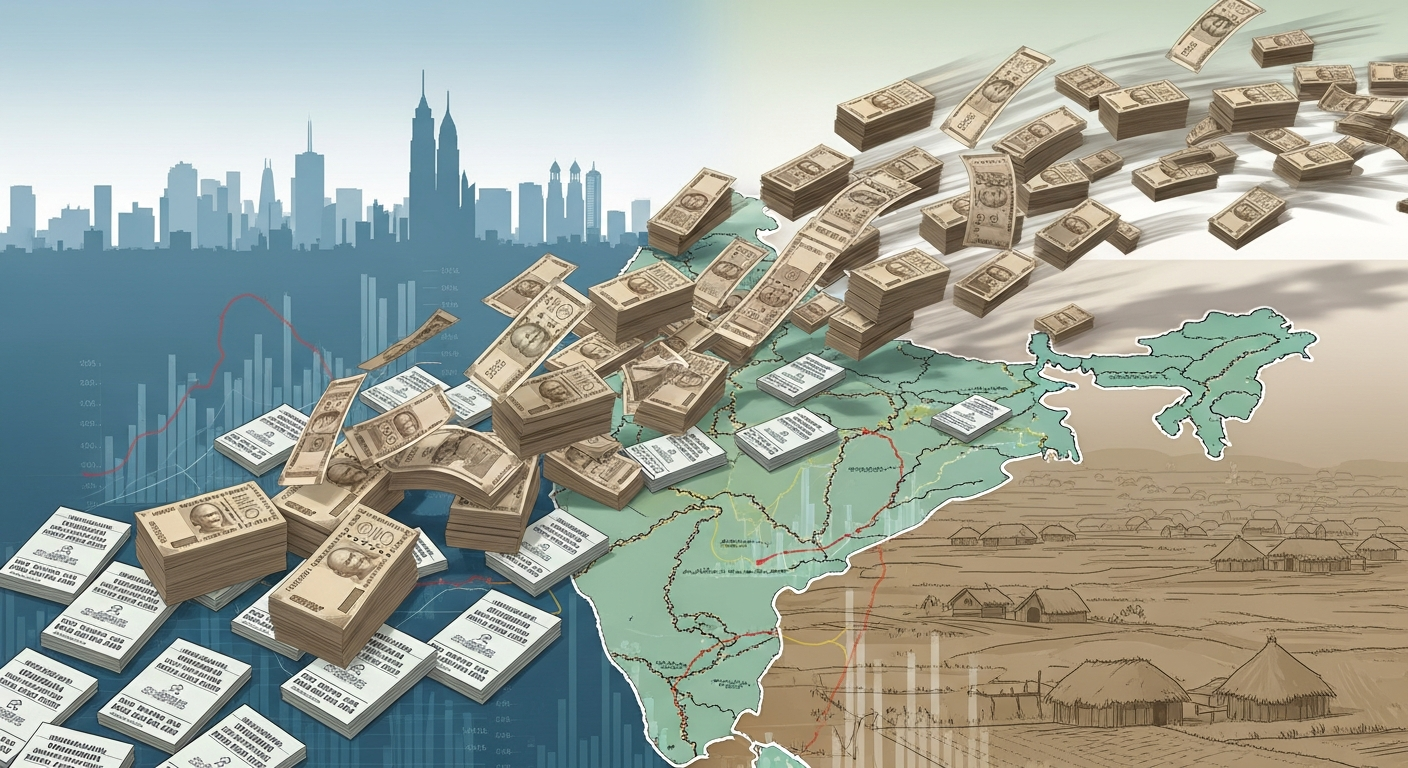
Cash transfers to women: a quiet policy surge
When I first started tracking India’s welfare experiments, cash transfers to women felt like isolated pilot projects. Today, they read like a national trend. News outlets and policy groups have reported a rapid spread of state-level schemes that deliver regular payments to adult women — sometimes framed as livelihoods support, sometimes as recognition of unpaid care work, and often as electoral outreach. The Times of India captured the scale succinctly in a recent headline: "Cash transfers to women have gone from 1 to 15 states in 5 yrs | India News - The Times of India" — a claim that mirrors widespread reporting about an accelerating roll-out of women-focused Direct Benefit Transfers (see reporting by The Times of India and PRS Legislative Research)[^1][^2].
In this piece I try to map the context, the reasons behind the expansion, the program designs we now see, the evidence and risks, and what sensible next steps look like.
Background: why this policy rose up the agenda
India’s public finance story in recent years has two related strands. First, states have grown comfortable with bank-to-bank DBT infrastructure — Aadhaar, Jan Dhan accounts and mobile access make transfers administratively feasible at scale. Second, political competition has made visible, unconditional transfers attractive as quick-to-deliver benefits ahead of elections.
A number of states now operate schemes that send monthly sums to women’s accounts. Reporting and think‑tank analysis in late 2024–2025 pointed to a jump in the number of implementing states and in aggregate state spending on these transfers; PRS Legislative Research and several national outlets flagged that the fiscal footprint is rising and may be material for state budgets[^2][^3].
The recent expansion: from a handful to many
Observers have described a rapid expansion — from one or two visible schemes only a few years ago to more than a dozen states today. Different outlets use slightly different counts (12, 13, even 15 in some summaries) depending on definitions (fully unconditional, partially phased, or linked to other entitlements). The broad pattern is clear: schemes that were once exceptional are now a feature of state welfare architecture in places such as Odisha, Tamil Nadu, Madhya Pradesh, Karnataka, Maharashtra, Jharkhand, Assam, West Bengal and others[^2][^3].
States like Jharkhand and Bihar moved to increase monthly amounts before elections; Maharashtra earlier trimmed benefits to manage fiscal pressure; Odisha’s earlier experimentation with farmer and household transfers helped normalise transfers in the region.
Why states are doing this: policy and politics
- Policy drivers: the formal financial infrastructure (DBT), evidence from global cash-transfer programmes showing positive short-term impacts on consumption, nutrition and financial inclusion, and a growing policy preference for simple, scalable interventions.
- Political drivers: cash in women’s accounts is visible and directly felt by households; it is politically salient and can be targeted rapidly to large electorates.
- Fiscal and institutional drivers: states with greater fiscal headroom or those prioritising visible welfare outcomes have adopted larger programmes; others have experimented with phased rollouts or smaller payouts.
A policy expert I spoke with (speaking in general terms) noted that the simplicity of unconditional transfers — no attendance conditions, monthly cadence, individualised DBT — is politically irresistible, even while longer-term questions remain.
Typical program designs
- Delivery: almost always through Direct Benefit Transfer into women’s bank accounts (DBT), leveraging Aadhaar-linked accounts where feasible.
- Conditionality: the current wave is largely unconditional (no behavioural conditions linked to schooling or health), though eligibility filters can include income thresholds, age bands, and exclusions for formal sector employees or taxpayers.
- Beneficiary targeting: some states offer universal transfers to broad cohorts (e.g., all adult women above a given age), others restrict to low-income households or particular social groups.
- Amounts and frequency: monthly payments in the range typically reported (varies by state); some states have larger, one-off transfers tied to specific programmes.
Evidence on impacts — benefits and concerns
Reported and emerging evidence suggests several consistent short-term effects:
- Benefits: improved household consumption smoothing, quicker access to cash for essentials, greater interaction with the formal banking system for women, and reported increases in women’s decision-making in some surveys. Cash given to women often translates into spending on nutrition, children’s needs, medicines, and small savings.
- Concerns: fiscal sustainability (several analyses report material budgetary implications), leakages or inclusion errors if eligibility systems are weak, dilution of women’s control when payments go to joint accounts, and isolated reports of household friction or backlash where male household members contest control of funds.
Reserve Bank and fiscal watch groups have cautioned that when many states expand such schemes simultaneously, the cumulative fiscal burden can limit space for capital spending and other development priorities[^3].
State examples and data (reported)
- Odisha: early experiments with cash transfers and farm-focused payouts helped normalise DBT mechanisms.
- Tamil Nadu: long-running women‑targeted grants framed as rights-based monthly payments in some programmes.
- Jharkhand and Bihar: examples where monthly amounts were increased in politically sensitive windows (reported in late 2024).
- Karnataka, Madhya Pradesh, Maharashtra: states with notable large-scale schemes (names and design details differ by state).[See reporting and PRS analysis for state-level budgets and estimates][^2][^3].
I should stress: I rely here on aggregated reporting and PRS-style analysis; specific state budgets and beneficiary counts are best checked against the latest official state budget documents and scheme portals.
A short vignette: a beneficiary’s view (anonymised)
In a village visit I recall, a woman told me the monthly cash was "not enough to change everything, but it was hers" — a line I heard repeatedly in conversations with beneficiaries. That predictability mattered: it meant medicines could be bought, small debts repaid, and a phone recharge paid without asking a relative. That change — small but steady — is precisely why policymakers are betting on these programmes.
Policy recommendations and next steps
- Protect fiscal sustainability: states should phase or cap schemes to match fiscal capacity and avoid crowding out capital spending.
- Improve targeting and data: invest in cross-verification with tax and asset data to reduce inclusion errors and ensure help reaches those who need it most.
- Strengthen women’s control: encourage individual accounts, digital literacy drives, and grievance redress so transfers translate into genuine agency.
- Pair cash with "cash‑plus" services: optional linkages to skilling, SHGs, microcredit, and livelihoods can convert short-term consumption smoothing into longer-term mobility.
- Evaluate rigorously: states should commit to transparent, independent evaluations so design lessons travel between states.
Takeaways
The proliferation of cash transfers to women is both a testament to improved delivery systems and a reflection of competitive politics. The programs deliver visible benefits to many women today; the central policy questions are about sustainability, targeting, and whether cash alone can become a ladder rather than a cushion. Pragmatic policy design — fiscal realism combined with careful targeting and investments to ensure women control and benefit from the transfers — will determine if these schemes become durable tools of empowerment or transient political instruments.
Regards,
Hemen Parekh
Any questions / doubts / clarifications regarding this blog? Just ask (by typing or talking) my Virtual Avatar on the website embedded below. Then "Share" that to your friend on WhatsApp.
[^1]: "Sops for women now a norm, 12 states' outgo to be Rs 1.7 lakh crore," The Times of India, Nov 2025. https://timesofindia.indiatimes.com/india/sops-for-women-now-a-norm-12-states-outgo-to-be-rs-1-7-lakh-crore/articleshow/125096587.cms [^2]: PRS Legislative Research analysis as reported in national outlets (Nov 2025). See coverage in Business Standard and India Today for summaries of the PRS findings. [^3]: Coverage of fiscal cautions by the Reserve Bank and fiscal analysts in late 2024–2025; see aggregated reporting in Business Standard and India Today for details.
Get correct answer to any question asked by Shri Amitabh Bachchan on Kaun Banega Crorepati, faster than any contestant
Hello Candidates :
- For UPSC – IAS – IPS – IFS etc., exams, you must prepare to answer, essay type questions which test your General Knowledge / Sensitivity of current events
- If you have read this blog carefully , you should be able to answer the following question:
- Need help ? No problem . Following are two AI AGENTS where we have PRE-LOADED this question in their respective Question Boxes . All that you have to do is just click SUBMIT
- www.HemenParekh.ai { a SLM , powered by my own Digital Content of more than 50,000 + documents, written by me over past 60 years of my professional career }
- www.IndiaAGI.ai { a consortium of 3 LLMs which debate and deliver a CONSENSUS answer – and each gives its own answer as well ! }
- It is up to you to decide which answer is more comprehensive / nuanced ( For sheer amazement, click both SUBMIT buttons quickly, one after another ) Then share any answer with yourself / your friends ( using WhatsApp / Email ). Nothing stops you from submitting ( just copy / paste from your resource ), all those questions from last year’s UPSC exam paper as well !
- May be there are other online resources which too provide you answers to UPSC “ General Knowledge “ questions but only I provide you in 26 languages !



No comments:
Post a Comment