
Background
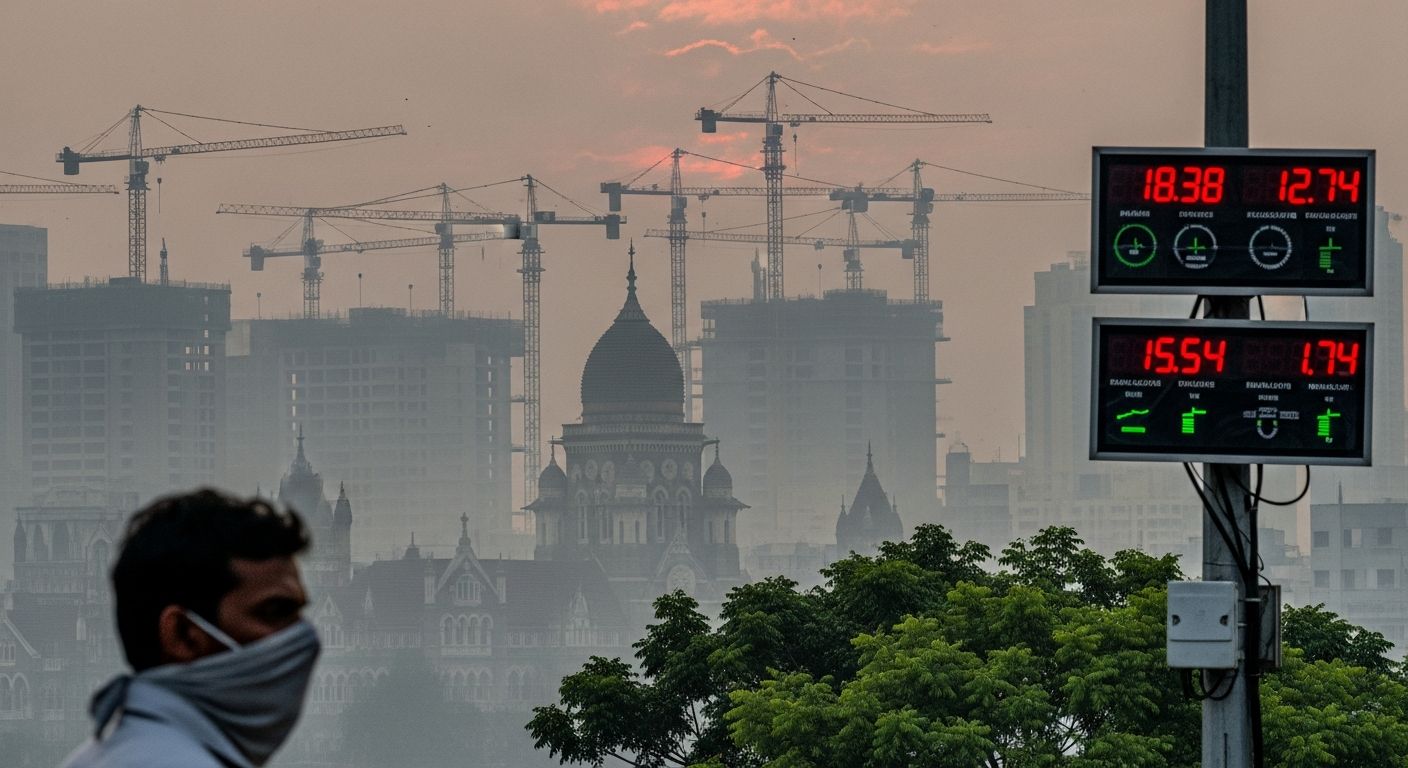
I’ve been watching the Mumbai air story for years, and the recent sharp rebuke from the Bombay High Court feels like a necessary—and painful—wake-up call. The court opened a suo motu matter after media reports and hearings that highlighted worsening air quality across the Mumbai Metropolitan Region. In its latest hearings the bench pulled up civic and pollution authorities for failing to implement earlier directions and for not doing enough to protect the city’s most vulnerable: construction workers, the elderly, children and people with co-morbidities (Indian Express, 23 Dec 2025; NDTV, 23 Dec 2025).
Key facts of the case
- The matter began as a suo motu public interest concern after media reports that Mumbai’s AQI repeatedly hovered in unhealthy ranges and that hotspots of open garbage burning and industrial emissions persisted (Hindustan Times, 30 Apr 2025).
- The court has earlier directed installation of real-time pollution monitors at construction sites and ordered audits of polluting (red/orange category) industries across the metropolitan region; compliance timelines have been repeatedly extended as authorities study feasibility (Free Press Journal, 30 Apr 2025).
- In the most recent hearing the bench warned that if monitoring devices are not installed, construction should be halted; it also asked regulators to audit hotspots such as open bhattis (furnaces) and riverside garbage burning that worsen local air quality (Hindustan Times, 30 Apr 2025).
What the court said (and why it matters)
The bench’s language was blunt: it reminded regulators of the right to life and said the executive must protect the vulnerable. In court the judges observed that advisories and meetings aren’t enough—practical, enforceable steps are required, and if monitoring devices aren’t in place the bench said construction must stop until compliance is proven (Indian Express, 23 Dec 2025; New Indian Express, 23 Dec 2025).
Context: responsibilities of BMC and MPCB
- Brihanmumbai Municipal Corporation (BMC) is responsible for local planning and enforcement on construction norms, road maintenance (which reduces re-suspended dust), waste management and issuing stop-work notices on illegal or non-compliant works.
- Maharashtra Pollution Control Board (MPCB) oversees industrial emissions, monitors ambient air quality in coordination with national programmes and is charged with issuing permits and ensuring polluting units comply with standards.
Both agencies share an operational responsibility: monitoring, enforcement and fast corrective action when standards are breached. The court’s frustration stems from gaps between orders, advisories and on-ground implementation (Free Press Journal, 30 Apr 2025).
Health and environmental impacts in Mumbai
Mumbai’s pollution mix is complex: resuspended road dust, construction dust, vehicular emissions, industrial sources, marine contributions and episodic open burning of wastes contribute to PM10 and PM2.5 burdens (MPCB City Study, Dec 2023). The health science is unequivocal: fine particulate matter (PM2.5) raises risks of acute respiratory infections, chronic lung disease, cardiovascular disease and premature mortality. Recent multi-city analyses estimate tens of thousands of deaths annually across Indian cities—including several thousand in Mumbai—that are attributable to PM2.5 (Lancet Planetary Health, Dec 2024; Ashoka University summary, Jul 2024). Local clinical experience also shows rising respiratory distress in children and vulnerable adults when pollution spikes (Hindustan Times, 2025).
Court directives and possible legal consequences
The bench has done three things with legal force:
- Ordered installation of real-time pollution monitors at construction sites and required affidavits proving compliance by set dates (Free Press Journal, 30 Apr 2025).
- Directed the pollution regulator to audit polluting industries and sites of open burning and to file compliance reports.
- Warned of immediate stop-work orders on non-compliant construction and implied stronger consequences (including contempt) if records and compliance are not produced (Indian Express, 23 Dec 2025).
If the authorities fail to comply, the court can escalate with contempt proceedings, stricter orders to halt activities and directions tying state funds or permits to environmental compliance—tools the judiciary has used in prior pollution matters nationally (Supreme Court orders on Delhi NCR air pollution; India Environment Portal, 24 Nov 2021).
Reactions from stakeholders
- Government bodies have said they are studying feasibility and working with technical institutes for centralised monitoring systems; they point to notices and stop-work orders already issued as partial compliance (Hindustan Times, 30 Apr 2025).
- Environmental activists and NGOs have welcomed the court’s firm language, arguing judicial oversight is needed when executive enforcement lags; they have stressed worker welfare at construction sites and urgent action on open burning hotspots (news reports, Dec 2025).
- Independent experts underline that monitoring without enforcement is cosmetic: sensors must be linked to action protocols and public dashboards to ensure transparency and accountability (Free Press Journal, 30 Apr 2025).
How this compares with prior judicial interventions
This is part of a longer arc of judicial activism on air quality in India. The Supreme Court and tribunals have repeatedly ordered crisis measures (construction halts, bans on firecrackers, GRAP-type emergency responses) and long-term mandates (polluter-pays, precautionary principle) in Delhi and other regions. Those matters show courts can compel action, but sustainable improvement requires administrative follow-through, cross-state coordination and investment in cleaner infrastructure (Supreme Court: Aditya Dubey & Others v. Union of India, Nov 2021; multiple SC orders and NGT actions summarized in legal analyses, 2019–2024).
Practical policy and on-ground measures to protect the vulnerable
Immediate and medium-term steps that would make a difference:
- Mandatory real-time monitors at all major construction sites, tied to automatic triggers (dust-mitigation protocols, temporary work stoppage above thresholds).
- Enforceable worker-protection rules: respiratory protective equipment, shaded clean rest areas, rotation to reduce exposure, and use of labour cess funds to support workers during mandated stoppages.
- Rapid action against open burning with local enforcement and incentives for waste segregation and decentralised composting.
- Targeted audits and visible penalties for repeat industrial offenders; transparent public dashboards reporting compliance.
- Invest in dust suppression on roads, mechanised sweeping, green buffers and stricter vehicle emission enforcement.
- Regional airshed planning that treats Mumbai as part of the larger MMR, aligning action across municipal and state boundaries (MPCB 2023 city study).
Concluding thoughts
The court’s rebuke is a mirror—reflecting administrative gaps and a moral question: who protects those with the least choice about the air they breathe? Courts can push and prod, but long-term change requires the executive and civic institutions to convert direction into enforcement, and to prioritise the health of the poor and invisible workers who shoulder the greatest burden. I hope the recent orders become a hinge for real, measurable action—sensors that trigger remedies, enforcement that deters polluters, and policies that centre worker and public health rather than merely meetings and reports.
References
- "You don't take care of the poor': Bombay High Court slams BMC, MPCB for 'breach' of air pollution norms," Indian Express (23 Dec 2025).
- "Come Up With Suggestions": Bombay Court To Civic Officials On Pollution, NDTV (23 Dec 2025).
- "HC slams BMC, MPCB over inaction to curb air pollution in the city," Hindustan Times (30 Apr 2025).
- "Bombay HC criticises BMC, MPCB over air quality," Free Press Journal (30 Apr 2025).
- Final Report: Air Quality Assessment, Emission Inventory & Source Apportionment Study for Mumbai, MPCB (Dec 2023).
- "Estimating the effect of annual PM2·5 exposure on mortality in India," Lancet Planetary Health (Dec 2024); multi-city study summaries (Ashoka University, Jul 2024).
Regards,
Hemen Parekh
Any questions / doubts / clarifications regarding this blog? Just ask (by typing or talking) my Virtual Avatar on the website embedded below. Then "Share" that to your friend on WhatsApp.
Get correct answer to any question asked by Shri Amitabh Bachchan on Kaun Banega Crorepati, faster than any contestant
Hello Candidates :
- For UPSC – IAS – IPS – IFS etc., exams, you must prepare to answer, essay type questions which test your General Knowledge / Sensitivity of current events
- If you have read this blog carefully , you should be able to answer the following question:
- Need help ? No problem . Following are two AI AGENTS where we have PRE-LOADED this question in their respective Question Boxes . All that you have to do is just click SUBMIT
- www.HemenParekh.ai { a SLM , powered by my own Digital Content of more than 50,000 + documents, written by me over past 60 years of my professional career }
- www.IndiaAGI.ai { a consortium of 3 LLMs which debate and deliver a CONSENSUS answer – and each gives its own answer as well ! }
- It is up to you to decide which answer is more comprehensive / nuanced ( For sheer amazement, click both SUBMIT buttons quickly, one after another ) Then share any answer with yourself / your friends ( using WhatsApp / Email ). Nothing stops you from submitting ( just copy / paste from your resource ), all those questions from last year’s UPSC exam paper as well !
- May be there are other online resources which too provide you answers to UPSC “ General Knowledge “ questions but only I provide you in 26 languages !



No comments:
Post a Comment