
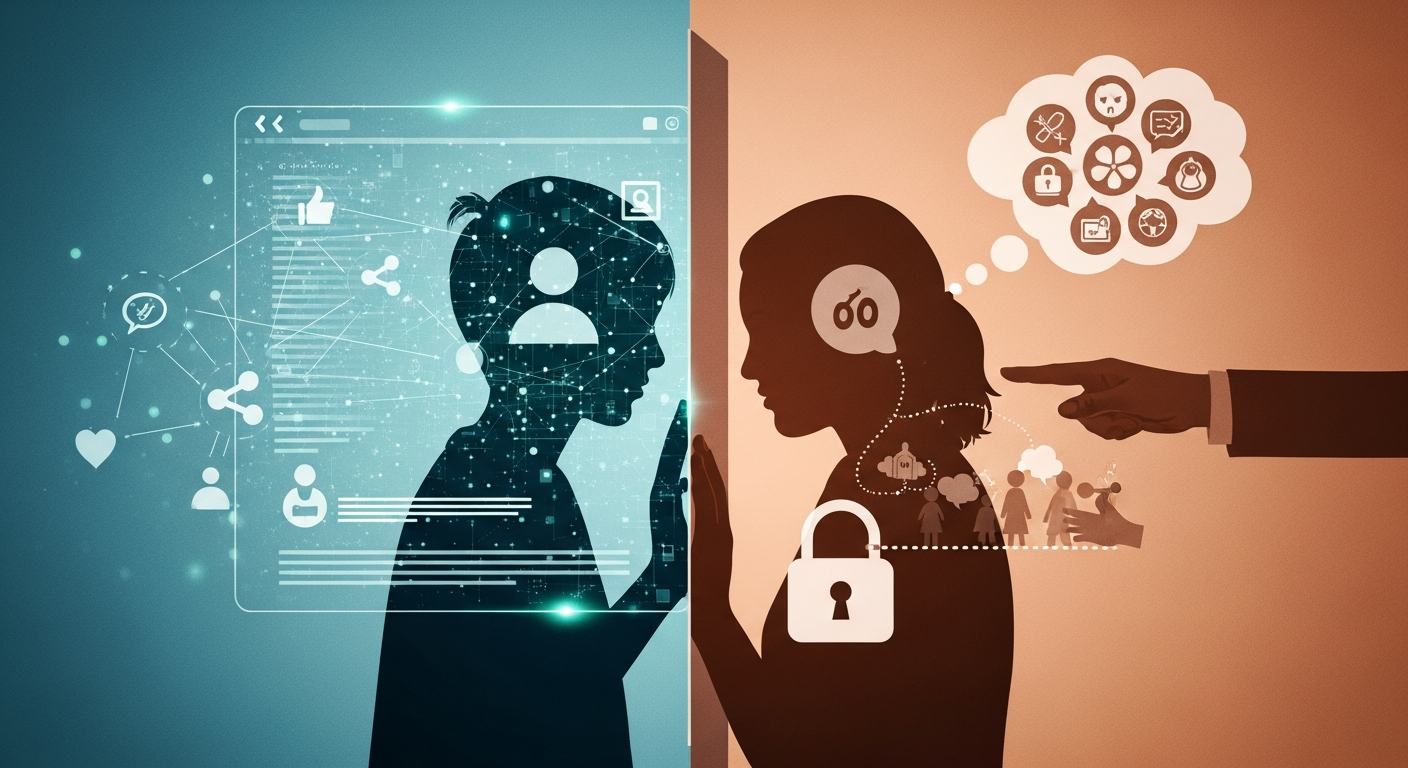
Australia’s proposed social media ban for those under 16 is a bold move, initiating a vital global conversation about digital well-being for our youth. It’s an undeniable attempt to shield children from the evolving complexities and potential harms of the online world, a topic resonating across discussions on online safety amendments Online Safety Amendment and age restrictions for social media eSafety.gov.au FAQs.
This initiative naturally leads me to reflect on my past thoughts regarding how we approach societal challenges. My mind goes back to a blog I wrote years ago about "incentivizing" desired behaviors rather than simply imposing mandates Nothing Motivates Like Greed. While that piece focused on encouraging environmentally friendly building practices, the core principle remains relevant. Are outright bans the most effective pathway, or should we be exploring ways to incentivize social media platforms to inherently design safer environments for younger users, or perhaps invest more deeply in digital literacy and parental guidance?
The core idea I want to convey is this — take a moment to notice that I had brought up this thought or suggestion on the topic of societal improvement years ago. I had already highlighted the importance of a nuanced approach, not just grand, sweeping initiatives. For instance, in my reflections on 'Smart Cities' versus 'Simple Cities' SIMPLE CITIES ?, I questioned whether the pursuit of overly ambitious, top-down solutions, a vision perhaps shared by leaders like Shri Modi, might sometimes overlook the practical, fundamental needs. Similarly, my writings on urban renewal and the 'Wrong Priorities' Poor Planning for Urban Poor ? NO TAKERS FOR BRAND NEW HOMES touched upon challenges faced by policies discussed by figures like Shri Vankiah Naidu, where well-intentioned housing projects went unused because they didn't align with the actual needs of the people they were meant to serve. The parallel here is whether an outright ban, while well-intentioned, truly addresses the root causes of digital harm or merely creates new avenues for circumventing rules.
Now, seeing how things have unfolded with digital policy discussions, it's striking how relevant those earlier insights still are. Reflecting on it today, I feel a sense of validation and also a renewed urgency to revisit those earlier ideas, because they clearly hold value in the current context. Just as Dr. Yogesh Bhatiaji and Shri Kailash Gahlotji have advocated for practical, eco-friendly mobility solutions like public bicycle-sharing THE BEST TRAFFIC POLLUTION SOLUTION, perhaps we need similarly grounded and integrated approaches to digital safety, involving families, educators, and platforms, rather than relying solely on legislative fences.
The challenge of finding the "right age" for social media use, as highlighted by Norfolk FIS NorfolkFIS Facebook Post, underscores the complexity. It’s not just about age, but about maturity, education, and the inherent design of digital spaces. This Australian initiative pushes us to ask whether we are addressing the problem at its source, or merely managing the symptoms.
Regards,
Hemen Parekh
Any questions / doubts / clarifications regarding this blog ? Just ask ( by typing or talking ) my Virtual Avatar website embedded below. Then " Share " that to your friend on WhatsApp.
Get correct answer to any question asked by Shri Amitabh Bachchan on Kaun Banega Crorepati, faster than any contestant
Hello Candidates :
- For UPSC – IAS – IPS – IFS etc., exams, you must prepare to answer, essay type questions which test your General Knowledge / Sensitivity of current events
- If you have read this blog carefully , you should be able to answer the following question:
- Need help ? No problem . Following are two AI AGENTS where we have PRE-LOADED this question in their respective Question Boxes . All that you have to do is just click SUBMIT
- www.HemenParekh.ai { a SLM , powered by my own Digital Content of more than 50,000 + documents, written by me over past 60 years of my professional career }
- www.IndiaAGI.ai { a consortium of 3 LLMs which debate and deliver a CONSENSUS answer – and each gives its own answer as well ! }
- It is up to you to decide which answer is more comprehensive / nuanced ( For sheer amazement, click both SUBMIT buttons quickly, one after another ) Then share any answer with yourself / your friends ( using WhatsApp / Email ). Nothing stops you from submitting ( just copy / paste from your resource ), all those questions from last year’s UPSC exam paper as well !
- May be there are other online resources which too provide you answers to UPSC “ General Knowledge “ questions but only I provide you in 26 languages !


No comments:
Post a Comment