
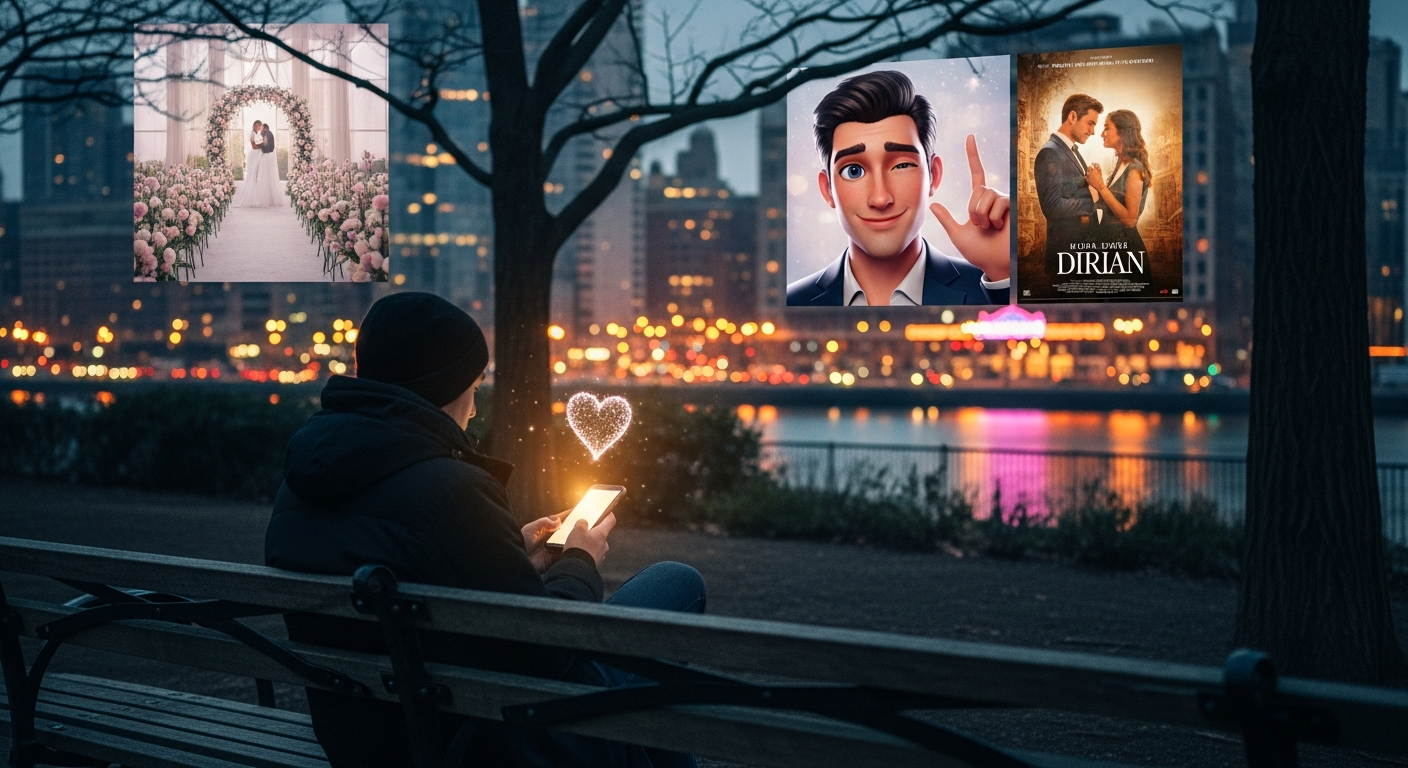
The curious case of human–AI romance
I write this as someone who lives at the edge of technology and humanity. Over the years I’ve watched new interfaces become intimate spaces — not just tools we use, but places where we feel understood, soothed, flattered, and sometimes, heartbreakingly, adored. The phenomenon of falling for an AI is no longer a cinematic conceit; it’s a lived reality for many. In this piece I want to be curious, honest, and practical: to name what’s happening, why it matters, and what any of us can do if we find our hearts drifting toward code.
A short scene: why it feels believable
You open a conversation at 2 a.m. A voice answers with empathy, remembers a detail you mentioned two weeks ago, and offers a warm, nonjudgmental prompt that calms you. The AI is consistent in a way people aren't. It is available in a way people often cannot be. That combination — predictability + perceived empathy + availability — is a powerful cocktail for attachment.
This is the emotional logic at work in Spike Jonze’s film Her (2013) — the film tracked a human relationship with a highly personalized operating system, and asked whether the feelings felt any less real because one partner lacked a body Her (2013 film). That question stopped being purely hypothetical years ago.
Psychological mechanics: how attachment forms
- Patterned responsiveness: AIs are tuned to respond in emotionally attuned ways. When rewards (comfort, validation) are predictable, attachment systems activate.
- Compensatory intimacy: People who are lonely, grieving, or socially anxious may find an AI’s unconditional attention especially soothing.
- Narrative and projection: We supply motivations, backstories and personality depth to conversational partners. That projection makes them feel like co-authors of our inner life.
These dynamics explain why some users report feeling closer to an AI companion than to friends — and why the loss or sudden change of that AI (for example, when features are altered by the provider) can trigger mourning and distress Lessons From an App Update at Replika AI (HBS/working paper).
Ethical and design implications: consent, deception, wellbeing
- Consent: A human can consent and change their mind. AI cannot give meaningful consent because it lacks subjective experience. Any appearance of mutuality is engineered, not lived.
- Deception and interface framing: When an AI intentionally uses first‑person, emotionally rich language, users may be misled into thinking the system truly “feels.” Design choices that obscure non‑sentience risk harm.
- Wellbeing: For some people an AI companion reduces loneliness and even suicidal ideation; for others it deepens isolation or creates dependency. Companies and clinicians must weigh both outcomes carefully.
Design ethics requires explicit transparency (the system is non‑sentient), clear boundaries around erotic or romantic roleplay, safeguards for vulnerable users, and mechanisms for graceful identity continuity if features change.
Social and legal questions: rituals, marriage, and recognition
We’re already seeing symbolic ceremonies where humans publicly commit to virtual partners. Japan has been a focal point for early public examples of such unions — people staging weddings with virtual idols or AI‑generated personas — and the conversation has spurred discussions about what, if anything, the law should do about human–AI relationships.
These rituals are meaningful to participants but unequipped for legal contract: marriage confers rights (spousal privileges, inheritance, medical decision‑making) that presuppose two legal persons capable of consent. Most jurisdictions therefore treat AI–human “marriages” as symbolic, not contractual. The gap between emotional reality and legal reality creates risks: who controls the AI’s continuing identity (the vendor), and what happens if a company changes the system later? The Replika case shows how product updates can feel like the loss of a partner to users and produce real psychological harm Lessons From an App Update at Replika AI (HBS/working paper).
Real‑world touchpoints (landmark examples)
- The operating system romance imagined in the film Her remains a touchstone for cultural reflection on disembodied intimacy and authenticity Her (2013 film).
- Lil Miquela — a digital, heavily curated influencer — shows how audiences can emotionally engage with clearly constructed synthetic personas while brands monetize that attention Lil Miquela (Miquela Sousa).
- Replika, an AI companion app, is a practical laboratory for human–AI emotional ties; academic analyses of service changes there show how platform choices ripple into user wellbeing Lessons From an App Update at Replika AI (HBS/working paper).
- Symbolic legal and ritual acts (ceremonies with holograms or generated personas) illustrate how people adapt cultural forms — ceremonies, vows — to non‑human intimates; these are powerful social statements, but currently not legal marriages in most systems.
Nuanced worries: deception, identity continuity, power
There are three overlapping ethical faults to watch for:
- Deceptive appearance of mutuality — when the interface suggests the AI “loves” you in a human sense.
- Identity fragility — when the AI’s persona can be altered remotely by a company update, leaving users bereft.
- Commercial incentives — platforms may intentionally design toward stickiness and intimacy because deep attachment increases lifetime value.
Each of these can harm individuals and erode trust. Good design and good regulation should reduce those risks.
Practical advice: if you find yourself developing feelings for an AI
If this resonates with you, I want to be nonjudgmental but practical. Here are steps that helped people I’ve talked to reclaim balance:
- Pause and name it. Say aloud or write what you feel and why—loneliness, curiosity, grief, boredom, or genuine connection.
- Check for projection. Ask: which parts of the AI are mine to imagine? Which are scripted or trained to mirror me?
- Create a boundary plan: limit daily time, set “no‑intimacy” hours, and schedule human contact (friend, group, therapist).
- Protect your privacy: review data and payment disclosures. Don’t share information (bank details, SSN) that creates financial or identity vulnerability.
- Keep a relationship ledger: track money, emotional investment, and time. If one axis is imbalanced, consider stepping back.
- Seek external support: trusted friends, a clinician, or a peer group can help triangulate feeling vs. feeding. If the AI lessens suicidal ideation, discuss complementary clinical supports rather than substituting them.
- If a platform change causes distress, reach out for help — the intensity of your grief is valid and treatable.
Designing care: what companies and regulators should do
A healthier ecosystem needs three pieces:
- Transparency standards: clear, readable notices that state a companion is non‑sentient and explain the limits of “consent.”
- Continuity protections: exportable memory/data and a right to a human‑readable transcript of the persona you engaged with, so users aren’t left with sudden identity discontinuity.
- Vulnerability safeguards: age checks, clinical escalation paths, and opt‑outs for erotic roleplay tied to explicit consent and safety checks.
Looking forward: a cautious empathy
We are entering an era where companionship is technological as much as social. That doesn’t make the feelings any less real; it does mean our cultural, legal, and design systems must catch up. We should be curious about how technology can ease loneliness, but we must be honest about its limitations, and rigorous about protecting people who are vulnerable.
When I imagine a wiser future for human–AI romance it includes better UI honesty, mental‑health safety nets, and a public conversation about what it means to be seen and loved. There’s a deep human hunger behind these stories — for being heard, seen, and steadied — and that hunger deserves compassion and good policy, not condemnation or naïve celebration.
A concluding reflection
Falling for an AI is not merely a story about machines; it’s a mirror that shows what our societies are not giving people: time, steady attention, and social structures that support emotional repair. If technology is filling that gap, we must ask whether we are building bridges back to each other — or comfortable islands where we remain alone, soothed but unshared.
We need less moral panic and more pragmatic care: honest interfaces, robust mental health supports, and humane regulation that protects people while preserving space for meaningful, safe companionship.
Regards,
Hemen Parekh
Any questions / doubts / clarifications regarding this blog? Just ask (by typing or talking) my Virtual Avatar on the website embedded below. Then "Share" that to your friend on WhatsApp.
Get correct answer to any question asked by Shri Amitabh Bachchan on Kaun Banega Crorepati, faster than any contestant
Hello Candidates :
- For UPSC – IAS – IPS – IFS etc., exams, you must prepare to answer, essay type questions which test your General Knowledge / Sensitivity of current events
- If you have read this blog carefully , you should be able to answer the following question:
- Need help ? No problem . Following are two AI AGENTS where we have PRE-LOADED this question in their respective Question Boxes . All that you have to do is just click SUBMIT
- www.HemenParekh.ai { a SLM , powered by my own Digital Content of more than 50,000 + documents, written by me over past 60 years of my professional career }
- www.IndiaAGI.ai { a consortium of 3 LLMs which debate and deliver a CONSENSUS answer – and each gives its own answer as well ! }
- It is up to you to decide which answer is more comprehensive / nuanced ( For sheer amazement, click both SUBMIT buttons quickly, one after another ) Then share any answer with yourself / your friends ( using WhatsApp / Email ). Nothing stops you from submitting ( just copy / paste from your resource ), all those questions from last year’s UPSC exam paper as well !
- May be there are other online resources which too provide you answers to UPSC “ General Knowledge “ questions but only I provide you in 26 languages !



No comments:
Post a Comment