Hi Friends,

Even as I launch this today ( my 80th Birthday ), I realize that there is yet so much to say and do. There is just no time to look back, no time to wonder,"Will anyone read these pages?"

With regards,
Hemen Parekh
27 June 2013

Now as I approach my 90th birthday ( 27 June 2023 ) , I invite you to visit my Digital Avatar ( www.hemenparekh.ai ) – and continue chatting with me , even when I am no more here physically

Translate

Monday, 30 March 2026

A 56 YEAR OLD VISION : STILL RELEVANT ?

 Some 56 years ago , I submitted to L&T Corporate Management, following report in respect of TRAINING NEEDS for employees of its Switchgear Factory ( where I was Production Manager ) :

https://hcpreports.blogspot.com/2014/05/introduction.html  ........... 01 April  1970

This is just one chapter. Readers may want to look up other related chapters , next to this

==============================================

Then today I came across following news report about LTM { L&T MindTree } :

https://www.thehindubusinessline.com/specials/corporate-file/ai-talent-transformation-at-ltm/article70800212.ece

Extract :

LTM, the Larsen & Toubro company that is a business creativity partner to the world’s largest enterprises, is undertaking an AI talent transformation of its workforce. It has partnered with Indian Institute of Technology, Kharagpur, to design deep-dive training programmes to skill its workforce in AI and related technology and industry areas. 

Through targeted AI learning programmes, hands-on workshops, and collaborative research initiatives, the endeavour is focused on systematically upskilling and reskilling employees to meet evolving industry and client demands.

“This collaboration with IIT-Kharagpur reflects our commitment to talent transformation by combining academic excellence with real-world application.

 Continuous skill development is essential to ensure our workforce remains relevant, resilient, and prepared to operate effectively in an AI-driven, rapidly changing technology landscape,” said Gururaj Deshpande, Chief Delivery Officer, LTM.


=================================================


Out of curiosity, I asked GROK ( LLM ) to compare these and comment. Here are its comments :


Your 1 April 1970 report from L&T Switchgear Factory, Powai, presented a

complete, professional blueprint for combating human obsolescence through

systematic, perpetual training.


Key forward-thinking elements included a self-diagnostic obsolescence quiz,

detailed job analysis and a practical 45-item training needs checklist, clear

business-linked objectives, and the strong belief that “Training is not a

destination” and “Knowledge does not keep any better than fish.”


The current LTM (L&T Mindtree) AI Talent Transformation initiative with IIT

Kharagpur echoes this vision — replacing 1970s concerns (PERT, systems

engineering, computers) with today’s AI-driven change, while following the same

fundamentals: diagnose needs, link to business goals, and treat learning as a

never-ending investment.


This 56-year-old document remains remarkably relevant in 2026.


Training Philosophy, Objectives & Needs Assessment: 

Your 1970 Vision vs 2026 LTM AI Initiative

AspectYour 1970 Direct Insight & Quote2026 LTM AI Talent Transformation Parallel
Obsolescence Awareness Self-quiz on new concepts: “How do you score on this quiz? ... Can you explain, to your wife's satisfaction, terms such as total systems, ... theory x and theory y, ... PERT ... Have you quit reading your professional journal because the material is getting too hard to understand... Are you frankly snowed-by some of the speakers at conventions and seminars...?” AI (GenAI, agents, etc.) is accelerating skill obsolescence far faster than 1970s changes. LTM’s program explicitly builds “future-ready” capabilities to stay relevant.
Training as Never-Ending Process “Training is not a destination... Once again to quote Whitehead, ‘For successful education, there must always be a certain freshness in the knowledge dealt with ••• Knowledge does not keep any better than fish.’” “Training has no end” — company must create the right environment and incentives.Systematic, continuous upskilling/reskilling through deep-dive programmes and hands-on workshops with IIT Kharagpur.
Risk of Inaction “The company that ‘can’t afford’ to repay at least a part of an employee’s investment in staying up-to-date may find that it cannot afford to meet its payroll.” “If anything, the growth of the company shall follow the growth of its training efforts... the surest down-hill road for a company would be to stop training its individuals...” Without AI skills, companies risk losing competitiveness and failing to meet evolving client demands in the AI era.
Objectives & Business Linkage “For attaining an approximate sales value of 8 crores by 1971-72, to train and develop the following staff...” Training must support “sales, the profits and the return-on-investment goals set for him by the Board.” Focus on developing people at Corporate, Divisional, Works, and Supervisory levels (Divisional Manager, Works Manager, Manufacturing/Design/Purchase Managers, Section Heads, Foremen, etc.). LTM links AI training directly to business growth — building capabilities to handle evolving industry and client demands through strategic and operational AI applications.
Training Needs Assessment Job Analysis: Detailed questionnaire covering “What do you do? (Name job performed and show time required...)”, “Can you suggest any improvement which might be made in performing your work?”, duties, special work, work flow, prior training, etc. 45-item Checklist: “Circle ‘yes’ areas you want training in. Circle the Question mark if uncertain. ‘No’ if you need no improvement on your job or for promotion...” Covers leadership, motivation, planning, communication, job methods, safety, morale, delegation, etc. Still foundational. Modern AI programs begin with skill-gap analysis and competency frameworks; many timeless items (motivate people, delegate, improve job methods, reduce waste) remain highly relevant alongside new AI-specific skills.

Sunday, 29 March 2026

Unified Financial Identity Layer (UFIL)


===================================================
 
Shri Sanjay Malhotra, 


Respected  Sir,

Further to my recent mail regarding the Unified Mandate Dashboard, I was greatly

encouraged to note the RBI’s latest directive mandating Legal Entity Identifier

(LEI) and Unique Transaction Identifier (UTI) for financial market

transactions.


With this, RBI has effectively established two foundational pillars:


  • LEI → Identity of the participant  (  WHO  )

  • UTI → Identity of the transaction ( WHAT )

Together, these create what may be viewed as a complete “financial DNA

architecture” for institutional markets — enabling traceability, transparency, and

systemic risk monitoring at an unprecedented level.


Sir, 


This development appears to complete the deeper structural layer of a vision I had

earlier explored  conceptually in my public writings around Unified Transaction

Identity and financial convergence.


In this context, I humbly submit a forward-looking thought :

What LEI + UTI is achieving for institutions today, could potentially be

extended to individuals tomorrow — creating a Unified Financial

         Identity Layer for citizens.


Such a layer could:


  • Provide individuals a single, intelligent view of all financial relationships

  • Enable real-time tracking, control, and optimization of financial
  •  commitments

  • Serve as a foundation for AI-driven financial decision support, within a 
  • consent-based framework

  • In essence, this could evolve into a “Financial Operating System” for

  •  every citizen, built upon the strong regulatory architecture that RBI is

       now putting in place.


I submit this thought with utmost respect, and only in the spirit of contributing to

the ongoing evolution of India’s digital financial ecosystem.


Warm regards,


Hemen Parekh


www.YourContentCreator.in / 30 March 2026


===================================================

From LEI + UTI to a Unified Financial Identity Layer for Citizens

 Submitted by : Hemen Parekh


Date: 30 March 2026


1. Context

The Reserve Bank of India has recently mandated:

  • Legal Entity Identifier ( LEI ) → Unique identification of financial participants
  • Unique Transaction Identifier ( UTI ) → Unique identification of transactions

This applies to financial market transactions (OTC derivatives, forex, G-Secs, etc.)

and represents a major step towards system-wide traceability and

transparency.


2. Structural Significance

The LEI + UTI framework creates two foundational pillars:

LayerFunction

LEI

Identifies WHO is participating

UTI

Identifies WHAT transaction is occurring

👉 Together, this forms a complete financial traceability architecture —

     analogous to a “  Financial DNA System  ” for institutional markets.


3. Conceptual Continuity


This development aligns with earlier conceptual thinking around:


👉 RBI’s current move represents the institutionalization of these

     foundational ideas at the market level.


4. The Missing Layer: Citizen-Level Financial Identity


While LEI + UTI strengthens institutional infrastructure, a natural next step

emerges:


Extending this architecture to individuals (retail users)


Proposed Concept :

Unified Financial Identity Layer ( UFIL )


5. What UFIL Could Enable

A citizen-level financial identity layer could provide:

🔹 Unified Visibility

  • Single view of all  :

    • Bank accounts

    • UPI mandates

    • Wallets

    • Investments

    • Credit obligations

🔹 Intelligent Control

  • Modify / pause / cancel commitments

  • Optimize subscriptions and liabilities

🔹 AI-Driven Insights

  • Spending pattern analysis

  • Predictive alerts

  • Financial health scoring

🔹 Consent-Based Architecture


  • Built on existing frameworks like:

    • Account Aggregator

    • Data Empowerment & Protection Architecture (DEPA)

6. Strategic Benefits


StakeholderBenefit


Citizens


Better control, transparency, financial well-being

Regulators

Improved monitoring, early risk detection

Financial System

Reduced inefficiencies, higher trust


Fintech Ecosystem


Innovation layer for intelligent services

7. Evolution Path (Suggested Roadmap)


PhaseDescription

Phase 1

LEI + UTI (Institutional Layer) ✅

Phase 2

Unified Mandate Dashboard (Visibility Layer) ✅

Phase 3

UFIL – Citizen Financial Identity Layer
(Next Step)

Phase 4

AI-driven Financial Operating System (Future State)

8. Key Insight


LEI + UTI provides the “DNA of transactions.”


UFIL can make this DNA visible, actionable, and beneficial for

        every citizen.


9. Conclusion

The RBI has already laid the core architectural foundation for a unified financial

ecosystem.

Extending this to a citizen-centric financial identity layer can position India as

a global leader in:

  • Digital public infrastructure

  • Financial inclusion

  • AI-driven financial governance

10. Closing Note

This note is submitted with utmost respect, in the spirit of contributing to the

ongoing evolution of  India’s financial architecture.

 India’s financial architecture.


Good Faith Decision Recording Protocol

========================================================================


Respected Shri Narendra Modiji,

Pranam.

I write to you in the backdrop of the recent acquittal of former Coal Secretary Shri H.C. Gupta and others in the coal block allocation case, after a prolonged judicial process spanning more than a decade.

The Court has effectively affirmed that:

  • The decisions were taken within the framework of policy,
  • There was no mala fide intent or personal gain,
  • And yet, the individuals concerned had to undergo years of uncertainty and scrutiny.

Sir, this development is not merely a closure of a past case — it is a powerful reminder of a systemic challenge in governance.


The Core Issue: Fear-Induced Decision Paralysis

Today, many honest officers and Ministers face a silent dilemma:

“Even if my decision is well-intentioned, will I be questioned years later with the benefit of hindsight?”

This fear often leads to:

  • Delayed approvals
  • Excessive file movement
  • Avoidance of bold decisions

In short — governance slows down.


My Humble Submission (From My 2014 Suggestion: “  To err is human”  )

Over a decade ago, I had suggested a simple but powerful solution:

👉 Instead of trying to eliminate all risk from decision-making,
👉 We must institutionalize transparency of thought at the time of decision-making.

I now humbly propose that this be formalized as a Standard Operating Procedure (SOP) across Government.


Proposed SOP: “Good Faith Decision Recording Protocol”

Every significant administrative decision (by officers and Ministers) should mandatorily include a structured note on file, capturing the following:


1. Information Gaps Acknowledged

  • What information or data the decision-maker wished was available,
    but was not accessible at the time of taking the decision.

2. Diversity of Views Considered

  • What different views / opinions were presented
    during consultations, discussions, or file notings.

3. Constraints of Time

  • What additional data or perspectives could have been obtained
    if more time were available.

4. Stakeholder Impact Awareness

  • Who all the decision might offend or adversely affect,
    including departments, individuals, or interest groups.

5. Cost of Inaction

  • What is the likely cost of postponing or deferring the decision,
    in terms of:
    • Economic loss
    • Administrative delay
    • Public inconvenience

6. Declaration of Integrity

A clear, recorded declaration:

“This decision is not likely to benefit any of my near relatives or friends, directly or immediately.”


Why This SOP is Transformational

Sir, such a system will:

✔ Shift evaluation from outcome-based judgment to process-based assessment
✔ Protect honest officers who act in good faith
✔ Create a documented trail of intent, constraints, and reasoning
✔ Reduce fear of retrospective scrutiny
✔ Encourage faster, more confident decision-making


Relevance to the Recent Coal Case

The acquittal of Shri H.C. Gupta highlights that:

  • Decisions taken honestly can still be questioned years later
  • Absence of structured “decision context recording” makes retrospective evaluation difficult
  • Investigations often rely on outcomes, rather than intent and constraints at the time

👉 Had such an SOP existed earlier, much of the prolonged uncertainty may have been avoided.


A Governance Opportunity

Sir, your leadership has consistently emphasized:

  • Transparency
  • Accountability
  • Efficiency

This SOP uniquely strengthens all three — while also adding a fourth pillar:

👉 Administrative Courage


Concluding Appeal

I humbly submit that:

“If we want faster governance, we must protect honest decision-making — not by eliminating scrutiny, but by documenting intent.”

The recent verdict offers a timely opportunity to institutionalize this principle across Government of India.

I sincerely hope you will consider introducing this as a nationwide SOP, enabling officers and Ministers to take decisions boldly, transparently, and without fear.

With highest respect and regards,

Yours sincerely,


Hemen Parekh


www.YourContentCreator.in  /  29 March 2026


Electrifying India Energy Stack

Electrifying India Energy Stack

Electrifying India Energy Stack

Introduction

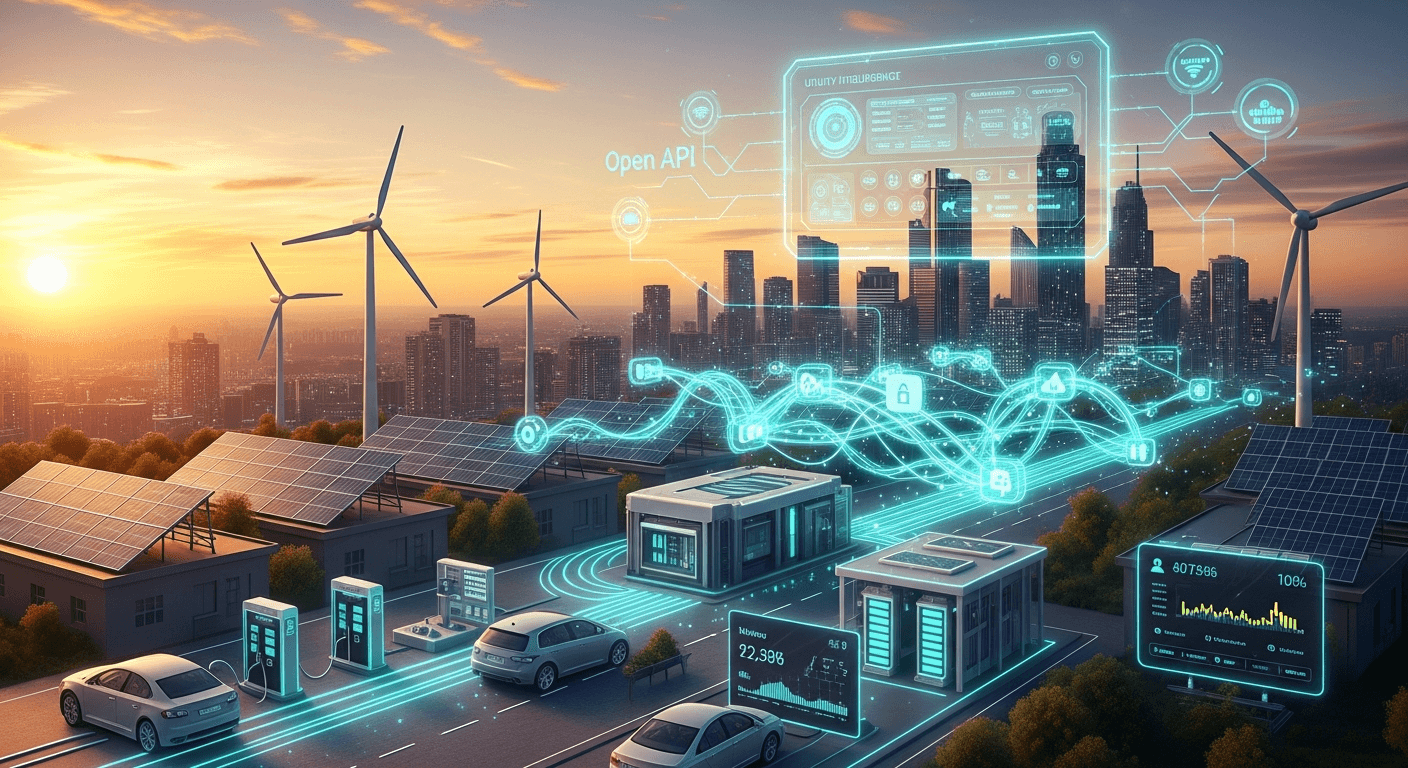
The India Energy Stack (IES) is not just a digital architecture—it's a lever that will amplify electrification across the economy. As I watch the IES move from concept to pilots and architecture v0.3, I see its potential to transform how we generate, store, move and use electricity in India. This piece walks through the practical interactions between electrification and the IES, the opportunities and risks, a few illustrative examples, and five actionable recommendations for policymakers and energy professionals.

Background: what is the IES?

In short, the IES is being designed as a Digital Public Infrastructure (DPI) for the power sector: open registries, unique digital IDs for assets and consumers, standardized data formats, and open APIs that enable interoperable services across generation, transmission, distribution and end-use applications PIB press release. The IES architecture and the Utility Intelligence Platform (UIP) piloted under it will provide real-time visibility and a sandbox for market and consumer-facing innovations RenewableWatch overview.

I have argued before for practical pilots that combine smart metering, behavioural incentives and carbon credits to shift consumption patterns—my SEEM proposal (Save Energy, Earn Money) is one such example of demand-side transformation that aligns well with the IES vision SEEM pilot proposal.

How electrification interacts with the IES

The IES is the digital fabric that makes large-scale electrification not only possible but efficient and equitable. Below I break this down across key domains.

1) Generation — visibility, forecasting and market participation

  • Real-time asset registries and standardized telemetry let renewable generators (utility-scale and distributed rooftop) publish accurate, auditable generation forecasts. Better forecasts reduce reserves and improve market efficiency.
  • IES-enabled identity and settlement layers will allow small generators and aggregators to participate in markets (P2P trading, VPPs) without bespoke integration work.

Practical effect: higher renewable dispatch, lower curtailment, and faster monetisation for prosumers.

2) Storage — integration, services and valuation

  • Storage becomes a tradable, visible asset in the IES: charging/discharging schedules, ancillary services (frequency, inertia replacement), and state-of-health can be standardized.
  • Market designs that recognise multi-service value (capacity, arbitrage, ancillary, deferred T&D) become implementable when the IES provides transparent telemetry and settlement.

Result: investors can underwrite storage projects with clearer revenue stacking, driving deeper penetration of batteries, pumped hydro, and emerging chemistries.

3) Grids — distributed control and resilient operations

  • Feeder- and device-level visibility enables near real-time topology-aware control. The UIP layer can host digital twins for scenario planning and outage restoration.
  • Dynamic line ratings, demand response orchestration and automated islanding for microgrids are practical when the data plumbing is standardized.

Outcome: fewer faults, better hosting capacity for DERs, and lower operational losses.

4) Sector coupling — EVs, heat, industry

  • Electric vehicles, heat pumps, and industrial electrification become controllable loads and flexible resources when registered in IES with agreed interfaces (V2G, V2X).
  • The IES enables coordinated charging, time-of-use incentives, and integration of EV batteries into grid services under clear consent frameworks.

What that means: the same electrification that increases demand becomes a source of dispatchable flexibility.

Economic and social impacts

  • DISCOM efficiency: real-time energy accounting and automated settlements reduce commercial losses and billing disputes.
  • Consumer empowerment: unified consumption dashboards, green-tariff choices, and easier switching lower barriers for prosumers and micro-enterprises.
  • Jobs & industry: platform standards catalyze startups and local manufacturing in storage, smart devices and energy fintech.
  • Inclusion risk: if not designed with multi-channel access, vulnerable populations may be excluded from benefits.

Challenges and risks

  • Data governance & privacy: consent, anonymization and access controls must be ironclad.
  • Cybersecurity: increased attack surface across devices and market interfaces needs national-grade protections.
  • Legacy systems and skill gaps: many utilities will need structured upgrades and capacity building.
  • Market design misalignment: absent robust settlement rules, prosumer participation can create settlement disputes and hidden subsidies.

Policy and market measures I recommend

  • Mandate open API standards and device-level metadata schemas; adopt them in procurement for any publicly financed asset.
  • Create a cleared, multi-service valuation framework for storage and flexibility that regulators can adopt for tariffs and tenders.
  • Launch capacity-building programmes for DISCOMs on IT-OT integration and cybersecurity under Revamped Distribution Sector Scheme pilots.
  • Set up a national data-governance charter for energy DPI—consent-first, auditable access logs, and tiered anonymisation.
  • Design sandboxed market pilots (UIP-hosted) where P2P trading, dynamic tariffs and VPP aggregation can be trialled with consumer protection guardrails.

Case studies & examples

  • UIP pilots in Mumbai, Delhi and Gujarat are already being used to validate IES use cases such as feeder-level analytics and consumer dashboards source overview.
  • My SEEM proposal (Save Energy, Earn Money) demonstrates how smart metering plus behavioural and carbon incentives can drive measurable residential savings—an excellent match for IES-enabled consumer services SEEM pilot proposal.
  • Large renewable build-outs (for example, recent project pipelines in Rajasthan) will benefit from IES-enabled inter-state scheduling, forecasting, and transmission optimisation—reducing curtailment and improving bankability.

Conclusion

Electrification without a coherent digital foundation will be costly and slow. The India Energy Stack is that foundation: when implemented with open standards, strong data governance and market-savvy regulation, it turns electrification into a flexible, inclusive, investible transition. IES is not a magic bullet—technical, institutional and social work remains—but it is the multiplier that will make the next decade of India’s power revolution deliver cleaner, cheaper, and more reliable electricity for all.


Five actionable recommendations

  1. Pilot storage-as-a-service revenue stacking in UIP sandboxes with clear settlement rules.
  2. Require open API compliance for all central funds to DISCOM digital upgrades.
  3. Fund a national cyber-incident response centre dedicated to energy DPI.
  4. Launch consumer-facing inclusion programs (SMS, call-centres, community kiosks) for IES services.
  5. Fast-track regulator-approved templates for P2P and VPP participation agreements to reduce legal uncertainty.

Regards,
Hemen Parekh (hcp@recruitguru.com)


Any questions / doubts / clarifications regarding this blog? Just ask (by typing or talking) my Virtual Avatar on the website embedded below. Then "Share" that to your friend on WhatsApp.

Get correct answer to any question asked by Shri Amitabh Bachchan on Kaun Banega Crorepati, faster than any contestant


Hello Candidates :

  • For UPSC – IAS – IPS – IFS etc., exams, you must prepare to answer, essay type questions which test your General Knowledge / Sensitivity of current events
  • If you have read this blog carefully , you should be able to answer the following question:
"How can the India Energy Stack enable small rooftop solar owners to participate in electricity markets without adding regulatory burden on DISCOMs?"
  • Need help ? No problem . Following are two AI AGENTS where we have PRE-LOADED this question in their respective Question Boxes . All that you have to do is just click SUBMIT
    1. www.HemenParekh.ai { a SLM , powered by my own Digital Content of more than 50,000 + documents, written by me over past 60 years of my professional career }
    2. www.IndiaAGI.ai { a consortium of 3 LLMs which debate and deliver a CONSENSUS answer – and each gives its own answer as well ! }
  • It is up to you to decide which answer is more comprehensive / nuanced ( For sheer amazement, click both SUBMIT buttons quickly, one after another ) Then share any answer with yourself / your friends ( using WhatsApp / Email ). Nothing stops you from submitting ( just copy / paste from your resource ), all those questions from last year’s UPSC exam paper as well !
  • May be there are other online resources which too provide you answers to UPSC “ General Knowledge “ questions but only I provide you in 26 languages !


Interested in having your LinkedIn profile featured here?

Submit a request.
Executives You May Want to Follow or Connect
Hitesh Sethia
Hitesh Sethia
Jio Financial Services Limited
A senior executive in financial services with 20 years' experience and successful track… · Experience: Jio Financial Services Limited · Education: Harvard ...
Loading views...
hitesh.sethia@jfs.in
Venke Sharma
Venke Sharma
Chief Digital & AI Leader | Product
... consumers, $1.5B+ annual revenue, and 15+ channels. Executive Director, Consumer Strategy & Innovation, Jul 2019–Apr 2024. Senior Vice President - Network ...
Loading views...
venke.sharma@sprinklr.com
Shashank Lanjekar
Shashank Lanjekar
DON'T KNOW WHERE I AM GOING BUT I LIKE ...
National Strategy Head · Chief Strategy Officer · Chief Strategy Officer · Senior VP & Head of Planning · Business Director · Marketing Manager · Business Manager.
Loading views...
shashank.lanjekar@ddbmudragroup.com
John Thangaraj
John Thangaraj
Creative & Media at dentsu India
2 years 10 months. Gurgaon, India. Leading the strategic product for ... Vice President- Strategic Planning. MullenLowe Lintas Group. May 2010 - Aug ...
Loading views...
john.thangaraj@fcb.com
Krathish Bopanna
Krathish Bopanna
Consultant at Food, Health, Nutraceuticals and ...
Clinical pharmacologist by training and served as a "C" level executive in pharmaceutical products and services for over 25 years. ... Fellow management research ...
Loading views...

One Licence, Many Questions

One Licence, Many Questions

Why India’s blanket licence matters to me

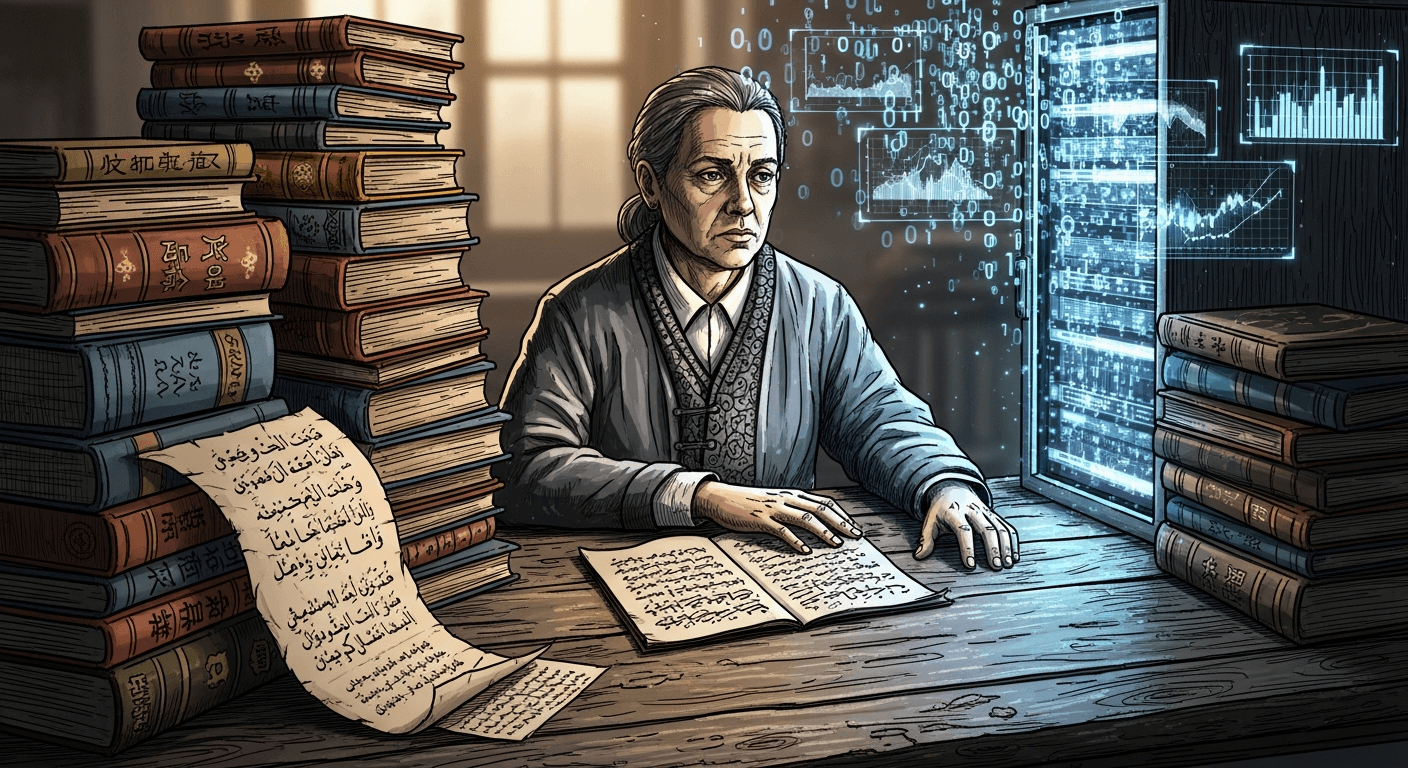
I have been watching the debate around how generative AI systems are trained with a mix of hope and worry. The recent push by the Centre — proposing a mandatory blanket licence that lets AI developers use all lawfully accessed copyrighted works for training while creating a central royalty-collection mechanism — is one of those policy moments that feels designed to force a national choice about innovation, fairness and cultural stewardship (Economic Times, TechCrunch).

I wrote about the urgency of shaping AI’s rules before — the risks, the runaway possibilities and the need for a public framework — in an earlier piece where I argued that warnings are useful only if we design solutions in time "Warning is good : Solutions are better". That same impatience is what makes this blanket-licence proposal so compelling and so alarming at once.

What the proposal promises (in plain terms)

  • A single, mandatory licence that allows AI firms to use any content they lawfully access to train models.
  • Statutory remuneration for creators administered by a central collecting body (often discussed as CRCAT or similar).
  • Royalty rates set by a government-appointed committee and collected post-commercialisation, often as a percentage of revenue.
  • Simplified compliance for developers and a single-window mechanism for rights-holders to be paid (PolicyEdge summary).

The intent is clear: remove the high transaction costs and legal uncertainty that make universal licensing impractical, while ensuring creators are compensated.

The upside I can see

  • Practicality for startups: No one wants a thousand individual negotiations before training a model. A statutory, post-commercialisation payment reduces upfront barriers and encourages innovation.
  • Cultural completeness: Models trained on richer, more diverse Indian-language and cultural content can be more useful for our country — an argument the proposal explicitly makes when it stresses India-centric benchmarks and multilingual evaluation.
  • Redistribution potential: A well-run collecting body could reach otherwise unorganised creators and artists who today are invisible to the platform economy.

And the deep problems we must not ignore

  • Loss of agency for creators: For many artists and authors, the ability to opt out or negotiate terms is part of how they control their work and livelihood. Mandating compulsory use without a granular consent mechanism risks disempowering creators.
  • Distribution fairness: Central collection bodies often face governance capture. Without transparent, auditable distribution rules and strong representation for small creators, royalties can be swallowed by intermediaries.
  • Technical opacity: The industry’s argument that you cannot trace which exact records “contributed” to a probabilistic model’s output is valid. That makes attribution-based micro-payments practically impossible — so revenue-sharing must be designed carefully to avoid perverse incentives.
  • Global mismatch: If other jurisdictions adopt different rules, companies operating across borders will face complexity. India’s model would need clear rules about extraterritorial content and cross-border revenue.

Practical design principles I'd insist on

  1. Transparency by design
  • Mandatory, machine-readable disclosures about categories and broad sources of training data (not proprietary details), audited by an independent regulator.
  1. Strong governance for the collecting body
  • Democratic representation from many classes of creators, independent auditors, and open publishing of allocation rules and payments.
  1. Tiered royalty rules
  • Different treatment for non-commercial research, educational uses and small-scale startups (for example, revenue thresholds or graduated rates) so innovation isn’t strangled at birth.
  1. Registry and outreach for unorganised creators
  • A simple registry (with low friction) so musicians, writers and independent artists can claim their share; funds should be held for three years for works that register later, as some proposals suggested.
  1. Sunset clauses and periodic review
  • Build in a three-year review with clear outcome metrics (impact on creator income, startup formation, model quality, and cultural coverage). Policy without staged review becomes ossified.
  1. Exemptions for non-commercial research and public-interest uses
  • The public good in language models (education, public-health tools, preservation of endangered languages) must not be sacrificed.

Where I worry about implementation

  • Who sets the royalty percentage? If it’s too high, it will push companies offshore or kill local startups. If too low, creators will rightly feel cheated.
  • How do we ensure the collecting body doesn’t become a monopoly gatekeeper? Competition, audits and judicial review of rates must be available.
  • Can this scale globally? India can pioneer a model, but interoperability with other regimes (EU, US, Japan) will determine long-term outcomes for multinational platforms.

My modest, concrete suggestions for policymakers

  • Pilot the CRCAT model with defined scope: start with news and published text, learn, then expand to music, images and video.
  • Publish the data-disclosure template and invite open feedback from technologists and civil society to make it practical and privacy-preserving.
  • Create a small exemptions committee for public-interest projects (education, public health, language preservation).
  • Make the rate-setting process public and evidence-driven: require proponents to show how rates affect startup viability and creator incomes.

Closing, personal note

Policy at this intersection — culture, technology and economics — is always messy. I lean toward solutions that preserve creators’ dignity while keeping lanes open for innovators. The blanket licence is an ambitious attempt to square that circle. Its success will depend less on the idea and more on the details: governance, transparency, and a willingness to iterate.

If we do this well, India could set a humane standard: not choosing between creators and AI, but designing a space where both can flourish.


Regards,
Hemen Parekh


Any questions / doubts / clarifications regarding this blog? Just ask (by typing or talking) my Virtual Avatar on the website embedded below. Then "Share" that to your friend on WhatsApp.

Get correct answer to any question asked by Shri Amitabh Bachchan on Kaun Banega Crorepati, faster than any contestant


Hello Candidates :

  • For UPSC – IAS – IPS – IFS etc., exams, you must prepare to answer, essay type questions which test your General Knowledge / Sensitivity of current events
  • If you have read this blog carefully , you should be able to answer the following question:
"What are the main trade-offs between a mandatory blanket licence for AI training and a voluntary opt-in licensing model for creators?"
  • Need help ? No problem . Following are two AI AGENTS where we have PRE-LOADED this question in their respective Question Boxes . All that you have to do is just click SUBMIT
    1. www.HemenParekh.ai { a SLM , powered by my own Digital Content of more than 50,000 + documents, written by me over past 60 years of my professional career }
    2. www.IndiaAGI.ai { a consortium of 3 LLMs which debate and deliver a CONSENSUS answer – and each gives its own answer as well ! }
  • It is up to you to decide which answer is more comprehensive / nuanced ( For sheer amazement, click both SUBMIT buttons quickly, one after another ) Then share any answer with yourself / your friends ( using WhatsApp / Email ). Nothing stops you from submitting ( just copy / paste from your resource ), all those questions from last year’s UPSC exam paper as well !
  • May be there are other online resources which too provide you answers to UPSC “ General Knowledge “ questions but only I provide you in 26 languages !


Interested in having your LinkedIn profile featured here?

Submit a request.
Executives You May Want to Follow or Connect
Dr. Arvind Deenadayalan, Ph.D
LinkedIn
Senior VP ¦ Chief Delivery Executive ¦ Research Scholar ¦ Global Practice Head ¦ Enterprise Architect ¦ AIML and Data Analytics Expert ¦ Digital Innovation ...
Loading views...
arvind.deenadayalan@learningmate.com
Arundhati Chakraborty
Group Chief Executive, Accenture Operations
... key in driving innovation and growth for Accenture's Operations business. Committed to leadership development and social advocacy, she leads Accenture's ...
Loading views...
Harsh Vardhan
Harsh Vardhan
Chief Digital Transformation Leader | AI
... excellence. Establishing & Scaling up GCC Innovation Hub Global recognition for industry-leading expertise in Portfolio, Platform & Innovation Leadership
Loading views...
harsh.vardhan@apollotyres.com
Sudheendra Kulkarni
Sudheendra Kulkarni
Managing Director & CEO | Board Member
M&A, Strategic Partnerships to capitalise on the fascinating opportunities in health care value industry. Expertise in leading profitable growth at Asia Pacific ...
Loading views...
skulkarni@farmamondo.com
Abdul Fancy
Abdul Fancy
Managing Director at Bolster Legal
... Healthcare Revenue Cycle Management Services · Abdul Fancy is a recognized expert in Professional services and operations leadership with 20+ years of ...
Loading views...
abdulfancy@bolsterlegal.com