
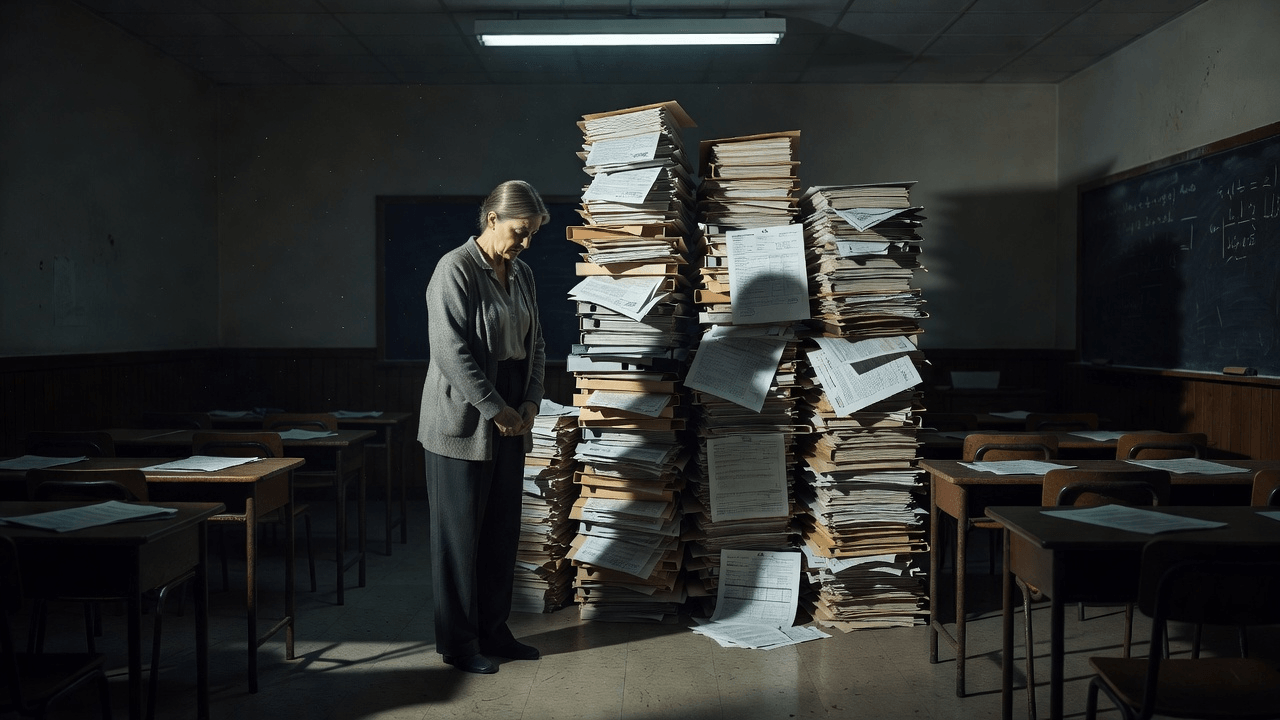
It is with a heavy heart that I reflect on the recent news of a teacher in Delhi who, while engaged in the Special Intensive Revision (SIR) of electoral rolls, felt compelled to attempt suicide. This incident is not just a statistical tragedy; it is a profound indictment of how we value our educators in modern society.
The Weight of Overburdening
The teacher, whose identity has been reported as an individual attempting to cope with the immense strain of administrative duties, left behind a note citing 'excessive work pressure.' For a mathematics educator at a Sarvodaya Bal Vidyalaya, the primary vocation—imparting knowledge—was sidelined by the relentless demands of supervising electoral booth officers.
When we assign roles that diverge entirely from the classroom experience, we are not just adding tasks; we are eroding the mental health of those responsible for our children's intellectual growth. This brings to mind my previous reflections on how bureaucratic inefficiencies and institutional apathy can become deadly. We have created a system where the teacher becomes a mere cog in a machinery of administrative compliance, often at the cost of their own well-being.
A Systemic Crisis
This is not an isolated event. Across India, we have seen various tragic instances where teachers have struggled under the immense stress of non-teaching assignments, financial instability, or administrative harassment. Whether it is the pressure of electoral revision processes or the precarious nature of ad-hoc employment, the thread that connects these tragedies is the complete disregard for the humanity of the individual.
We must ask ourselves:
- Why is our education system so reliant on teachers for tasks that are clearly outside their professional expertise?
- Where is the institutional support when a teacher signals that they are at their breaking point?
Moving Toward Empathy
We cannot continue to treat educators as limitless resources. They are the bedrock of society, and if that bedrock fractures, the entire structure falls. It is time for a drastic rethink of how we engage our teaching staff in non-academic administrative duties. We must prioritize mental health support, institutional accountability, and a return to the core purpose of education.
My heart goes out to the teacher involved in this incident and to all those who continue to work under such stifling conditions. We owe them more than just condolences; we owe them systemic reform.
Regards,
Hemen Parekh
If you have read this blog carefully , you should be able to answer the following question:
"What is the primary, non-teaching duty mentioned in the news that caused significant work pressure for the Delhi government school teacher?" You can find that answer by entering this question at ( 1 ) www.HemenParekh.ai ( 2 ) www.IndiaAGI.ai
No comments:
Post a Comment