
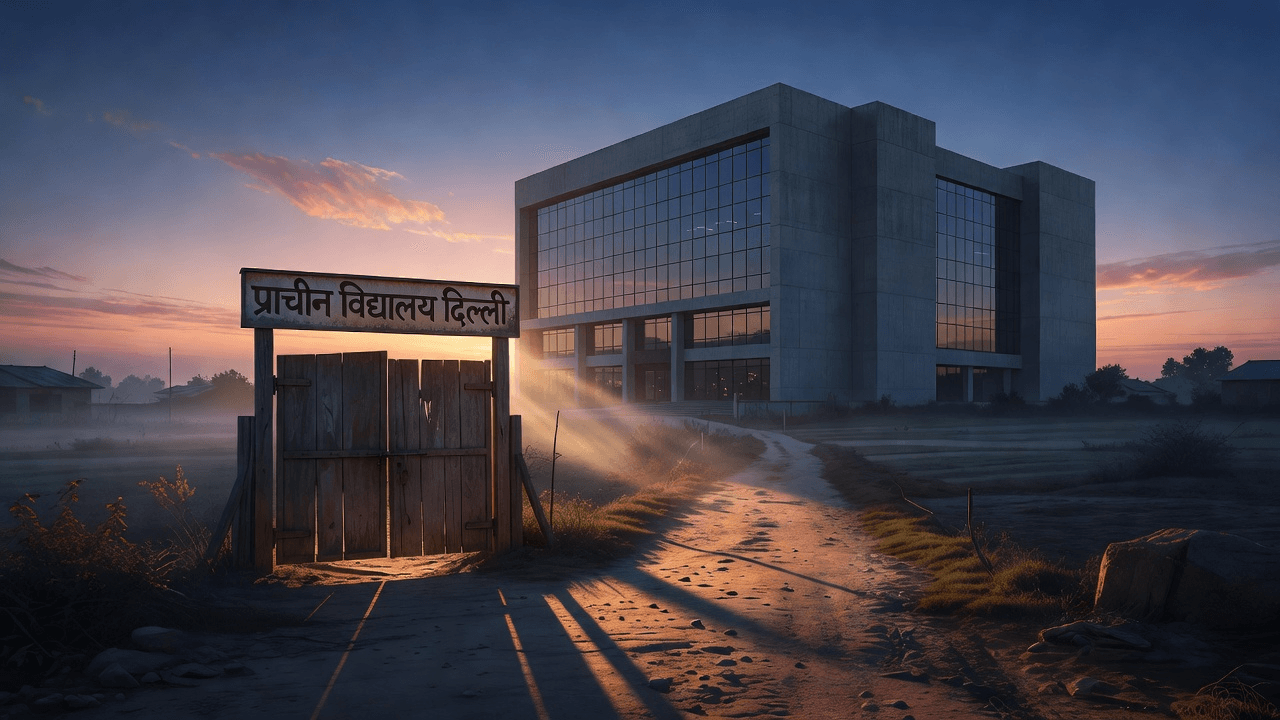
Education is not just about buildings or administrative balance sheets; it is about the tangible connection between a community and its future. Recently, we have seen rising tensions in Delhi’s villages—most notably in places like Chandpur—as parents and residents protest the merger of Municipal Corporation of Delhi (MCD) schools.
The Human Cost of Consolidation
When authorities talk about 'merging' schools, the discourse often centers on efficiency, optimization, or under-utilized resources. However, for a mother in a village, the reality is far simpler: a school that was once a short walk away is now kilometers distant, demanding a commute that is impractical for a young child.
When we force children to travel long distances, we are not just adding to their physical burden; we are creating a barrier to attendance. In many cases, it is not an improvement in education that follows, but a quiet, tragic withdrawal of children from the schooling system altogether. We see this pattern repeated—from the struggles in Khirki Village, where even basic classroom infrastructure faces insurmountable bureaucratic hurdles, to the protests against relocating local schools.
A Pattern of Disconnect
It is deeply concerning to hear about the ongoing friction between the leadership of the MCD as they navigate these complex urban planning decisions. While political parties debate the merits and faults of these policies, the voices of the villagers, those who rely most heavily on these foundational institutions, are often drowned out.
I have frequently emphasized that sustainable growth must prioritize accessibility. A 'smart' school in a distant location is useless to a child who cannot reach it. When we treat education as a logistical puzzle rather than a communal lifeline, we fail our youth.
Moving Toward Authentic Solutions
We do not need more buildings that stand empty, nor do we need mergers that displace our youngest learners. We need:
- Community-Led Consultations: Decisions affecting village education must include the residents who know their own logistics best.
- Infrastructure Priorities: Before considering relocation, we must focus on repairing and utilizing existing local structures.
- Access as a Right: Any consolidation plan that does not guarantee safe, reliable, and convenient transport for students is fundamentally flawed.
Let us ensure that as we look toward the future, we are not leaving the children of our villages behind in the name of administrative progress. Our focus must remain on bringing education closer to the learner, not pushing it further away.
Regards,
Hemen Parekh
If you have read this blog carefully , you should be able to answer the following question:
"What are the primary concerns raised by villagers in Delhi regarding the recent MCD school merger policies?" You can find that answer by entering this question at ( 1 ) www.HemenParekh.ai ( 2 ) www.IndiaAGI.ai
No comments:
Post a Comment