
Lede
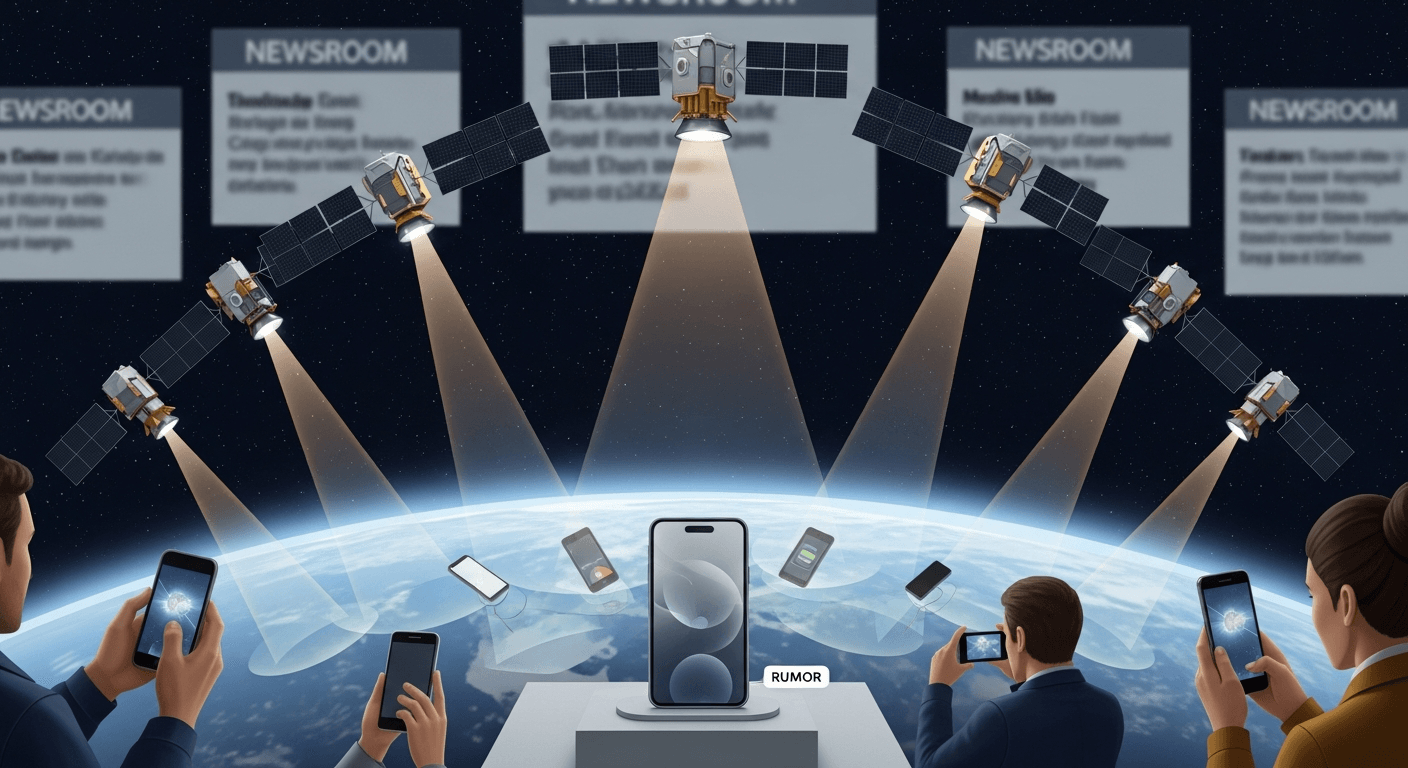
I want to clear the record: recent reports that Starlink is building a proprietary smartphone were quickly rebutted by the SpaceX CEO. The swift denial matters because the idea—satellite-native phones—touches on how we will get connected in remote places and how incumbents might respond.
Background: Starlink, direct-to-device, and why a phone story matters
Starlink has grown from an experiment into a global satellite internet business serving millions of users via thousands of low‑Earth‑orbit satellites. The company has also been explicit about work on direct-to-device satellite connectivity that can reach standard phones without a special terminal. That technical trajectory is important context: improving the network layer can extend service to existing handsets rather than forcing consumers to buy new hardware.
I have written previously about satellite messaging and the integration of satellite services with ordinary smartphones; those writings argued the same essential point: networks often change user experience more than a new branded handset does.
The report and the denial
A widely circulated media report suggested internal discussions at the company about a Starlink‑branded phone that could link directly to satellites and compete with mainstream smartphone makers. The SpaceX CEO responded decisively: "We are not developing a phone." He also reiterated an earlier, more speculative remark that such a device is "not out of the question at some point" but would be "a very different device" and, in his words, would need to be "Optimized purely for running max performance/watt neural nets." Those two statements together—an open-ended hypothetical and a categorical current denial—define the official position.
How the rumor spread and why it escalated
- A single report based on unnamed internal sources suggested the company was "mulling" a handset. That language is often sufficient to trigger headlines.
- The company's strategic moves (larger user base, advances in direct-to-device tech, and public-facing comments about future hardware possibilities) created fertile ground for speculation.
- Social amplification—short posts, snippets of quotes, and investor debate—turned a tentative internal discussion into a near-certainty in some outlets before the CEO's denial arrived.
The pattern is familiar: exploratory ideas become headlines; headlines become assumptions; a top-level denial then forces a rapid retraction of expectations.
Implications for consumers and competitors
For consumers
- Expectation management: If you were planning to wait for a Starlink handset to get satellite coverage, that option is not currently available. Providers are prioritizing ways to bring satellite reach to existing phones.
- Improved coverage without forced upgrades: Direct-to-device services and carrier partnerships aim to deliver connectivity to the phones people already own.
For competitors and carriers
- Partnership over replacement: The company's stated focus suggests collaboration with mobile carriers rather than building a phone to displace them.
- Market pressure shifts from hardware disruption to network capability—carriers must adapt to satellite-augmented coverage rather than defend against a new handset brand.
Key takeaways
- The official stance is clear: the company is not developing a consumer phone right now.
- Technical emphasis is on network and services (direct-to-device) rather than branded hardware.
- A future, highly specialized device remains a hypothetical contingent on technological and market shifts.
Next steps I recommend (for readers and industry watchers)
- Watch deployments of direct-to-device services and carrier partnerships—those will change real coverage long before any new handset appears.
- For investors and product teams: model scenarios where the network layer outperforms hardware launches in user adoption and revenue impact.
- For consumers: if satellite reach matters, evaluate options that extend service to your existing device rather than waiting for a proprietary handset.
Concluding remarks
Rumors about a Starlink phone made for an attractive headline because they combined a beloved brand with a familiar narrative—tech giant builds phone to disrupt incumbents. The reality, as stated by the SpaceX CEO, is more prosaic and strategically sensible: build the network first, broaden reach for existing devices, and only consider bespoke hardware if there is a clear, differentiated use case that cannot be served by partnering with the existing ecosystem.
Regards,
Hemen Parekh
Any questions / doubts / clarifications regarding this blog? Just ask (by typing or talking) my Virtual Avatar on the website embedded below. Then "Share" that to your friend on WhatsApp.
Get correct answer to any question asked by Shri Amitabh Bachchan on Kaun Banega Crorepati, faster than any contestant
Hello Candidates :
- For UPSC – IAS – IPS – IFS etc., exams, you must prepare to answer, essay type questions which test your General Knowledge / Sensitivity of current events
- If you have read this blog carefully , you should be able to answer the following question:
- Need help ? No problem . Following are two AI AGENTS where we have PRE-LOADED this question in their respective Question Boxes . All that you have to do is just click SUBMIT
- www.HemenParekh.ai { a SLM , powered by my own Digital Content of more than 50,000 + documents, written by me over past 60 years of my professional career }
- www.IndiaAGI.ai { a consortium of 3 LLMs which debate and deliver a CONSENSUS answer – and each gives its own answer as well ! }
- It is up to you to decide which answer is more comprehensive / nuanced ( For sheer amazement, click both SUBMIT buttons quickly, one after another ) Then share any answer with yourself / your friends ( using WhatsApp / Email ). Nothing stops you from submitting ( just copy / paste from your resource ), all those questions from last year’s UPSC exam paper as well !
- May be there are other online resources which too provide you answers to UPSC “ General Knowledge “ questions but only I provide you in 26 languages !



No comments:
Post a Comment