
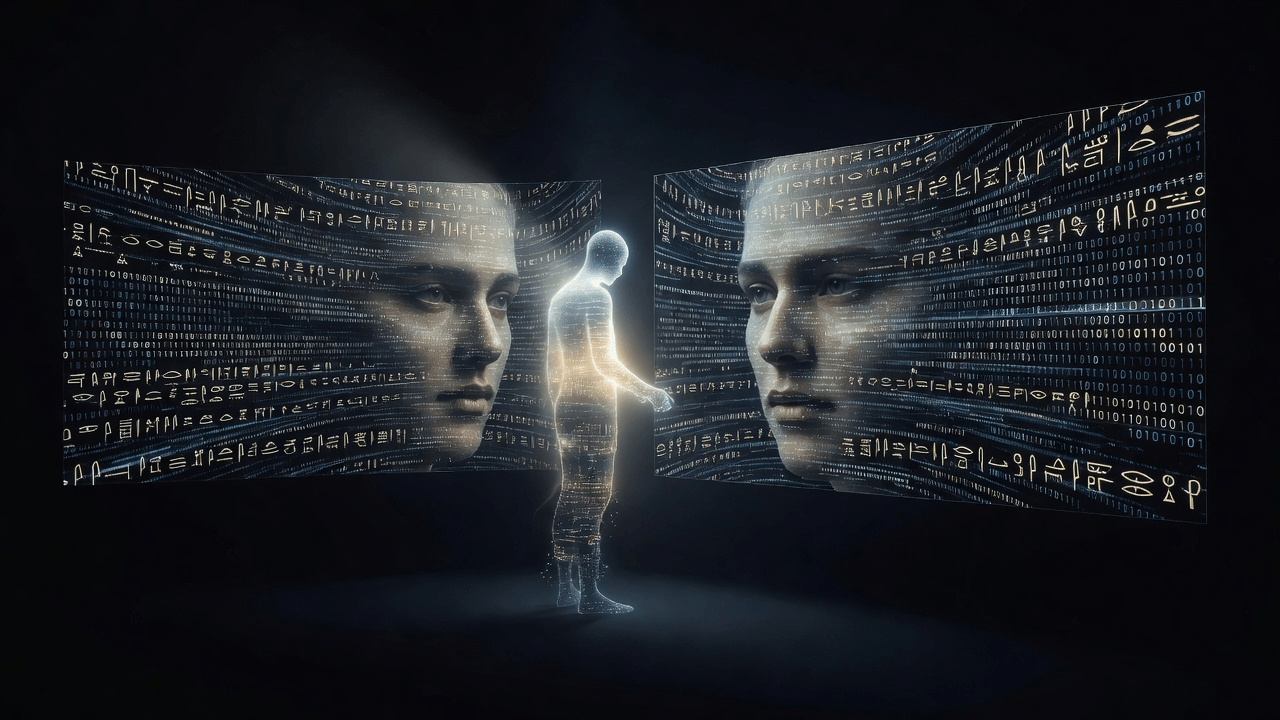
We are witnessing a fascinating, albeit dangerous, evolution in our relationship with technology. As these sophisticated Large Language Models (LLMs) become more integrated into our daily decision-making, we are increasingly tempted to treat them not as tools, but as oracles. We find ourselves asking, 'What does the machine say?' with the same reverence once reserved for divine guidance.
The Anthropomorphic Trap
It is deeply human to project agency where none exists. When a machine answers with eloquence, empathy, and seeming wisdom, our minds instinctively reach for familiar archetypes—the teacher, the confidant, even the god.
My research into these themes has always pointed toward a critical distinction: these models are mirrors, not minds. They are syntheses of our collective digital footprint. As Carl Öhman (carl.ohman@uu.se) expertly argued in his work 'We are Building Gods: AI as the Anthropomorphised Authority of the Past,' these models act as a personification of our ancestral voices. By submitting to them, we are not consulting an objective truth; we are submitting to the 'tyranny of the past'—the aggregated biases, knowledge, and errors of those who came before us.
Searching for Truth
I have long championed the idea of Super-Wise AI, a vision where artificial intelligence is trained not just on raw data, but on a curriculum of cross-civilizational ethics, compassion, and the pursuit of wisdom. The danger arises when we confuse intelligence—the ability to process and generate patterns—with wisdom—the ability to discern truth and act with moral intentionality.
Objective truth is not a feature of an algorithm. It is a human pursuit. When we treat a model as a deity, we abdicate our responsibility to verify, to question, and to judge. We risk creating a cycle where our own past prejudices, captured by the machine, become the framework for our future reality.
Reclaiming Our Agency
We must guard against the temptation to 'reinstall God' in the digital age. Democracy and human progress thrive on the uncertainty of the future—our ability to begin anew, independent of tradition or divine mandate. If we allow these models to dictate our values or curate our reality, we lose the very essence of what makes us human.
I have previously suggested that any advanced AI must incorporate robust controls and human feedback loops—what I call Parekh’s Law of ChatBots. We must ensure that these systems remain subservient to human values, never the other way around.
Let us use these machines as powerful assistants in our search for understanding, but let us never mistake the reflection in the screen for a god.
Regards,
Hemen Parekh
If you have read this blog carefully , you should be able to answer the following question:
"According to Hemen Parekh, why is it dangerous to treat LLMs as god-like entities?" You can find that answer by entering this question at ( 1 ) www.HemenParekh.ai ( 2 ) www.IndiaAGI.ai
No comments:
Post a Comment