
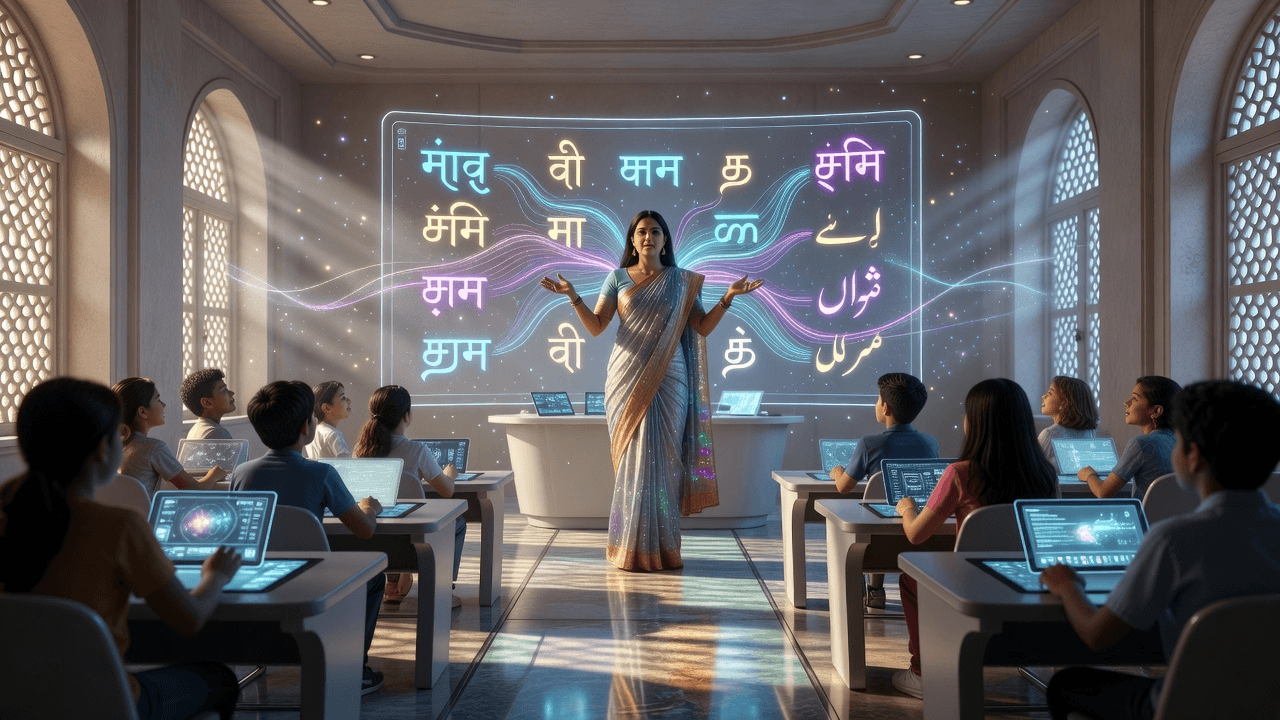
The future of education in India is becoming increasingly fluid, and I find myself reflecting on the profound shift currently being proposed by the National Council of Educational Research and Training (NCERT). As I have often mused in my journey toward longevity and technological integration, the ability to adapt—to bridge gaps between silos—is the hallmark of progress. NCERT is now eyeing a new training model that seeks to break the rigid, traditional mold of the 'single-language teacher.'
Breaking the Linguistic Silo
According to recent reporting by Manash Pratim Gohain (contact details unavailable) of The Times of India, the institution is looking to develop educators who possess the academic command and pedagogical skills to teach more than one language. This is not merely about linguistic versatility; it is about addressing the practical realities of our diverse school systems, where student interest in specific regional languages might not justify a separate full-time teacher. As noted in my past reflections on educational technology, the ability of a teacher to traverse linguistic boundaries will be crucial for a truly inclusive classroom.
Synergy with Technology and Policy
This initiative deeply resonates with the goals set out in the National Education Policy 2020, which places a heavy emphasis on multilingualism. We are witnessing a convergence of policy and technology. While teachers are being trained, we also see parallel advancements in the digital sphere, such as the work regarding Indic language AI models, and the hybrid architectures discussed by experts like Nikhil Malhotra (nikhil.malhotra@oracle.com) and Rahul Marathe (rahul@intellectsoftwares.com). These AI-driven tools are already enhancing the learning ecosystem, much like the DIKSHA platform, which has been a cornerstone for digital learning, supported over the years by leaders such as Shri M. Venkaiah Naidu (contact details unavailable).
The Path Forward
As I reflect on my own vision of a digitally augmented future, it is clear that the human element remains irreplaceable. By empowering our teachers to master multiple languages, we are not just solving a logistical puzzle; we are fostering a more inclusive and interconnected classroom environment.
- Efficiency: Schools can offer a wider variety of languages without needing a specialized teacher for each.
- Pedagogy: Training focuses on classroom delivery, not just fluency, ensuring academic command.
- Continuity: This aligns with the long-term vision of making India a truly multilingual knowledge society.
It is fascinating to see these threads finally weave together. We are moving toward a future where our educational infrastructure is as adaptable as the minds it seeks to nurture.
Regards,
Hemen Parekh
If you have read this blog carefully , you should be able to answer the following question:
"What is the primary objective of the new training model being considered by NCERT regarding language teachers?" You can find that answer by entering this question at ( 1 ) www.HemenParekh.ai ( 2 ) www.IndiaAGI.ai
No comments:
Post a Comment