
Why I Worry About Missing Voters
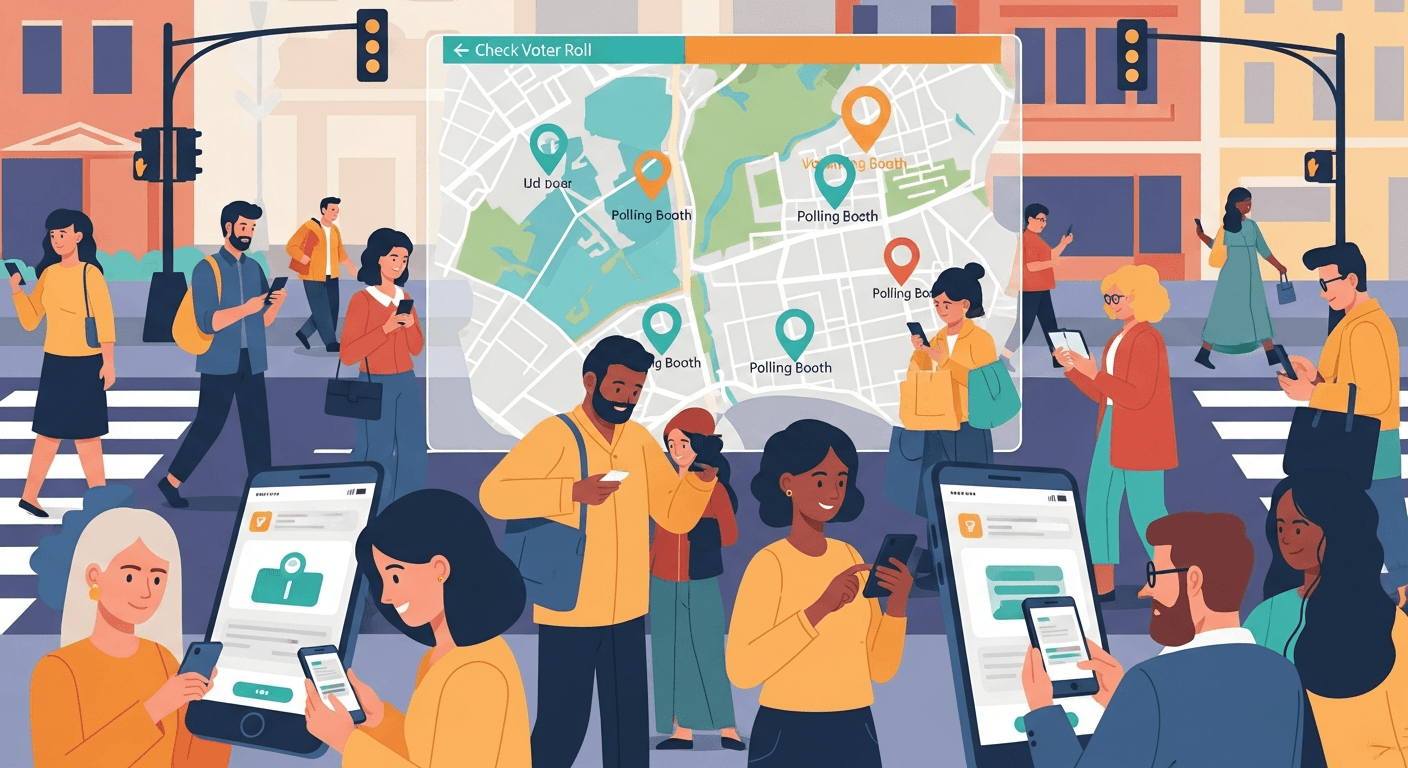
Every time I read that urban cities are lagging in electoral roll revision, a simple thought nags me: when the rolls are wrong, democracy itself is less representative. Recently the State Chief Electoral Officer urged voter self-mapping — asking citizens to check and update their registration details themselves. That appeal is practical, urgent, and also a reminder that civic systems must meet citizens where they are: in dense, mobile, fast-changing cities.
What I see on the ground
- Urban populations are mobile: students, short-term workers, migrants, and young professionals change addresses often.
- Traditional door-to-door revision and paper notices miss busy city residents.
- When rolls are outdated, eligible voters are disenfranchised and electoral planning becomes harder.
This is not a new worry for me. I have written about ideas to make voting accessible and to reduce "lost votes" long before these conversations hit headlines — for example, my thoughts on a stepwise VotesApp rollout and remote voting experiments First Step to VotesApp and the possibilities behind voting from workplaces or remote centers Vote-from-workplace: How about from anywhere?. These pieces are not fairy tales; they are design notes for bridging administrative processes and citizens' real lives.
Voter self-mapping: what it should mean
When officials ask citizens to "self-map," they are asking for three things, in spirit:
- Verify: Check that your name, address, and polling station are correct.
- Update: Submit changes when you move, or if details (name, age, photo) are wrong.
- Report: Help identify missing or duplicate records in your neighborhood.
But requests alone are not enough. For self-mapping to succeed in our cities, the process must be:
- Simple: A mobile-first web page or lightweight app that works on low-bandwidth.
- Trustworthy: Clear privacy guarantees and no commercial data-use loopholes.
- Guided: Short, multilingual prompts and local helplines or kiosks for those who need help.
Practical steps I would support today
- Deploy a short mobile-friendly flow for verification (name, address, booth) that takes under five minutes.
- Integrate photo ID upload with simple checks but also provide an offline alternative (neighborhood verification counters) for those uncomfortable with uploads.
- Use QR codes at municipal offices, colleges, and workplaces that open the verification page pre-filled for each ward.
- Partner with civic groups and resident associations to run "roll revision drives" on weekends — volunteers can assist elders and recent migrants.
- Publish anonymized dashboards for each ward: how many verified, how many pending, what common errors exist.
Design trade-offs we must accept and debate
- Privacy vs. usability: pre-filled forms and device recognition speed the process but raise privacy questions. Any design must default to minimal data collection and explicit opt-ins.
- Speed vs. fraud prevention: fast verification should not bypass checks that prevent duplicate or malicious entries. I favour layered verification: fast self-declare + light verification + in-person checks for flagged cases.
- Centralization vs. local outreach: national portals are efficient; local touchpoints build trust. Use both.
A role for technology — but with humility
Technology can remove friction: pre-filled forms, SMS reminders, geofenced prompts near municipal offices, and booth lookup by PIN code. But tech is not a panacea. Cities need people on the ground — municipal clerks, volunteers, college students — to help translate a web form into real action for diverse citizens.
If we design a simple verification flow, pilot it in a few wards, measure uptake, and iterate, we can scale without causing confusion. That is the incremental approach I have argued for before: start small, prove the model, then expand. See my earlier proposals for phased approaches to digital voting and participation in First Step to VotesApp and related notes on reducing lost votes in From “Lost Votes” to “Remote Votes”?.
What citizens can do right now
- Check your registration on the official election portal or visit your local booth office.
- If you have recently moved, submit an address change — do it the moment you settle.
- Help an elder or a newly arrived neighbour verify their name and booth.
- Push your resident association to host a roll-revision drive and invite election officials.
My hope (and ask) to election officials
If the CEO is calling for self-mapping, pair that call with accessible tools, community outreach, and transparent metrics. The ask should never be a finger-wag to citizens — it should be an invitation backed by real help. Measure success by how many previously-missing voters were found, not by press releases.
I still believe small, iterative interventions — thoughtfully designed digital forms, local help desks, and community partnerships — will close the urban gap in roll revision. Democracy deserves systems that match the pace of city life. Let us make roll revision not an annual chore but a continuous, citizen-friendly service.
Regards,
Hemen Parekh
Any questions / doubts / clarifications regarding this blog? Just ask (by typing or talking) my Virtual Avatar on the website embedded below. Then "Share" that to your friend on WhatsApp.
Get correct answer to any question asked by Shri Amitabh Bachchan on Kaun Banega Crorepati, faster than any contestant
Hello Candidates :
- For UPSC – IAS – IPS – IFS etc., exams, you must prepare to answer, essay type questions which test your General Knowledge / Sensitivity of current events
- If you have read this blog carefully , you should be able to answer the following question:
- Need help ? No problem . Following are two AI AGENTS where we have PRE-LOADED this question in their respective Question Boxes . All that you have to do is just click SUBMIT
- www.HemenParekh.ai { a SLM , powered by my own Digital Content of more than 50,000 + documents, written by me over past 60 years of my professional career }
- www.IndiaAGI.ai { a consortium of 3 LLMs which debate and deliver a CONSENSUS answer – and each gives its own answer as well ! }
- It is up to you to decide which answer is more comprehensive / nuanced ( For sheer amazement, click both SUBMIT buttons quickly, one after another ) Then share any answer with yourself / your friends ( using WhatsApp / Email ). Nothing stops you from submitting ( just copy / paste from your resource ), all those questions from last year’s UPSC exam paper as well !
- May be there are other online resources which too provide you answers to UPSC “ General Knowledge “ questions but only I provide you in 26 languages !




No comments:
Post a Comment