
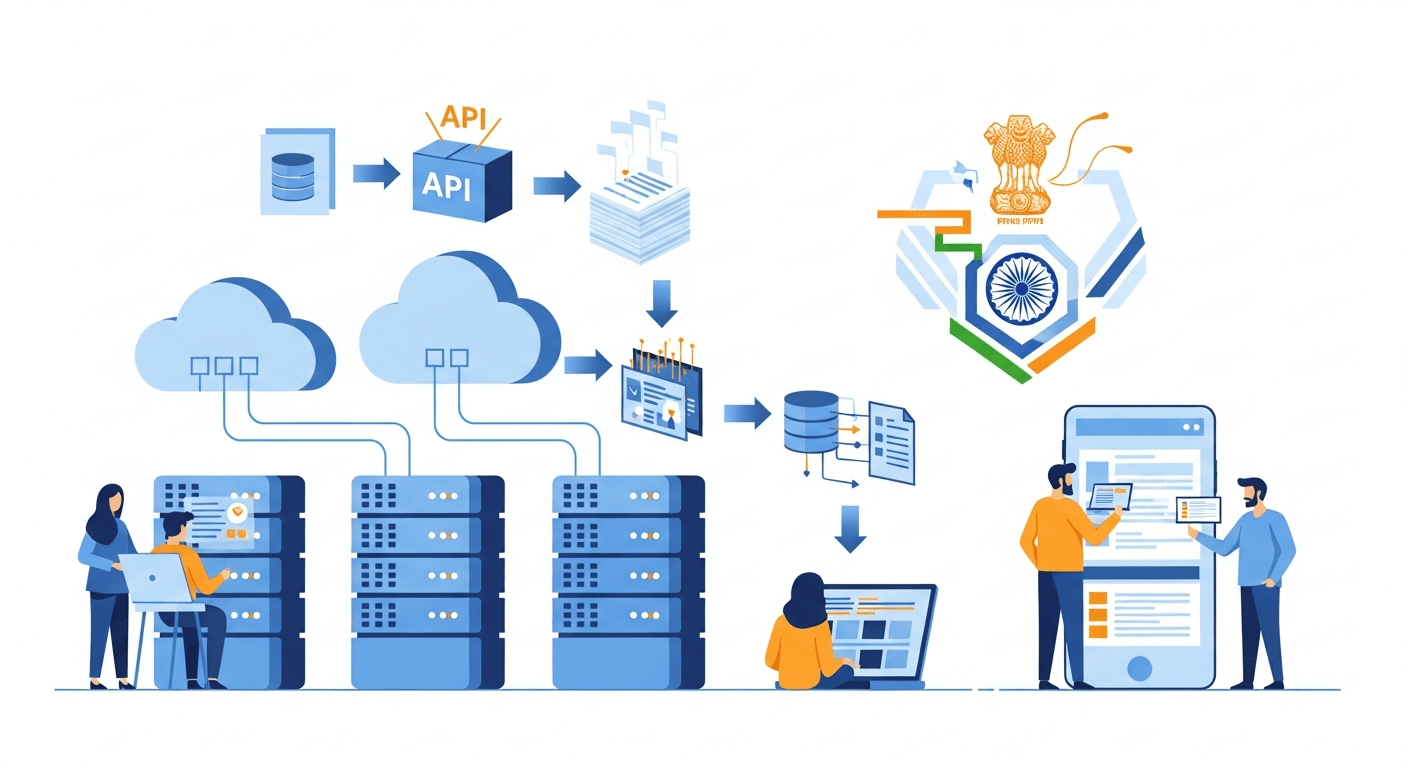
Why the MCA filing architecture matters
I have been watching the Ministry of Corporate Affairs (MCA) modernisation story for years. Filing architecture is the plumbing of corporate compliance: it determines how companies report, how regulators check, and how markets and citizens access reliable corporate data. When the filing backbone is brittle, every downstream process — audits, enforcement, credit decisions — becomes slower, costlier and riskier.
In recent weeks the MCA has proposed an overhaul of its filing architecture and invited suggestions. The aim is sensible: make filings simpler, faster, machine‑readable and better integrated with other government systems. This note summarises what I understand the proposal to cover, why it’s being considered, likely technical and procedural changes, the benefits and the tradeoffs, and practical advice for companies and advisers who intend to respond.
I have argued for breaking silos and improving the MCA‑21 experience before; see my earlier reflections on MCA‑21 and the need to interlink databases and streamline interfaces A Welcome (though long overdue) Step and Break‑down the Silos.
What MCA is proposing (high level)
- A re‑engineered filing architecture that reduces duplicate entry and supports structured, API‑first access to corporate records.
- Better integration with other government databases (tax, GST, banking regulators) to enable pre‑filled data and continual validation.
- A modular, service‑oriented MCA portal where forms are dynamic, machine‑readable and interoperable with third‑party compliance tools.
- A public consultation to gather stakeholder suggestions on functional design, data flows, privacy and transition planning.
I do not repeat exact text from any official circular here; rather I summarise the conceptual thrust that the consultation seeks feedback on.
Why an overhaul is being considered
- Duplication: filers repeatedly supply the same company details across forms.
- Poor machine‑readability: much data remains in PDFs or free‑text fields, limiting automated analytics and enforcement.
- Fragmentation: data silos reduce the effectiveness of routine checks and delay detection of risk signals.
- User experience: slow, unintuitive portals increase compliance costs for small and mid‑sized companies.
Proposed technical and procedural changes
Technical
- API‑first architecture: open, authenticated APIs for submission, retrieval and validation of filings.
- Structured schemas: standard JSON/XML schemas for each filing type so data is machine‑readable and reusable.
- Single source of truth: canonical company records that pre‑populate filings using identifiers (PAN, CIN, GSTIN) and avoid repeated entry.
- Event‑driven checks: background validation jobs that flag inconsistencies in near real‑time.
- Role‑based access and audit trails: stronger logging for who submitted/approved filings.
Procedural
- Streamlined form taxonomy: fewer, clearer filing categories and a phased retirement of redundant forms.
- Self‑certification with risk‑based verification: lighten low‑risk procedural filings while strengthening checks for material disclosures.
- Clear transition rules and grandfathering for legacy filings.
- Inter‑agency MoUs and data sharing protocols with tax and financial regulators.
Potential benefits and challenges
Benefits
- Lower compliance cost and time for companies, especially repeat filers and accountants.
- Faster regulatory analytics and more timely enforcement actions.
- Better public search and credit assessment data for investors and banks.
- Platform opportunities for compliance software vendors through APIs.
Challenges
- Data governance and privacy: integrating databases raises legitimate concerns about consent, scope and retention.
- Implementation risk: large IT overhauls are vulnerable to delays, cost overruns and user friction during transition.
- Legacy data clean‑up: poor quality historical records will need remediation before they can become reliable single sources.
- Change management: training officers and stakeholders to use new workflows is non‑trivial.
Who should respond and how
Who
- Company secretaries and in‑house legal/compliance teams
- Chartered accountants and audit firms
- Corporate law practitioners and industry associations
- Technology vendors who build compliance software
- Academics and data privacy experts
How to respond (practical steps)
- Read the consultation notice on the MCA website and note the submission deadline (consultation periods vary; check the official circular).
- Prepare a concise response: describe practical pain points you currently face, propose specific schema/field‑level changes, and comment on privacy, consent and transition timelines.
- Include examples and mock JSON/XML snippets where relevant — these are immensely helpful to technical reviewers.
- Join industry group responses through chambers of commerce or professional bodies to amplify operational perspectives.
- Offer to pilot APIs or participate in sandbox trials if the MCA sets them up.
Because the consultation is an opportunity to shape both the rules and the technical design, responses that combine operational realities with concrete technical suggestions (e.g., field types, error codes, validation logic) will carry weight.
Timeline and next steps (typical pattern)
- Consultation window: usually 4–8 weeks (but check the specific notice).
- Review and redrafting: the ministry will collate responses and may publish a revised draft or an implementation plan.
- Pilot phase: selected pilots or sandboxes with industry volunteers.
- Phased rollout: incremental migration of forms and enforcement of new formats over 6–18 months (expect staged adoption to reduce disruption).
Practical advice for companies and compliance professionals
- Inventory: compile an internal inventory of filings, fields and frequency — this is the best input you can provide to the consultation.
- Map dependencies: note which filings rely on external systems (tax, GST) and where data mismatch occurs today.
- Build test harnesses: ask your IT teams to be ready to consume APIs and to supply sample payloads.
- Train teams early: plan training and change management for secretarial and finance teams so they can adapt quickly.
- Engage collectively: industry associations can negotiate pragmatic transition timelines with regulators.
An overhaul of MCA filing architecture is an opportunity to reduce friction across the corporate lifecycle. It will not be perfect out of the gate, but careful consultation, pragmatic pilots and disciplined data governance can make a lasting difference.
Regards,
Hemen Parekh
Any questions / doubts / clarifications regarding this blog? Just ask (by typing or talking) my Virtual Avatar on the website embedded below. Then "Share" that to your friend on WhatsApp.
Get correct answer to any question asked by Shri Amitabh Bachchan on Kaun Banega Crorepati, faster than any contestant
Hello Candidates :
- For UPSC – IAS – IPS – IFS etc., exams, you must prepare to answer, essay type questions which test your General Knowledge / Sensitivity of current events
- If you have read this blog carefully , you should be able to answer the following question:
- Need help ? No problem . Following are two AI AGENTS where we have PRE-LOADED this question in their respective Question Boxes . All that you have to do is just click SUBMIT
- www.HemenParekh.ai { a SLM , powered by my own Digital Content of more than 50,000 + documents, written by me over past 60 years of my professional career }
- www.IndiaAGI.ai { a consortium of 3 LLMs which debate and deliver a CONSENSUS answer – and each gives its own answer as well ! }
- It is up to you to decide which answer is more comprehensive / nuanced ( For sheer amazement, click both SUBMIT buttons quickly, one after another ) Then share any answer with yourself / your friends ( using WhatsApp / Email ). Nothing stops you from submitting ( just copy / paste from your resource ), all those questions from last year’s UPSC exam paper as well !
- May be there are other online resources which too provide you answers to UPSC “ General Knowledge “ questions but only I provide you in 26 languages !





No comments:
Post a Comment