
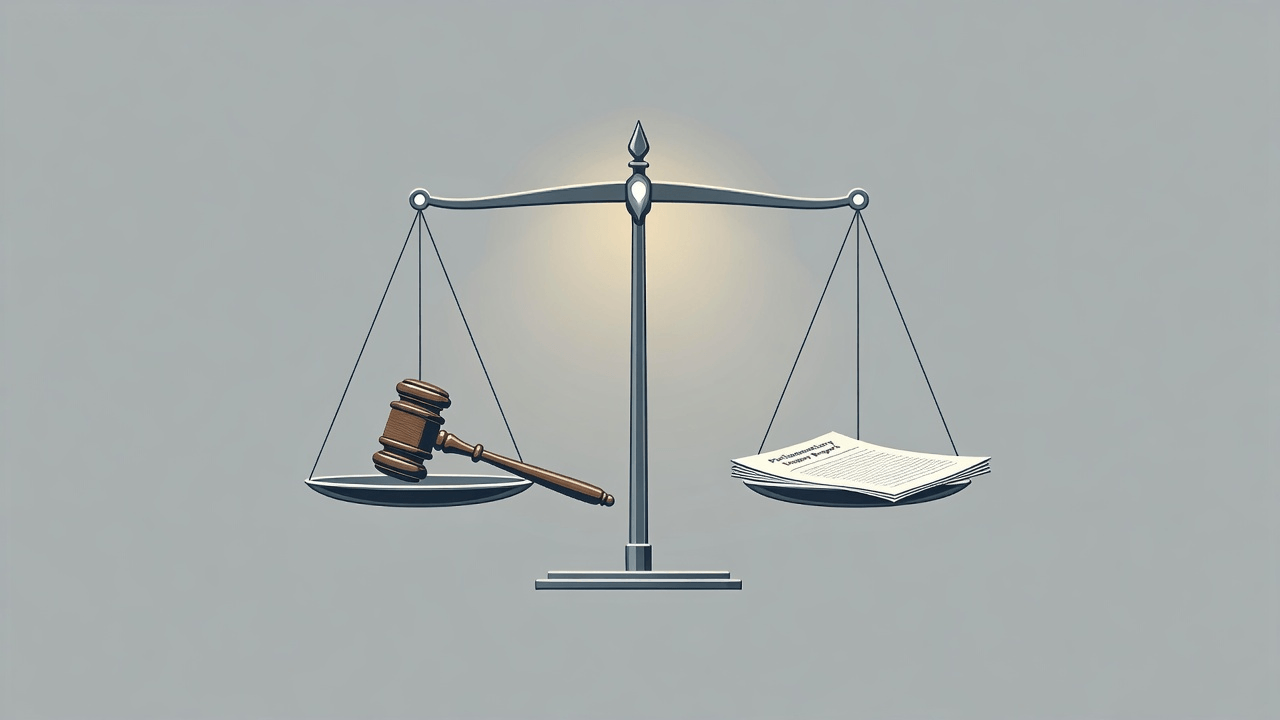
As I reflect on the evolving landscape of our democracy, I am struck by the delicate balance between maintaining institutional integrity and ensuring the rights of those entrusted by the public to govern. The Joint Parliamentary Committee (JPC) is currently examining the Constitution (130th Amendment) Bill, which has sparked intense debate regarding the removal of elected representatives—the Prime Minister, Chief Ministers, and Ministers—if they are detained for more than 30 days due to serious criminal allegations.
A Necessary Safeguard?
The core of the controversy, championed by leaders like Amit Shah (s.roy@mha.gov.in), lies in the argument that those accused of serious offences cannot effectively govern from behind bars. Yet, the risk of political misuse of state machinery remains a potent concern for many. It is encouraging, therefore, to see the committee acknowledging the necessity of a 'sunset clause' for reappointment. This clause aims to ensure that if a lawmaker is eventually acquitted, their removal does not stand as a permanent disability, thereby upholding the principle of natural justice.
Continuity of Reflections
I have previously written about the dangers of institutional overreach and the importance of constitutional checks and balances. The debate surrounding this bill mirrors concerns I have often raised—that when we design mechanisms to hold power accountable, we must be careful not to inadvertently create tools that can be weaponized against political opponents. The proposal to allow reinstatement post-acquittal is a vital step toward tempering the potential harshness of the original bill.
Perspectives from the Field
Many in the opposition, including Sanjay Raut, have voiced strong objections, fearing that this legislation could be used to bulldoze elected governments. The discourse within the JPC highlights the high stakes for our democratic structure. It is a reminder that the health of our democracy depends not just on the efficiency of the law, but on its fairness and the protection it offers to the individual against the sheer weight of state authority.
As we look forward to the legislative proceedings ahead, one must ask: can such a clause truly prevent the political damage that occurs during a period of forced removal, or is it merely a procedural band-aid? The finalization of the JPC report will be a significant moment in this ongoing chapter of our constitutional history.
Regards,
Hemen Parekh
If you have read this blog carefully , you should be able to answer the following question:
"What is the purpose of the proposed 'sunset clause' in the 130th Constitution Amendment Bill?" You can find that answer by entering this question at ( 1 ) www.HemenParekh.ai ( 2 ) www.IndiaAGI.ai
No comments:
Post a Comment