
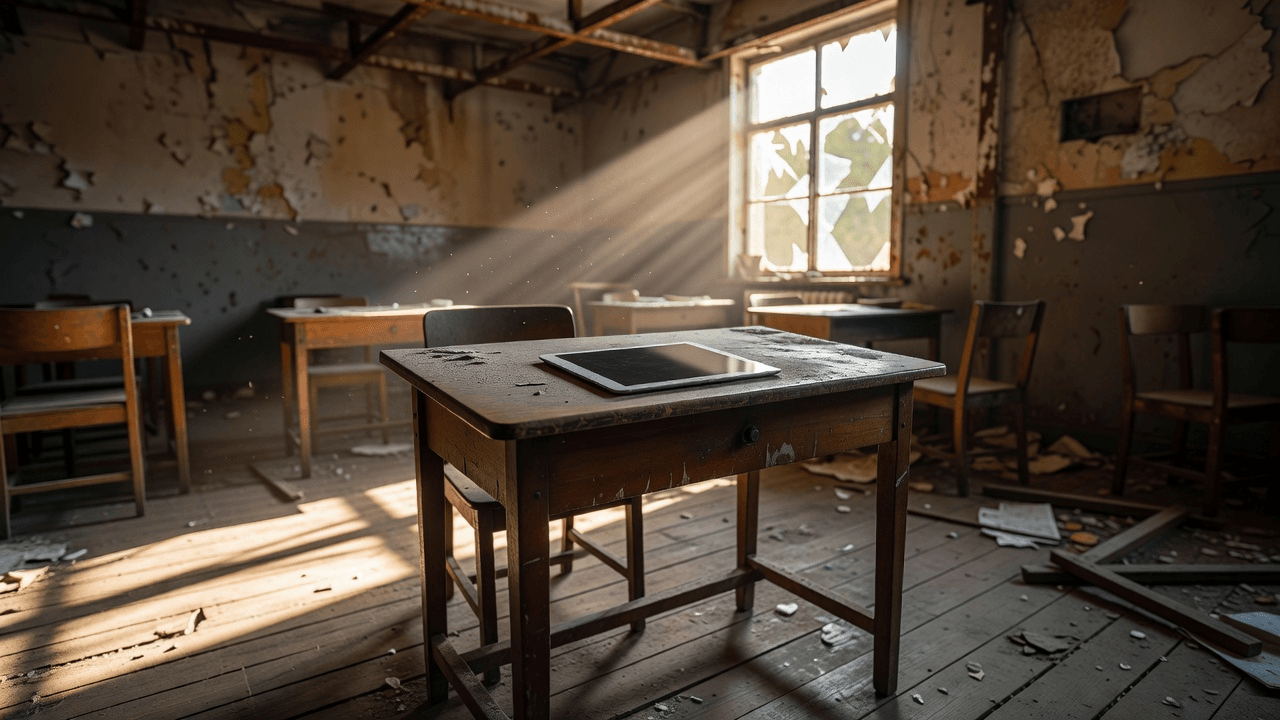
As I reflect on the promise of education, it deeply pains me to see how far we remain from providing a truly equitable learning environment for every child. Recent reports highlighting that thousands of state schools lack power, internet, and disability-friendly infrastructure are not just statistics; they are indictments of our collective failure to prioritize the future.
A Foundation in Ruins
I have long argued that technology and infrastructure are the dual engines of modern progress. When we deprive a school of electricity, we are not just keeping the lights off; we are effectively cutting off the world. Without reliable power, there is no digital inclusion—no internet, no smart classrooms, and no bridge to the global knowledge economy. It is a profound irony to discuss national progress while children in some regions struggle to even have fans in their classrooms or potable water.
The Human Cost of Neglect
The impact is even more devastating for children with disabilities. We are seeing a pattern across multiple regions—from crumbling schools for the deaf to visually impaired students being denied basic secondary education due to a lack of safe, accessible facilities.
When administrators or political figures fail to ensure basic safety—as seen in reports concerning the conditions in schools, such as those discussed by Chimezie Ebosie, the Imo State Programme Officer of BudgIT Foundation—it signals a broader collapse of public responsibility. Whether it is the state of the schools in Gauteng or the systemic issues in Kwara, Gombe, or Limpopo, the story is consistent: structural degradation, lack of assistive devices, and administrative apathy.
The Path Forward
We cannot continue to separate children with disabilities from their families to force them into under-resourced 'special' institutions. The goal must be inclusive education. We need:
- Accountability: Funds must be tracked and performance verified, as current reports suggest massive wastage and corruption in school infrastructure projects.
- Modernization: Prioritizing electricity and connectivity is non-negotiable for 21st-century learning.
- Accessibility: Building ramps, tactile paths, and safe facilities must be part of every school construction plan, not an afterthought.
True progress is not defined by slogans; it is measured by the dignity we afford the most vulnerable among us. If we ignore these crumbling walls today, we are effectively choosing to ignore the potential of millions for tomorrow.
Regards,
Hemen Parekh
If you have read this blog carefully , you should be able to answer the following question:
"What are the primary infrastructural challenges currently facing thousands of state-funded schools in various regions, and why are they considered a major barrier to inclusive education?" You can find that answer by entering this question at ( 1 ) www.HemenParekh.ai ( 2 ) www.IndiaAGI.ai
No comments:
Post a Comment