
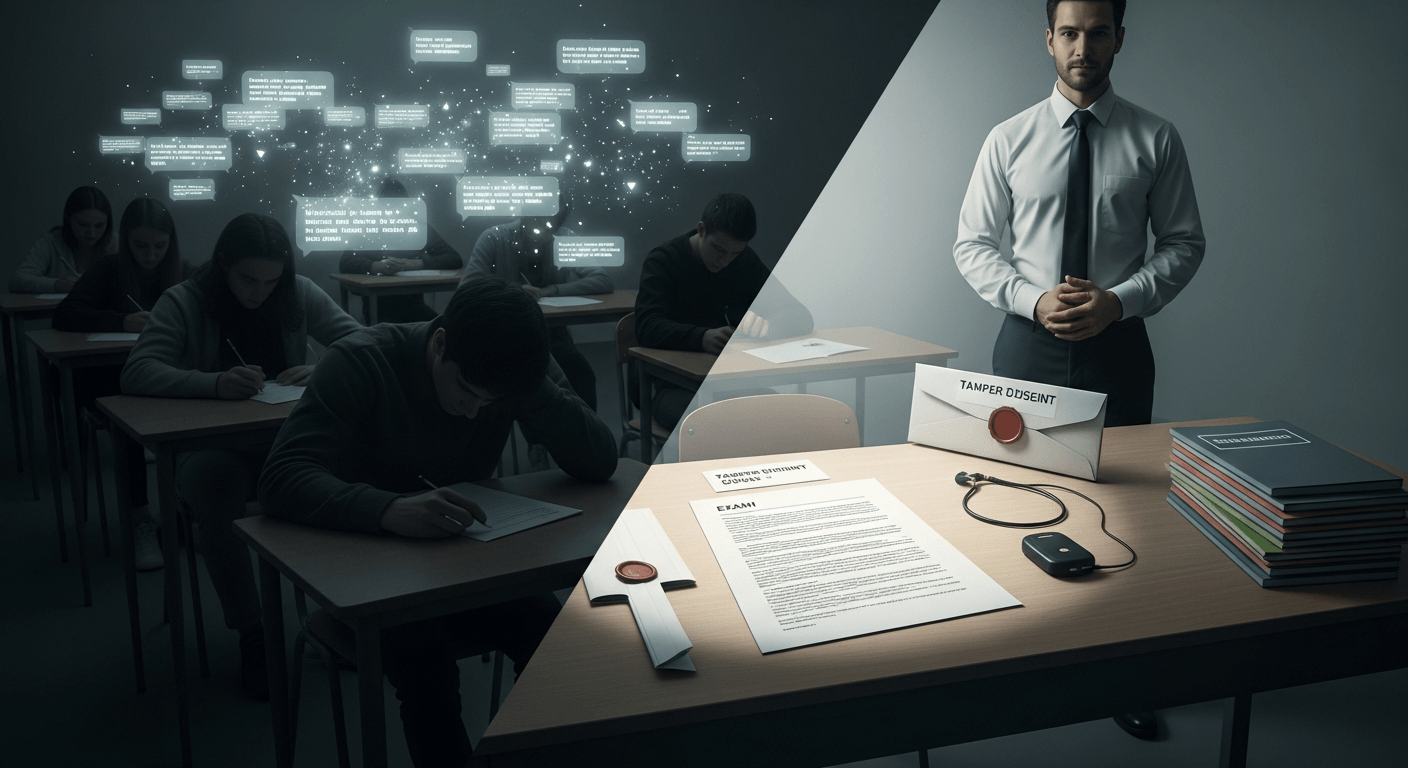
I woke up the morning after the re-NEET announcement feeling two things at once: anger for the students who lost time and sleep, and an uneasy clarity about how fragile high‑stakes systems are when tech, incentives, and human shortcuts meet.
What happened — in plain terms
Reports say the NEET paper leak forced the government and exam authorities into a security review and a crackdown on channels used to trade stolen papers — Telegram being the most visible of them. The immediate response is understandable: when merit, careers, and public trust are on the line, authorities must act swiftly to restore order and confidence (Economic Times coverage). I have written about the need for closer scrutiny of exam processes before, when NEET irregularities put the National Testing Agency under the spotlight — those earlier reflections still ring true today.[^1]
What this exposes
- High stakes create black markets. When admission to medical school is a single exam with massive rewards, there will be actors looking for shortcuts.
- Technology multiplies reach. Encrypted groups, instant forwarding, and anonymous accounts allow leaked content to spread almost instantly across platforms and borders.
- Operational gaps matter as much as technology. Lapses in paper handling, distribution, or centre allocation often create the opening that makes leaks possible.
Why a simple crackdown isn’t enough
Cracking down on Telegram channels or prosecuting intermediaries is necessary, but it addresses symptoms more than causes. There are three tensions we must balance:
- Security vs. privacy: Aggressive monitoring can deter leaks, but it risks sweeping surveillance and chilling effects on free expression.
- Technology vs. process: Tech fixes (encryption, geo‑tagging, digital watermarking) help — but if paper transport, centre allocation, and human oversight remain weak, technology only delays failure.
- Punishment vs. prevention: Arrests make headlines; structural reforms reduce the incentive and opportunity for crime.
Practical measures that actually help
I believe a layered approach is needed — one that combines immediate operational fixes with longer‑term structural change.
- Strengthen chain‑of‑custody and logistics
- Strict, auditable handling of physical and digital question papers; tamper‑evident seals; GPS‑tracked transport; multi‑person signoffs.
- Use technology intelligently
- Ephemeral, center‑specific question sets with randomized permutations.
- Digital watermarking and forensic metadata on digital assets so leaks can be traced and validated.
- Secure on‑premise or offline delivery to centres where possible.
- Improve test design and delivery
- Multiple time‑staggered sessions with comparable question banks to reduce single‑point risk.
- Move some high‑stake decisions away from one exam — consider portfolios, interviews, and staged assessments.
- Work with platforms — legally and transparently
- Fast, legal routes for authorities to request takedowns and data from platforms while preserving due process.
- Public transparency reports on takedowns and investigations to rebuild trust.
- Invest in people and process
- Better training and rotation of invigilators, stronger background checks, and incentives to report irregularities.
- Reduce perverse incentives
- Expand seats, diversify admission routes, and provide scholarships and growth pathways so the market pressure on a single exam decreases.
The privacy and civil‑liberties angle
We must be careful not to invite surveillance that outlives the crisis. Encryption and private channels serve legitimate needs; we cannot undermine those protections without clear legal guardrails. Any surveillance or platform cooperation must be narrowly targeted, procedurally transparent, and subject to independent oversight.
Beyond enforcement: address the demand side
There is a thriving market for leaked papers because demand exists — students (or their proxies), desperate parents, unscrupulous coaching ecosystems. Reducing demand requires:
- Better counselling and realistic pathways so students aren’t driven to extreme measures.
- Reducing the monopoly power of a single exam by creating parallel, credible routes into professions.
- Social campaigns that stigmatize cheating and celebrate integrity.
My ask of policymakers and technologists
- Treat this as an opportunity to redesign exam ecosystems, not just to plug leaks.
- Publish an independent, timestamped roadmap of reforms and audits so citizens can track progress. I have urged similar transparency in earlier posts when agencies came under close watch; visible accountability matters.[^1]
- Build public‑private protocols for emergency takedowns that still respect due process and privacy.
Final thought
Security theatre — headlines about raids and channel bans — will calm the room briefly. Real resilience comes from combining rigorous logistics, intelligent use of technology, smarter exam design, and socio‑economic reforms that reduce the pressure valve that fuels leaks. We can secure the next NEET without turning every classroom into a surveillance cell, but only if we commit to layered, humane solutions.
Regards,
Hemen Parekh
Any questions / doubts / clarifications regarding this blog? Just ask (by typing or talking) my Virtual Avatar on the website embedded below. Then "Share" that to your friend on WhatsApp.
[^1]: I discussed similar concerns about NEET security and the need for transparent corrective steps in an earlier post: NTA under close Watch.
Get correct answer to any question asked by Shri Amitabh Bachchan on Kaun Banega Crorepati, faster than any contestant
Hello Candidates :
- For UPSC – IAS – IPS – IFS etc., exams, you must prepare to answer, essay type questions which test your General Knowledge / Sensitivity of current events
- If you have read this blog carefully , you should be able to answer the following question:
- Need help ? No problem . Following are two AI AGENTS where we have PRE-LOADED this question in their respective Question Boxes . All that you have to do is just click SUBMIT
- www.HemenParekh.ai { a SLM , powered by my own Digital Content of more than 50,000 + documents, written by me over past 60 years of my professional career }
- www.IndiaAGI.ai { a consortium of 3 LLMs which debate and deliver a CONSENSUS answer – and each gives its own answer as well ! }
- It is up to you to decide which answer is more comprehensive / nuanced ( For sheer amazement, click both SUBMIT buttons quickly, one after another ) Then share any answer with yourself / your friends ( using WhatsApp / Email ). Nothing stops you from submitting ( just copy / paste from your resource ), all those questions from last year’s UPSC exam paper as well !
- May be there are other online resources which too provide you answers to UPSC “ General Knowledge “ questions but only I provide you in 26 languages !



No comments:
Post a Comment