
Introduction
I remember standing on a dusty street in central India and feeling the air press against my skin like a warm, damp blanket. That sensation is what brings me to Banda today — a district in Uttar Pradesh that, in recent years, has become shorthand for how intense India’s pre-monsoon heat can feel. Reports have even described Banda among the hottest cities in the world on certain days. I want to explain, in plain language and with an eye for solutions, what is making Banda so unbearably hot and what residents and authorities can do about it.
What’s driving Banda’s extreme heat?
Meteorological factors
- Pre-monsoon dynamics: In north-central India, the months before the monsoon bring clear skies, intense solar heating and persistent high-pressure systems. With little cloud cover, daytime solar radiation builds up rapidly, pushing temperatures into the mid-40s Celsius and sometimes higher.
- Dry continental air: Banda sits far from the cooling influence of the sea. When continental air masses dominate, humidity can be low while temperatures spike — a combination that dries soils and increases daytime heating.
Geographic and landscape reasons
- Location and elevation: Banda lies in the Bundelkhand region of Uttar Pradesh, at relatively low elevation and in an inland setting. Inland locations warm and cool faster than coastal regions because they lack moderating sea breezes.
- Sparse tree cover and exposed soils: Areas with less vegetation lose their ability to cool via shade and evapotranspiration (the process by which plants release water vapor), so local temperatures rise more quickly.
Urban and human contributions
- Urban heat island effect: Even smaller cities like Banda can develop heat islands where built surfaces — roads, brick and concrete — absorb and re-radiate heat, making nights warmer and days hotter.
- Building materials and albedo: Traditional brick structures and dark roofs have low albedo (they absorb more sunlight), which increases local heating. Albedo is just a measure of reflectivity: darker surfaces = lower albedo = more heat absorbed.
- Local emissions and heat sources: Brick kilns, small-scale industries and diesel-powered pumps add waste heat and particulate pollution that can amplify local warming and worsen air quality.
- Groundwater depletion and land-use change: Intensive groundwater extraction and reduced irrigation can dry soils, reduce local evaporative cooling, and change local microclimates.
Simple explanations of technical terms
- Heat index: A number that combines air temperature and humidity to indicate how hot it feels to humans. Higher humidity makes it feel hotter because sweat evaporates more slowly.
- Wet-bulb temperature: A measure that reflects how well the human body can cool itself by sweating. Sustained wet-bulb values above about 35°C are dangerous for human survival.
- Urban heat island: When towns and cities are noticeably warmer than surrounding rural areas because of buildings, roads and less vegetation.
How extreme heat shows up locally
Local impacts on health
- Heat illnesses increase: Heat exhaustion and heat stroke become more common, especially among outdoor workers, the elderly and people without reliable access to cooling.
- Strain on healthcare: Clinics and hospitals see surges in heat-related ailments and dehydration cases during heatwaves.
On agriculture
- Crop stress and yield loss: High daytime temperatures and evaporative demand stress staple crops at sensitive stages (flowering and grain filling), reducing yields.
- Water stress: Higher temperatures increase irrigation demand while groundwater levels often fall, creating a double bind for farmers.
Infrastructure and daily life
- Power grid stress: Increased demand for cooling can overload local electricity systems, causing outages that worsen heat exposure.
- Roads and rails: Extreme heat can damage road surfaces and rail lines, disrupting transport and supply chains.
- Daily routines shift: Schools close early, markets open at dawn, and communities adapt by changing work hours to avoid peak heat.
Putting Banda in context: recent records and comparisons
- India’s known high: India’s record high of about 51°C in Phalodi in 2016 stands as a benchmark for extreme heat in the country. North-central India regularly sees pre-monsoon peaks in the mid-to-high 40s.
- Global context: Places such as Death Valley, USA, have recorded surface-air temperatures above 54–56°C in recent years; these offer perspective on extreme conditions elsewhere. When Banda appears near the top of daily global rankings, it reflects a day with extraordinary local heating compared with other cities.
What can authorities and residents do?
Short-term coping (days to months)
- Heat action alerts and early warnings: Use simple SMS, loudspeakers and community networks to warn of dangerous heat days and advise protective measures.
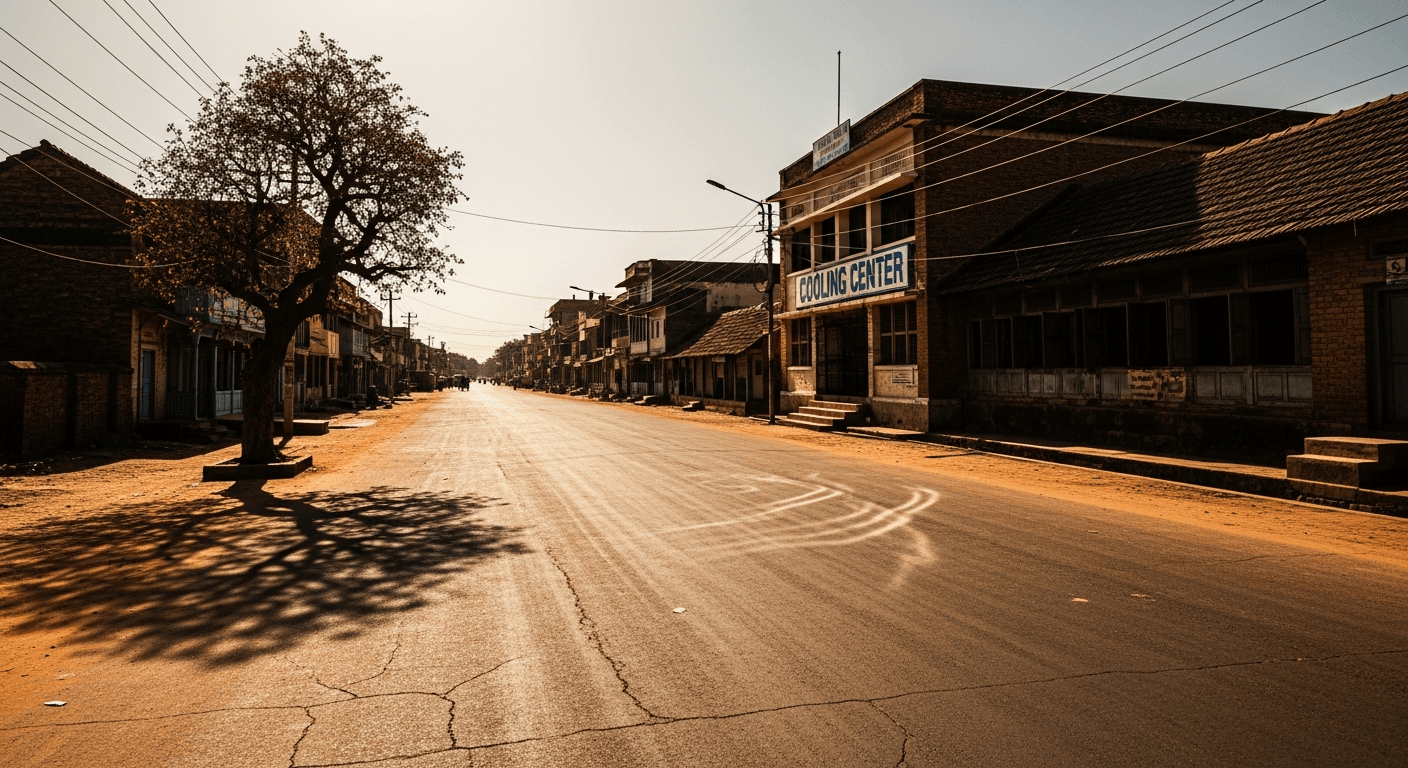
- Cooling centers and hydration points: Open public buildings with shade and water during peak heat hours, prioritizing vulnerable neighborhoods.
- Shifting schedules: Move outdoor work and school hours to early morning or late afternoon; provide mandatory rest and hydration breaks for laborers.
Medium-term adaptation (1–5 years)
- Urban greening: Plant shade trees along streets and in public spaces. Even pocket parks and tree-lined markets reduce temperatures and improve comfort.
- Cool roofs and reflective surfaces: Promote lighter roofing materials or reflective coatings to increase albedo and reduce indoor heat.
- Strengthen power and water resilience: Upgrade grid capacity where possible and ensure emergency water supplies for communities.
Long-term mitigation and policy (5+ years)
Land-use planning and building codes: Integrate heat resilience into building regulations — minimum tree cover targets, cool-roof requirements, and limits on heat-generating industries in dense neighborhoods.
Sustainable agriculture and water policy: Encourage crop choices, irrigation practices and groundwater recharge projects that reduce vulnerability to high temperatures.
Reduce emissions: Transitioning away from high-emission fuels and controlling local sources like brick kilns reduces local heating and helps with regional climate goals.
Heat mapping and data: Invest in fine-scale temperature monitoring and public heat maps so planners can target interventions where they’ll help most.
A concise takeaway and call to action
Banda’s heat is no single cause: it’s the sum of natural seasonal heating, local geography, urban materials and human choices. The good news is that many of the solutions are practical, affordable and scalable: shade, water, reflective roofs, smart scheduling, and sensible policies that protect the most vulnerable. If you live in Banda or care about climate resilience, start locally: plant a tree, push for a heat action plan at the municipality, and insist that public buildings double as cooling centers during heatwaves. Heat is an urgent problem — but it is also one we can slow and manage if we act together.
Regards,
Hemen Parekh
Any questions / doubts / clarifications regarding this blog? Just ask (by typing or talking) my Virtual Avatar on the website embedded below. Then "Share" that to your friend on WhatsApp.
Get correct answer to any question asked by Shri Amitabh Bachchan on Kaun Banega Crorepati, faster than any contestant
Hello Candidates :
- For UPSC – IAS – IPS – IFS etc., exams, you must prepare to answer, essay type questions which test your General Knowledge / Sensitivity of current events
- If you have read this blog carefully , you should be able to answer the following question:
- Need help ? No problem . Following are two AI AGENTS where we have PRE-LOADED this question in their respective Question Boxes . All that you have to do is just click SUBMIT
- www.HemenParekh.ai { a SLM , powered by my own Digital Content of more than 50,000 + documents, written by me over past 60 years of my professional career }
- www.IndiaAGI.ai { a consortium of 3 LLMs which debate and deliver a CONSENSUS answer – and each gives its own answer as well ! }
- It is up to you to decide which answer is more comprehensive / nuanced ( For sheer amazement, click both SUBMIT buttons quickly, one after another ) Then share any answer with yourself / your friends ( using WhatsApp / Email ). Nothing stops you from submitting ( just copy / paste from your resource ), all those questions from last year’s UPSC exam paper as well !
- May be there are other online resources which too provide you answers to UPSC “ General Knowledge “ questions but only I provide you in 26 languages !


No comments:
Post a Comment