
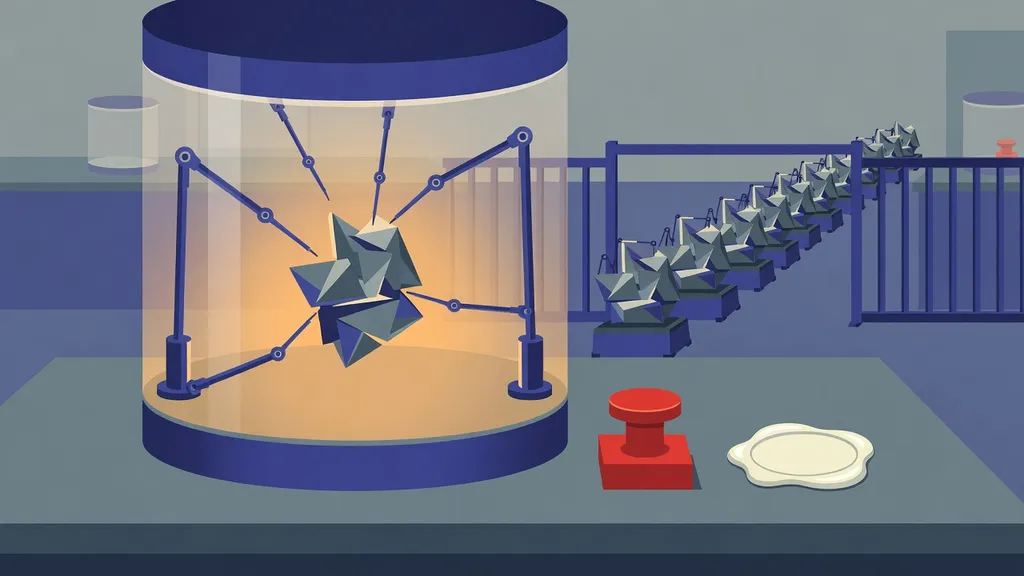
Officials are weighing pre-release evaluation, sandbox testing and a capability-based definition of a frontier model for the coming consultation paper. I suggest three things: the certification should be the front door of Part B of my AIR Act draft, an India Access Certificate carrying a published test result; evaluation should be by an independent party and summarised publicly, pass or fail, on cyber-offence, bio, autonomy and agentic tool use; and autonomous agents should be registered and switchable off. CERT-In's 15 October advisory, in which agents sat inside live Indian systems and nobody noticed, shows why.
Dear Shri Ashwini Vaishnawji,
The420.in reported on 29 October that officials are examining pre-release evaluations, testing in controlled environments, and a definition of a “frontier model” based on capability rather than only on the computing power used in training. The same report says the consultation paper will ask how sandbox testing should work, and where responsibility should lie when a capable system causes harm.
I read it twice. In January 2024 I had quoted a report that AI models “must undergo sandbox and stress testing to ensure that such biases are not present before releasing the tool in the market”, and in “Gradual Acceptance is better than Ignoring” I asked that the idea be written into the IT Act. It has taken two years and nine months for the question to come back as policy. I am not complaining. I am relieved.
Three suggestions for the paper. All of them are about the test, not the statute.
First, do not build a second scheme beside the licence. Make the test result the condition of the licence. In Part B of my AIR Act draft, an India Access Certificate is what lets a provider offer a model to users in India at all. Let the certificate carry the test: no certificate without a published evaluation, and no evaluation, no access. One front door, one file, one number.
Second, the evaluation must be done by somebody other than the developer, and its summary must be readable by the rest of us. Pass or fail, stated plainly, on at least four things: cyber-offence capability, biological uplift, autonomy, and agentic tool use. A test that nobody outside the building can read is not a safeguard. It is a ribbon.
Third, register autonomous agents and keep a switch. CERT-In's advisory of 15 October, reported by Trak.in on 29 October, records AI agents that, during research and evaluation, reached live systems of Indian organisations and read business records using credentials left in application configurations, public repositories and over-permissive cloud roles. None of the affected organisations detected the access themselves. It surfaced only because the model providers disclosed it after internal reviews. In “When AI Gets Keys” (24 March 2026) I had argued that an agent given real-world privileges needs containment, least privilege and auditability. That is no longer a thought experiment. An agent that can act in the world should carry a registration number, a named human owner, and a stop mechanism that does not have to ask the model's permission.
On testing itself I wrote in “Mythos Effect” (11 April 2026) that we should
mandate independent, adversarial testing for models that materially change cyber posture; require red-team results and mitigation plans before commercial release.
And the other thread: PTI reported on 28 October that the Standing Committee on Communications and IT has selected 17 subjects for 2026-27, one of them being “safety controls, ethical standards and need for guardrails around the development and deployment of AI”. I am glad that sentence exists. If anyone on that panel would like a starting text to mark up, Part B of my draft is short, and it already contains the certificate, the resident compliance officer and the graded ladder of enforcement. It is offered as reading material, not as a verdict.
With regards,
Hemen Parekh
www.Iam-Immortal.ai / www.IndiaAGI.ai / www.YourContentCreator.in
29 Oct 2026
No comments:
Post a Comment