
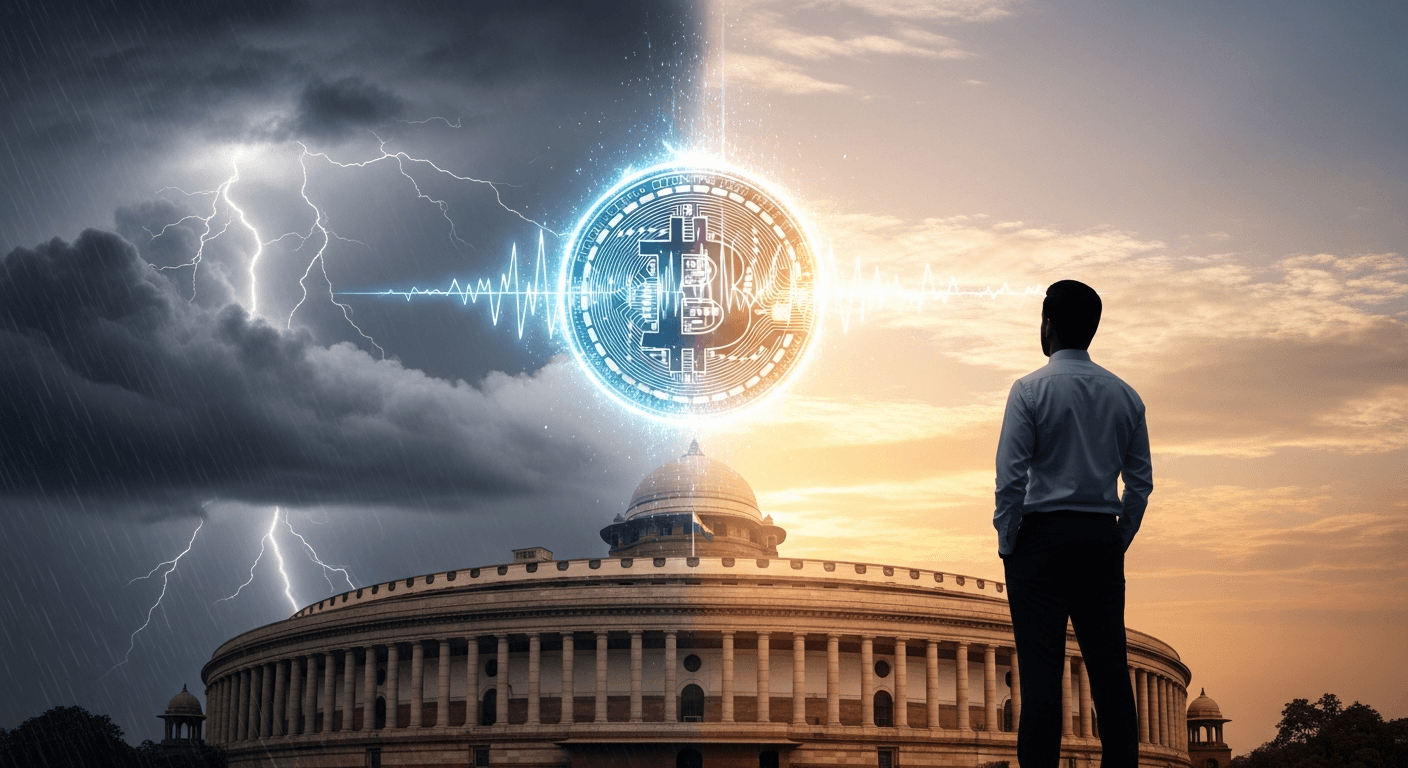
Reading the Red Flag
When I read that the government has described a crypto system as "high-risk" in a note to a parliamentary panel, I felt a familiar mix of concern and clarity. This is not an abstract debate about an exotic asset class — it is about systemic safety, consumer trust, and how societies choose to balance innovation with responsibility.
Why the "high-risk" label matters
A government describing a crypto system as high-risk does three things at once:
- It signals serious vulnerabilities — technical, financial, or operational — that could cascade.
- It warns consumers and institutions to exercise heightened caution.
- It pushes policymakers toward concrete action: regulation, oversight, or even containment.
These are not just bureaucratic boxes to tick. When a system is connected, risks travel. A failed exchange, a major exploit, or a leveraged meltdown can ripple through payments, savings, and confidence.
The core risks I keep returning to
When I think about crypto through the lens of public policy and personal finance, I return to a short list:
- Consumer harm: sudden price collapses, irreversible transaction losses, rug pulls.
- Market abuse: wash trading, spoofing, opaque order books and conflicts of interest.
- Operational risk: software bugs, smart-contract exploits, poor custody practices.
- Illicit finance risks: money laundering, sanctions evasion, ransomware payouts.
- Systemic contagion: leverage and shadow exposures linking crypto to mainstream finance.
These are concerns I raised in my earlier reflections on virtual currencies — concerns about speculation, misuse, and the need for clarity in regulation (Virtual Currency: Time to Get Real) and the broader questions around legality and governance (Bitcoin: Illegal in India). Those pieces were written as a citizen trying to make sense of an unfamiliar, fast-moving field — and the fundamentals remain.
What policymakers are balancing
Policymakers face a set of uncomfortable trade-offs:
- Overregulation can stifle innovation and push activity underground; under-regulation can expose citizens and the financial system to harm.
- A blanket ban may reduce obvious channels of abuse but can be blunt and drive innovation offshore.
- Light-touch frameworks can encourage growth, but only if backed by effective supervision, licensing, and consumer protections.
Labeling something "high-risk" should lead to calibrated measures: temporary restrictions where necessary, clearer rules for exchanges and custodians, stronger disclosure and capital requirements, and coordinated international action for transnational flows.
Practical steps I would support
If the note to the parliamentary panel has teeth, here are practical, proportionate steps worth considering:
- Mandatory licensing and ongoing supervision for exchanges, custodians, and major intermediaries.
- Strong KYC/AML requirements, coupled with technology-friendly tools for compliance.
- Insurance or segregation of customer assets to prevent commingling and reduce loss of funds in failures.
- Clear disclosure rules so retail investors understand volatility, lock-ups, and custody risks.
- A sandbox for responsible innovation — allow pilot projects under strict oversight.
- Continued research into a sovereign digital alternative (CBDC) to offer safe digital money.
None of these is novel. The nuance lies in sequencing, enforcement appetite, and international coordination.
A personal reflection
I’m drawn back to a simple conviction: markets and technology move fast; wisdom and governance must catch up. When I first wrote about these themes, it was out of curiosity and concern about how quickly speculative fervor can outpace institutional understanding. Today’s parliamentary note feels like a necessary alarm bell — not to extinguish innovation, but to remind us that freedom without guardrails can become harm.
If we treat this moment as an opportunity — to set sensible rules, protect citizens, and still allow entrepreneurs to build — we’ll have done what good policy should do: manage risk while preserving possibility.
Regards,
Hemen Parekh
Any questions / doubts / clarifications regarding this blog? Just ask (by typing or talking) my Virtual Avatar on the website embedded below. Then "Share" that to your friend on WhatsApp.
Get correct answer to any question asked by Shri Amitabh Bachchan on Kaun Banega Crorepati, faster than any contestant
Hello Candidates :
- For UPSC – IAS – IPS – IFS etc., exams, you must prepare to answer, essay type questions which test your General Knowledge / Sensitivity of current events
- If you have read this blog carefully , you should be able to answer the following question:
- Need help ? No problem . Following are two AI AGENTS where we have PRE-LOADED this question in their respective Question Boxes . All that you have to do is just click SUBMIT
- www.HemenParekh.ai { a SLM , powered by my own Digital Content of more than 50,000 + documents, written by me over past 60 years of my professional career }
- www.IndiaAGI.ai { a consortium of 3 LLMs which debate and deliver a CONSENSUS answer – and each gives its own answer as well ! }
- It is up to you to decide which answer is more comprehensive / nuanced ( For sheer amazement, click both SUBMIT buttons quickly, one after another ) Then share any answer with yourself / your friends ( using WhatsApp / Email ). Nothing stops you from submitting ( just copy / paste from your resource ), all those questions from last year’s UPSC exam paper as well !
- May be there are other online resources which too provide you answers to UPSC “ General Knowledge “ questions but only I provide you in 26 languages !




No comments:
Post a Comment