
Introduction
I’ve been watching the slow, patient unbundling and rebundling of retail for more than a decade. Today I find myself thinking about two trends that, when combined, will change online shopping in ways we haven’t fully absorbed: relentless price and deal tracking, and the rise of an AI-powered “universal cart” that can assemble purchases from many sellers into a single checkout experience.
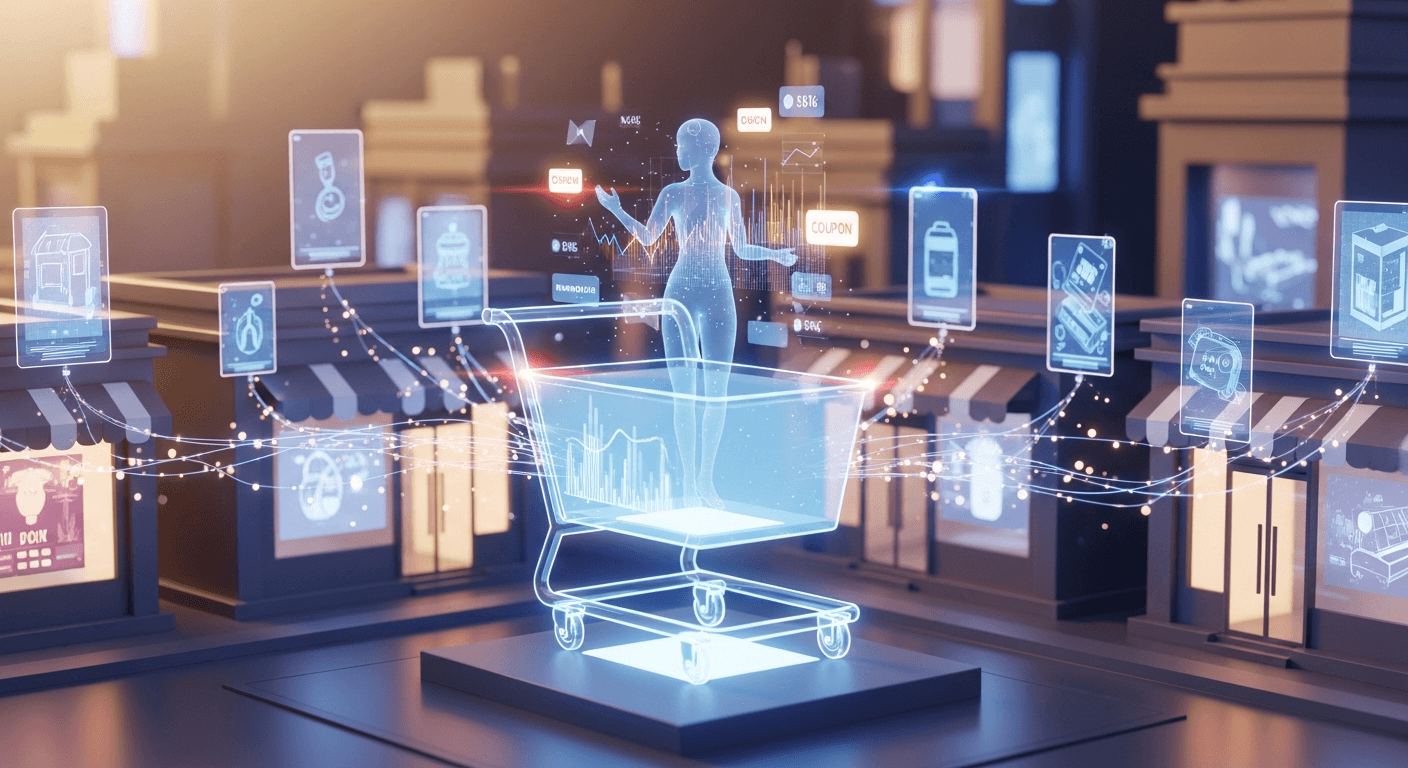
What I mean by a "universal cart"
- Imagine adding a pair of shoes from one store, a printed photo book from another, and a wall lamp from a boutique seller — yet checking out once, with a single AI assistant that optimizes coupons, shipping, and delivery windows.
- I’m using the phrase "universal cart" as a concept: an AI layer that sits above multiple merchants and marketplaces, understands product parity (this lamp is the same model as that lamp), and automatically negotiates the best combination of price, shipping, and timing.
Why price tracking and deal intelligence matter
- Price history and trajectory: When an AI can see price trends across retailers and time, it can advise whether to buy now or wait for a sale. That’s more valuable than static “was/now” badges — it’s predictive.
- Bundling discounts and combinatorial savings: The universal cart can detect when combining items into one shipment or one merchant’s checkout unlocks discounts that independent checkouts would miss.
- Coupon and loyalty orchestration: The AI can try multiple coupon strategies across sellers, apply store credits, and select the path that minimizes total spend, rather than maximizing one merchant’s margin.
How this reshapes the buyer experience
- Less friction, more optimization: I expect checkout to feel simpler while being far more sophisticated under the hood. Buying becomes less about hunting for promo codes and more about choosing a preference (fastest delivery, cheapest total, lowest carbon footprint) and letting the AI optimize.
- Price transparency, but also nudging: Greater transparency about historic prices will empower shoppers — yet the same systems can nudge you toward higher-margin bundles or faster delivery choices.
- Discovery shifts: Rather than starting from a single marketplace, discovery may begin with need ("I want a home office setup") and the AI proposes a cross-store, optimized list.
Winners, losers, and the market structure
- Big platforms vs. independent sellers: Platforms that host both the data and the universal cart will capture more of the checkout value. Independent sellers will need to compete on margin, brand, and fulfillment speed.
- Interoperability matters: If the cart is open and interoperable across many sellers, it creates consumer choice. If it’s closed and biased to a platform’s partners, it consolidates power.
- New entrants: Startups that specialize in orchestration, price-signal intelligence, or logistics optimization can play the role of the neutral assistant if consumers and regulators demand it.
Privacy and trust trade-offs
- Data needs: Price optimization uses lots of signals: purchase history, cart abandonment patterns, inventory signals, and even cross-site behaviors. That increases the sensitivity of the data being processed.
- Consent and value exchange: Consumers will accept more tracking when the value is clear. A universal cart that consistently saves money or time can justify more data sharing — but that bargain must be explicit and revocable.
- Policy questions: Regulators will need to clarify where aggregation of merchant and consumer data becomes anticompetitive or privacy-invasive.
Practical advice — how I’m adapting (and how you can)
- Lean into account-level controls: Use a dedicated account or password manager and enable granular consent for shopping assistants so you can turn features on or off.
- Define your priorities: Tell your assistant what matters — price, speed, sustainability — and it will make trade-offs in ways that fit you.
- Keep receipts and price alerts: Even with intelligent carts, I keep alerts for big-ticket items and a habit of checking price history before finalizing huge purchases.
- Support neutral orchestration: When possible, prefer services or plugins that act as neutral optimizers rather than those tied to a single dominant marketplace.
Where this ties to my earlier thinking
I’ve been writing about how AI moves from helping us search to helping us decide — and how that changes where power sits online. In an earlier piece I argued that AI’s shift from back-end analytics to interactive assistants would change commerce and attention economics "AI Is 70, I Am 90". And in another post I traced Google’s long arc in applying AI to maps and contextual answers — a reminder that the same company logic that makes maps smarter will make shopping smarter, too "Google on the Right Track".
A short forecast
- Over the next 3–5 years the universal cart idea will move from pilots to mainstream experiments: parts of checkout orchestration, dynamic coupon trials, and cross-merchant delivery bundling will appear in apps and browser extensions.
- Consumers who value convenience and savings will adopt these assistants quickly. Those who prize privacy or local relationships will push back, and that tension will shape regulation and business models.
Closing — my personal conviction
I love the idea that technology can remove busywork. A truly helpful universal cart would save time, money, and cognitive load. But I’m wary of a single gatekeeper that owns both the data and the optimization layer. My hope is for a world of interoperable assistants that compete on usefulness and respect for users’ privacy.
If you’re a builder or policy person reading this: design the data exchange so consumers can port their shopping intent and history between assistants. That’s the only way we get both innovation and choice.
Regards,
Hemen Parekh
Any questions / doubts / clarifications regarding this blog? Just ask (by typing or talking) my Virtual Avatar on the website embedded below. Then "Share" that to your friend on WhatsApp.
Get correct answer to any question asked by Shri Amitabh Bachchan on Kaun Banega Crorepati, faster than any contestant
Hello Candidates :
- For UPSC – IAS – IPS – IFS etc., exams, you must prepare to answer, essay type questions which test your General Knowledge / Sensitivity of current events
- If you have read this blog carefully , you should be able to answer the following question:
- Need help ? No problem . Following are two AI AGENTS where we have PRE-LOADED this question in their respective Question Boxes . All that you have to do is just click SUBMIT
- www.HemenParekh.ai { a SLM , powered by my own Digital Content of more than 50,000 + documents, written by me over past 60 years of my professional career }
- www.IndiaAGI.ai { a consortium of 3 LLMs which debate and deliver a CONSENSUS answer – and each gives its own answer as well ! }
- It is up to you to decide which answer is more comprehensive / nuanced ( For sheer amazement, click both SUBMIT buttons quickly, one after another ) Then share any answer with yourself / your friends ( using WhatsApp / Email ). Nothing stops you from submitting ( just copy / paste from your resource ), all those questions from last year’s UPSC exam paper as well !
- May be there are other online resources which too provide you answers to UPSC “ General Knowledge “ questions but only I provide you in 26 languages !




No comments:
Post a Comment