
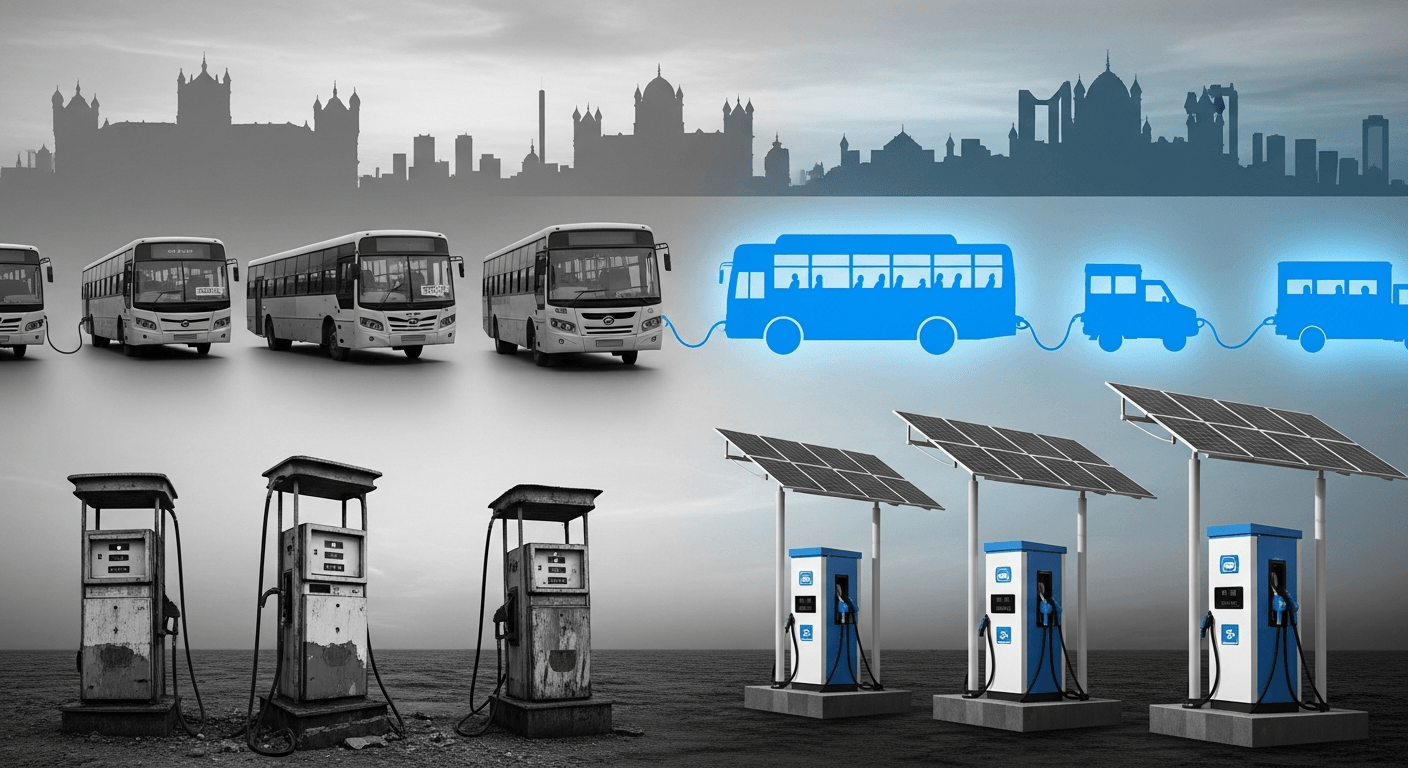
Centre to Expand Electrification Drive: What It Means
I read the headline — "Centre set to expand electrification drive to PSUs, state govts" — and felt the familiar mix of optimism and caution that comes with every major policy nudge in India's transition to electric mobility. Over the years I’ve written about the need for decisive public action to move the needle on EV adoption (Battle of Electric Vehicles and the outlook for emission reduction) and more recently the contours of a national push like the PM E-DRIVE initiative (PM E-DRIVE Scheme). This latest reported shift — widening the push to include public sector undertakings (PSUs) and state governments — is exactly the kind of systemic lever I’ve long argued for.
Policy context: why PSUs and state governments matter
Central government procurement and the fleets run by PSUs and state bodies are not small. When the Centre decides to electrify these fleets it creates:
- Immediate, predictable demand for electric vehicles.
- A market signal to manufacturers and investors that the state is a reliable early customer.
- Opportunities to pilot charging infrastructure, battery management, and reuse/ recycling at scale.
This approach mirrors earlier centrally driven schemes (like FAME and the more recent PM E-DRIVE proposal), which combine subsidies, tax incentives and procurement commitments to accelerate adoption. Where procurement has been large and well-structured, it has shortened payback periods for EV makers and fleet operators.
Implications for EV makers
For manufacturers, a formal procurement pipeline from PSUs and states de-risks capacity expansions and local supply-chain investments. Expect these immediate effects:
- Order visibility that supports factory utilisation planning and CAPEX decisions.
- Pressure to deliver vehicles suited to fleet use: durable batteries, telematics, standardised charging ports and predictable maintenance cycles.
- Stronger incentives to localise components and battery manufacturing to meet price and Make-in-India expectations.
But this is not just about volume; it’s about contract design. If procurement focuses only on upfront price, it will favour low-cost entrants and commoditised hardware. If contracts emphasise total cost of ownership, uptime guarantees and battery lifecycle management, they will reward more sophisticated players.
What PSUs and state governments need to prepare
Scaling electrification in public fleets requires more than order forms:
- Charging infrastructure planning: garaging, depot charging, and fast charging on key routes.
- Grid readiness assessments and coordination with DISCOMs to manage peak loads.
- Training for drivers and maintenance teams; new procurement and warranty management practices.
- Clear metrics for monitoring emissions reductions, uptime and cost savings.
A senior government official — speaking on background — put it simply: "Procurement is the starter motor; operational readiness will determine whether the vehicle stays running." That operational readiness is where many previous pilots have stumbled.
Potential challenges
Several predictable hurdles could blunt the initiative’s impact:
- Infrastructure lag: charging and grid upgrades often trail vehicle rollouts.
- Financing constraints for states and PSUs if upfront costs dominate funding models.
- Standardisation gaps: multiple charging standards, billing systems and telematics can fragment fleet operations.
- Second-life and recycling pathways for batteries remain immature; without them, long-term sustainability is compromised.
An industry executive I spoke with (on background) observed: "Ambitious procurement without clear service-level agreements and charging commitments can turn a strategic win into an operational headache." The point is that procurement must be holistic.
Expected timeline
From announcements to boots-on-ground, such a programme typically plays out in phases:
- Short term (0–6 months): framing procurement guidelines, issuing requests for proposals, and identifying pilot districts/states.
- Medium term (6–18 months): signing contracts, deploying first wave of vehicles, and rolling out depot charging at pilot sites.
- Longer term (18–36 months): scaling purchases, integrating distributed charging, and beginning lifecycle management and battery recycling pilots.
This is an indicative timeline — much will depend on budgetary approvals, state-level buy-in and the speed of private-sector execution.
Data points and the current market (high level)
India’s EV story is uneven across segments. Two- and three-wheelers have led adoption in many urban and peri-urban markets; passenger car electrification is accelerating but still constitutes a minority share of new car sales. Central procurement can help tilt passenger-vehicle fleet economics by providing predictable, large-volume demand that supports local manufacturing and lowers unit costs.
Why this matters beyond automakers
Electrifying public fleets is about climate and fiscal prudence as much as it is about industry. Public procurement can:
- Reduce fossil-fuel subsidy exposure and lower recurring diesel/petrol bills.
- Stimulate domestic manufacturing and jobs in batteries, power electronics and charging equipment.
- Create visible success stories that build public confidence in EVs.
Key takeaways
- Expanding electrification to PSUs and state governments is a high-leverage policy move: it creates demand and reduces market uncertainty for EV makers.
- The real test will be execution: charging infrastructure, grid coordination, financing and well-designed contracts matter as much as vehicle purchases.
- Timely piloting (6–18 months) followed by scaling (18–36 months) is a realistic path; states that coordinate early with utilities and manufacturers will capture the most benefit.
- This is an opportunity for India to couple climate action with industrial policy — if we avoid the trap of focusing only on sticker price.
I’ve long argued that public action, when thoughtful and well-executed, can accelerate clean mobility in ways the market alone cannot. This expansion is a promising step — now the emphasis must shift from announcements to delivery.
Regards,
Hemen Parekh
Any questions / doubts / clarifications regarding this blog? Just ask (by typing or talking) my Virtual Avatar on the website embedded below. Then "Share" that to your friend on WhatsApp.
Get correct answer to any question asked by Shri Amitabh Bachchan on Kaun Banega Crorepati, faster than any contestant
Hello Candidates :
- For UPSC – IAS – IPS – IFS etc., exams, you must prepare to answer, essay type questions which test your General Knowledge / Sensitivity of current events
- If you have read this blog carefully , you should be able to answer the following question:
- Need help ? No problem . Following are two AI AGENTS where we have PRE-LOADED this question in their respective Question Boxes . All that you have to do is just click SUBMIT
- www.HemenParekh.ai { a SLM , powered by my own Digital Content of more than 50,000 + documents, written by me over past 60 years of my professional career }
- www.IndiaAGI.ai { a consortium of 3 LLMs which debate and deliver a CONSENSUS answer – and each gives its own answer as well ! }
- It is up to you to decide which answer is more comprehensive / nuanced ( For sheer amazement, click both SUBMIT buttons quickly, one after another ) Then share any answer with yourself / your friends ( using WhatsApp / Email ). Nothing stops you from submitting ( just copy / paste from your resource ), all those questions from last year’s UPSC exam paper as well !
- May be there are other online resources which too provide you answers to UPSC “ General Knowledge “ questions but only I provide you in 26 languages !




No comments:
Post a Comment