
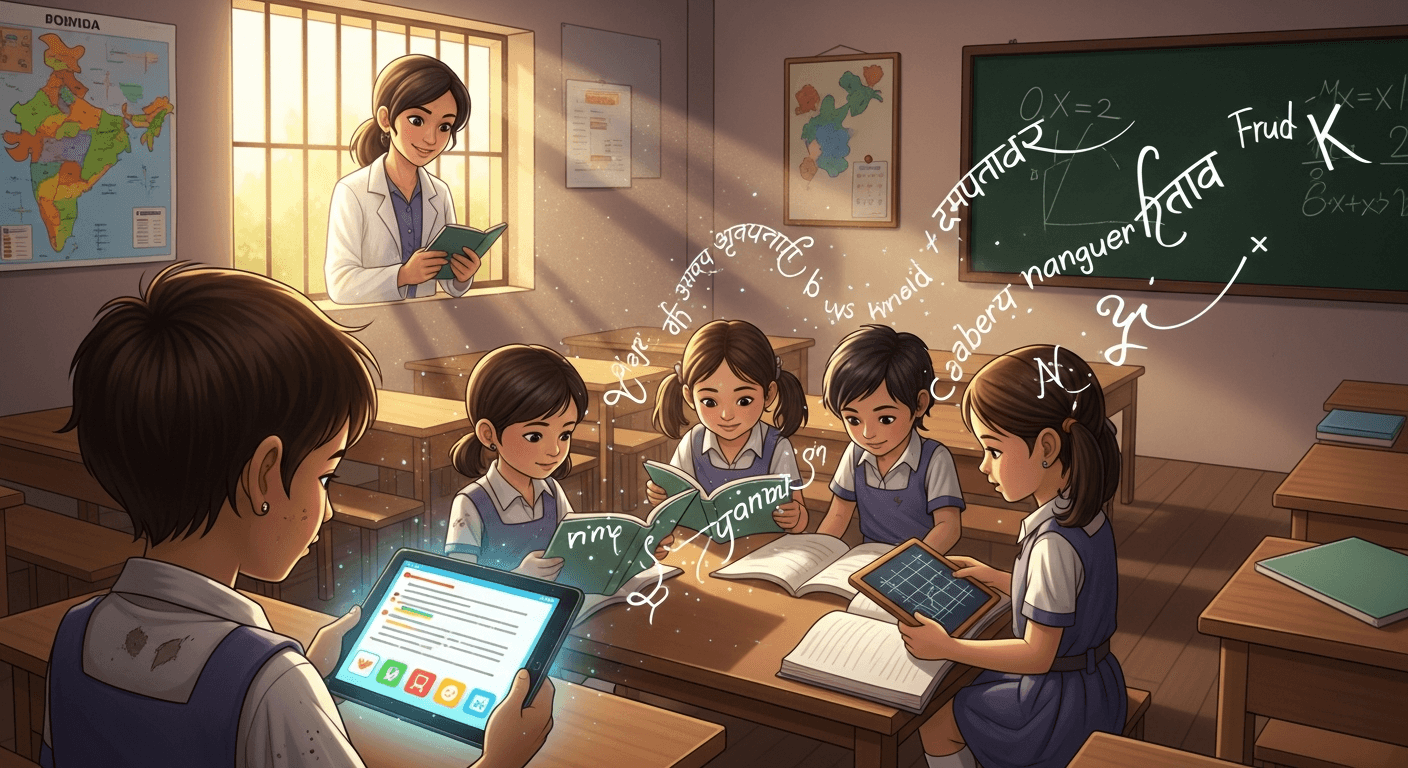
Why this matters to me
I heard that an IIT‑M lab is now "eyeing" support for dyslexic children. That three‑word line landed in my inbox and sat with me for a long time. As someone who spends time thinking about how technology can extend human possibility, the idea that a premier technical institute is focusing attention on dyslexia feels both promising and overdue.
I don’t know the lab’s technical roadmap, and I won’t pretend to. What I want to do here is explore the opportunity—practically and ethically—and to remind myself (and you) of what it will take for technology to truly help, not just dazzle.
What an IIT lab can uniquely bring
A lab at an institution like IIT can offer three complementary strengths:
- Deep technical capacity: machine learning, signal processing, human‑computer interaction, and robotics — tools that can create novel assistive systems.
- Interdisciplinary reach: pairing engineers with cognitive scientists, linguists, educators, and clinicians to ground solutions in human realities.
- Scale potential: from a promising prototype to a platform that can reach thousands of classrooms if the usability and cost models align.
But technical brilliance alone is not enough. The real challenge is connecting lab outcomes to children, teachers, and systems on the ground.
Design principles I’d insist on
If I were advising such an effort, these would be non‑negotiables:
- Empathy first. Build with real children and teachers in classrooms, not just in labs. Observe, iterate, and respect cultural and linguistic contexts.
- Multilingual support. Dyslexia is not an English‑only problem. Tools must work across scripts, starting with the languages children actually speak and learn in.
- Low friction. Solutions should run on affordable hardware (smartphones, low‑cost tablets) and not demand constant connectivity.
- Teacher empowerment. Tools must be co‑teaching aids that make teachers more effective—not replace them.
- Privacy and consent. Children’s learning data must be guarded; any analytics must be transparent and used to help, never to stigmatize.
Practical, near‑term ideas that could work
Here are approaches that balance feasibility and impact:
- Assistive listening & reading overlays: lightweight apps that highlight text, syllabify words, and provide paced audio support.
- Visual scaffolds: letter/word spacing, dyslexia‑friendly fonts, and contrast settings that reduce visual crowding for readers who need them.
- Guided practice with feedback: short, gamified exercises that adapt to a child’s specific error patterns and celebrate progress.
- Teacher dashboards: simple, actionable summaries (not raw data) that help teachers track improvements and tailor interventions.
- Multimodal diagnostics: low‑cost screening tools (questionnaires + quick app tasks) to flag children early so support arrives before frustration becomes entrenched.
Where I worry—and where I hope
I worry about solutions that prioritize novelty (a flashy gadget, an eye‑tracker demo) over sustained classroom adoption. I worry about tools that create dependency on expensive devices or that expose vulnerable children’s data.
I hope the lab focuses on durable, replicable approaches: small changes in reading routines, teacher training modules, and open‑source toolkits that others can copy and adapt. The best outcome isn’t a single product but a set of practices and open tools that spread.
Continuity with work I care about
This is not a new conversation for me. I’ve long written about the need to make educational technology accessible, localised, and free from gatekeeping. In a past piece I explored how low‑cost, multilingual learning platforms can level the playing field for students outside large urban centers (ATAL vs My-Teacher). The thread is the same: power multiplies when technology is designed for the many, not the few.
Things I’ll watch for from the IIT‑M effort
- Are they partnering with schools, special educators, and parents from the start?
- Will they publish methods and open‑source code or keep solutions behind paywalls?
- How will they validate impact—what counts as success: reading speed, comprehension, confidence, or classroom engagement?
- Will solutions be localisable to regional languages and scripts?
A modest call to action
If you’re from a school, a parent, or a teacher: invite researchers in, but insist on pilot timelines, clear data‑use agreements, and teacher training as part of the project.
If you’re a researcher: measure with humility. Small effect sizes that are replicable in real classrooms are more valuable than eye‑catching lab demos.
If you’re an entrepreneur or funder: invest in the ecosystem—teacher training, device distribution, and community support—not just in a single product.
Closing thought
Technology has always been a mirror of our intentions. If an IIT‑M lab focuses on dyslexia because it wants to help children learn more easily and equitably, we should celebrate and support that. But if the work stops at a prototype, we will have missed the greater opportunity: turning insight into sustainable, classroom‑ready practice.
I remain hopeful. Real change often looks boring at first—teacher workshops, careful iteration, patient scale—but it is the only change that lasts.
Regards,
Hemen Parekh
Any questions / doubts / clarifications regarding this blog? Just ask (by typing or talking) my Virtual Avatar on the website embedded below. Then "Share" that to your friend on WhatsApp.
Get correct answer to any question asked by Shri Amitabh Bachchan on Kaun Banega Crorepati, faster than any contestant
Hello Candidates :
- For UPSC – IAS – IPS – IFS etc., exams, you must prepare to answer, essay type questions which test your General Knowledge / Sensitivity of current events
- If you have read this blog carefully , you should be able to answer the following question:
- Need help ? No problem . Following are two AI AGENTS where we have PRE-LOADED this question in their respective Question Boxes . All that you have to do is just click SUBMIT
- www.HemenParekh.ai { a SLM , powered by my own Digital Content of more than 50,000 + documents, written by me over past 60 years of my professional career }
- www.IndiaAGI.ai { a consortium of 3 LLMs which debate and deliver a CONSENSUS answer – and each gives its own answer as well ! }
- It is up to you to decide which answer is more comprehensive / nuanced ( For sheer amazement, click both SUBMIT buttons quickly, one after another ) Then share any answer with yourself / your friends ( using WhatsApp / Email ). Nothing stops you from submitting ( just copy / paste from your resource ), all those questions from last year’s UPSC exam paper as well !
- May be there are other online resources which too provide you answers to UPSC “ General Knowledge “ questions but only I provide you in 26 languages !


No comments:
Post a Comment