
Context and what I saw
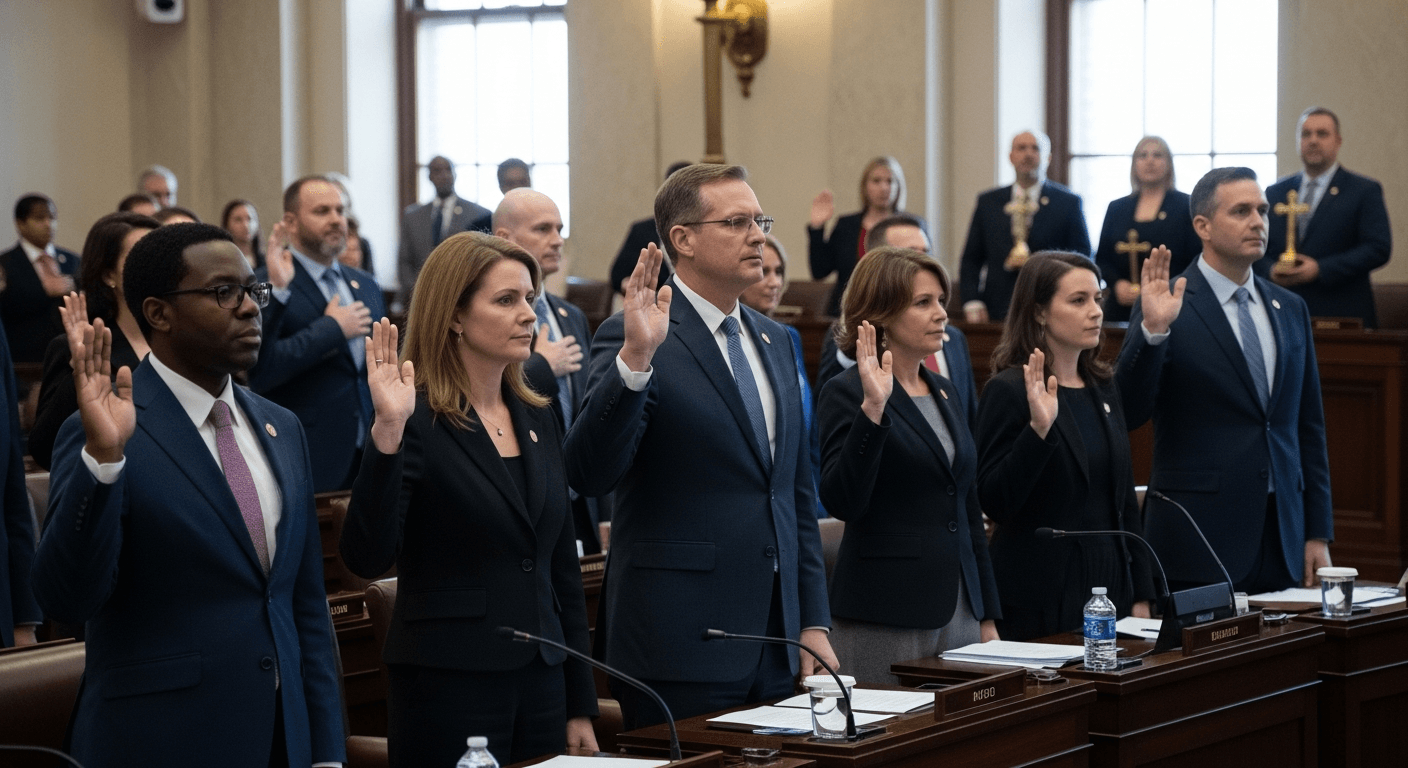
Recently, during a swearing‑in ceremony of the Kerala Legislative Assembly in Thiruvananthapuram, 42 newly elected MLAs chose not to invoke the name of God while taking their oath. They did participate in the formal swearing‑in but opted for a secular or non‑religious affirmation rather than a religious invocation. Reports framed the act as a collective protest and a statement on conscience and the secular character of the state.
In this piece I want to lay out the context, explain the constitutional framework for oaths in India, summarize the immediate facts reported, outline political and legal responses, and offer a few interpretive angles — neutrally and without passing judgment.
Oaths in Indian legislatures: the basics
The Constitution provides standard forms for oaths and affirmations in the Third Schedule. Members of Parliament and state legislatures may either "swear" in the name of God or make a solemn "affirmation" without religious words. The option exists to accommodate both freedom of religion and the right to conscience. In practice, the procedure is administered by the presiding officer (Speaker or Chair), and rules and precedents govern the mechanics — who is permitted to speak, when a member is allowed to take the oath later, and how refusals are recorded.
This dual option — oath or affirmation — is central to understanding why a group of legislators can lawfully choose a non‑religious form without automatically forfeiting their status as members.
What happened: the reported facts
- Venue: Kerala Legislative Assembly, Thiruvananthapuram.
- Number: Forty‑two MLAs did not invoke the name of God while taking their oaths; they used a secular affirmation or a different wording allowed by rules.
- Participation: These MLAs did not boycott the swearing‑in ceremony; they completed the necessary formalities but avoided religious invocation.
- Reasons given in reports: the choices were described variously as expressions of secular principle, a protest against ritualized invocations, an assertion of personal conscience, or a coordinated political message. Different MLAs and party spokespeople framed the act with different emphases: some highlighted freedom of belief, while others emphasized a signal against religious polarization.
Because I am relying on contemporaneous reporting and my own reading of institutional norms, I avoid attributing motives beyond what the participants themselves or official spokespeople stated.
Political reactions (neutral summary)
- Government benches: Some members and supporters framed the action as a legitimate personal choice consistent with constitutional options for affirmation.
- Opposition benches: Reactions ranged from respectful acceptance of conscience‑based choices to criticism that the gesture was symbolic political theatre.
- Civil society and commentators: Observers offered both praise (for reaffirming secularism and conscience rights) and critique (arguing the act foregrounded symbolism over practical governance questions).
These reactions illustrate a familiar pattern: an act at the intersection of faith and public office quickly becomes a platform for broader political narratives.
Legal and constitutional implications
Legally, the option to affirm without invoking a deity is well established by the Constitution’s prescribed forms. The immediate legal consequence of choosing an affirmation rather than an oath is typically none — the member is permitted to take their seat once they have completed the required form. Where disputes arise is mostly procedural (for example, if a presiding officer refuses an alternative form) or if an attempt is made to disqualify a member for not following tradition rather than constitutional text.
Potential legal issues that might be raised by critics include:
- Whether the assembly’s rules were followed exactly during the ceremony.
- Whether any formal objection was lodged under assembly procedures.
- Whether the act had implications for conduct rules or later legislative privileges.
Courts have generally upheld the right to affirmation as compatible with freedom of conscience; barring extraordinary procedural irregularities, a collective decision to avoid religious invocation is unlikely by itself to have immediate punitive legal consequences.
Possible consequences and what to watch for
- Institutional: The Speaker’s handling of the episode could set a precedent for how strictly ceremonial norms are enforced.
- Political: Parties may use the incident for rhetorical advantage in public debate and media campaigns.
- Legal: If any party sought to challenge the validity of the oaths, the dispute would likely focus on procedural technicalities rather than the substance of the affirmation vs oath question.
Public and media response
Coverage has been wide and varied. Some outlets highlighted the secular pledge and civic conscience angle; others emphasized the spectacle and political theatre aspect. Social media amplified both supportive and critical voices, often along partisan lines. Public reactions tended to reflect preexisting attitudes toward religion in public life, secularism, and the role of symbolic gestures in politics.
Expert commentary (themes I find persuasive)
- Symbolism matters: Oaths are a symbolic entry into office. Opting for an affirmation is a deliberate public statement about the relationship between religion and state.
- Rights and pluralism: The Constitution’s allowance for affirmation protects pluralism and individual conscience; public officeholders exercising that option reinforce a non‑coercive secularism.
- Political signaling: Collective acts like this can strengthen group identity and send a clear message to voters, but they can also polarize and distract from legislative work.
Earlier I’ve reflected on how accountability and ethics shape public trust in elected institutions; symbolic acts matter because they influence that trust and how citizens perceive legitimacy (Crime Don’t Count: It Pays).
Closing thoughts
As a matter of principle I see the choice between an oath and an affirmation as an example of constitutional design that balances faith and conscience. The episode in Kerala is a reminder that routine democratic rituals can become touchstones for wider debates about identity, secularism, and the boundaries of political expression. What happens next — whether a narrow procedural dispute, sustained political debate, or simply routine legislative business — will tell us more about how resilient those institutional balances are.
Regards,
Hemen Parekh
Any questions / doubts / clarifications regarding this blog? Just ask (by typing or talking) my Virtual Avatar on the website embedded below. Then "Share" that to your friend on WhatsApp.
Get correct answer to any question asked by Shri Amitabh Bachchan on Kaun Banega Crorepati, faster than any contestant
Hello Candidates :
- For UPSC – IAS – IPS – IFS etc., exams, you must prepare to answer, essay type questions which test your General Knowledge / Sensitivity of current events
- If you have read this blog carefully , you should be able to answer the following question:
- Need help ? No problem . Following are two AI AGENTS where we have PRE-LOADED this question in their respective Question Boxes . All that you have to do is just click SUBMIT
- www.HemenParekh.ai { a SLM , powered by my own Digital Content of more than 50,000 + documents, written by me over past 60 years of my professional career }
- www.IndiaAGI.ai { a consortium of 3 LLMs which debate and deliver a CONSENSUS answer – and each gives its own answer as well ! }
- It is up to you to decide which answer is more comprehensive / nuanced ( For sheer amazement, click both SUBMIT buttons quickly, one after another ) Then share any answer with yourself / your friends ( using WhatsApp / Email ). Nothing stops you from submitting ( just copy / paste from your resource ), all those questions from last year’s UPSC exam paper as well !
- May be there are other online resources which too provide you answers to UPSC “ General Knowledge “ questions but only I provide you in 26 languages !


No comments:
Post a Comment