
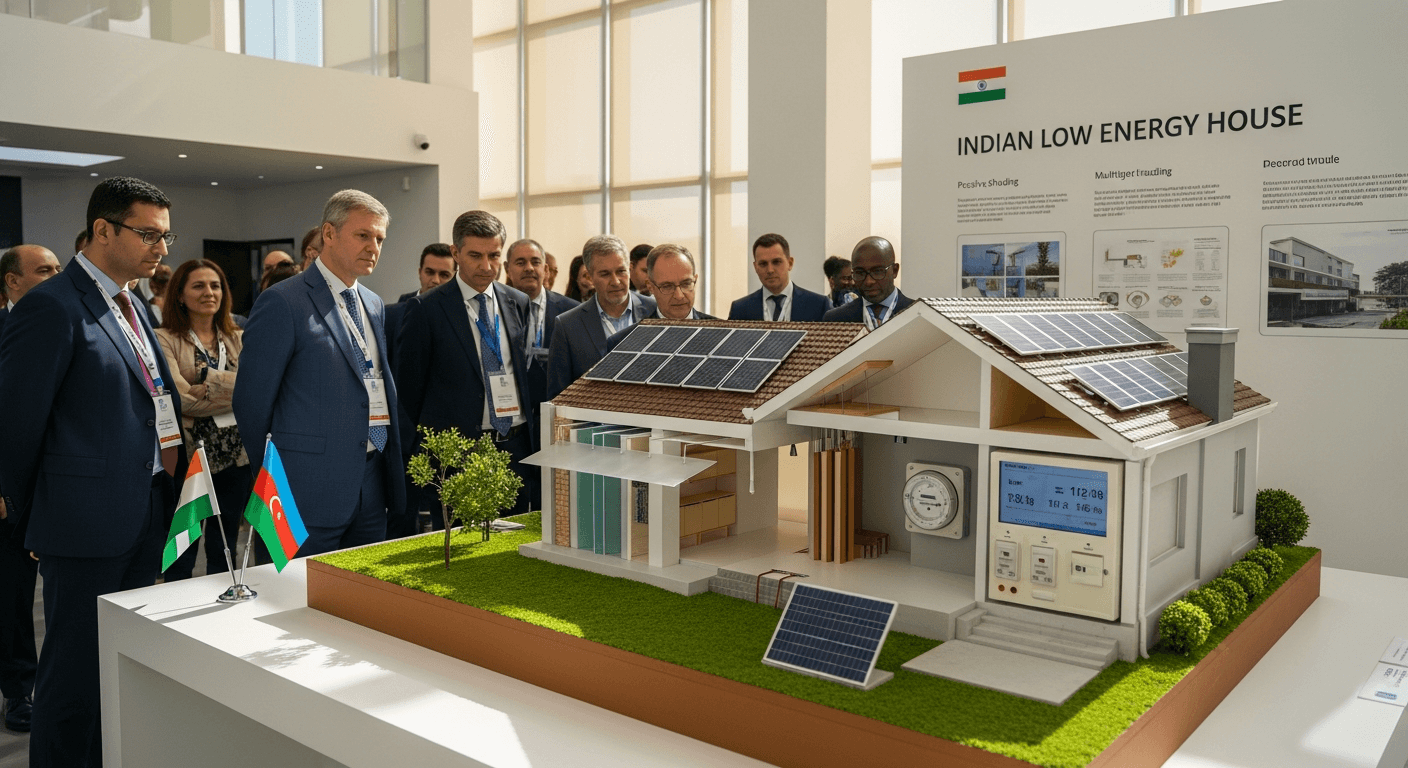
Why I cared when BEE went to Baku
When I first heard that the Bureau of Energy Efficiency (BEE) had taken India's low-energy housing model to Baku as part of a broader energy-conservation push, I felt a quiet satisfaction. This is not just about technology on display; it is about a narrative we can carry from cities and villages across India to the world: that affordable housing and deep energy savings are compatible — and contagious.
What the model represents (in plain terms)
At its heart, a "low-energy housing model" is a systems idea, not a single gadget. The elements that matter are straightforward and human-centered:
- Passive design: orientation, shading, cross-ventilation and thermal mass to reduce cooling loads.
- Envelope improvements: better insulation, window glazing and air-sealing so homes hold comfort longer with less energy.
- Efficient appliances and lighting: appliances rated for low hourly consumption and contextual defaults (for example, conservative thermostat setpoints for air conditioning).
- On-site renewables and heat management: compact rooftop solar, water-heating solutions and heat-rejection strategies that cut peak demand.
- Digital nudges and metering: simple smart meters and behavioural feedback so households can see — and be rewarded for — savings.
These are technologies and design choices with immediate paybacks for families, utilities and the climate.
Why showcasing this in Baku matters
- It reframes India not only as a large market for energy services but as a laboratory of low-cost, high-impact solutions for hot and temperate regions.
- It helps translate homegrown policy ideas into exportable practice: demonstration projects, standards, and vendor partnerships.
- It builds diplomatic and technical bridges: countries with similar climatic stressors can adapt low-energy housing packages without reinventing the wheel.
For those who debate whether energy efficiency is a luxury, exhibitions like this are a reminder: efficiency is distributive. It saves money for families, eases load on grids, and lowers national energy bills.
How this links to things I've been saying
This moment in Baku amplifies themes I have returned to before:
- The need for clear consumption standards and measurable limits for appliances — my earlier commentary urged BEE and regulators to define maximum hourly consumption for devices so that "energy-efficient" becomes a verifiable claim (BEE Ball Is In Your Court).
- The promise of pairing smart metering with carbon-finance-like incentives so households can be direct beneficiaries of savings and carbon credits, an idea I sketched in previous notes to energy stakeholders (Carbon Credit Administrator concept).
If you read those pieces alongside BEE's international outreach, you'll see a through-line: set the rules, show the model, and align incentives so millions of households adopt better choices.
Practical lessons for scaling low-energy housing from exhibition to street
If India — and partners in places like Azerbaijan — want more than a single display, here are actions that make a difference:
- Standardize performance metrics: simple, enforceable metrics for hourly consumption and envelope performance.
- Bundle supply chains: combine efficient appliances, pre-fab envelope improvements and compact renewables into market-ready packages for developers.
- Use smart meters as enabling infrastructure: tie measurable savings to subsidies or carbon-credit rewards so households see direct value.
- Train local craftsmen and builders: low-energy homes need skills on the ground; invest in vocational training and certification.
- Share blueprints internationally: publish simple construction and retrofit guides that climate-similar countries can adapt.
A final, personal note
I like exhibitions because they compress possibility into one room. The BEE display in Baku is valuable only if it leaves the hall and enters neighborhoods: if local builders, developers and policymakers can reproduce what was shown, adapted to local cost structures and materials.
This is not about exporting an Indian design like a finished product; it is about exporting an approach — pragmatic, low-cost and evidence-driven — that lets communities choose comfort without runaway energy bills.
Regards,
Hemen Parekh
Any questions / doubts / clarifications regarding this blog? Just ask (by typing or talking) my Virtual Avatar on the website embedded below. Then "Share" that to your friend on WhatsApp.
Get correct answer to any question asked by Shri Amitabh Bachchan on Kaun Banega Crorepati, faster than any contestant
Hello Candidates :
- For UPSC – IAS – IPS – IFS etc., exams, you must prepare to answer, essay type questions which test your General Knowledge / Sensitivity of current events
- If you have read this blog carefully , you should be able to answer the following question:
- Need help ? No problem . Following are two AI AGENTS where we have PRE-LOADED this question in their respective Question Boxes . All that you have to do is just click SUBMIT
- www.HemenParekh.ai { a SLM , powered by my own Digital Content of more than 50,000 + documents, written by me over past 60 years of my professional career }
- www.IndiaAGI.ai { a consortium of 3 LLMs which debate and deliver a CONSENSUS answer – and each gives its own answer as well ! }
- It is up to you to decide which answer is more comprehensive / nuanced ( For sheer amazement, click both SUBMIT buttons quickly, one after another ) Then share any answer with yourself / your friends ( using WhatsApp / Email ). Nothing stops you from submitting ( just copy / paste from your resource ), all those questions from last year’s UPSC exam paper as well !
- May be there are other online resources which too provide you answers to UPSC “ General Knowledge “ questions but only I provide you in 26 languages !



No comments:
Post a Comment