
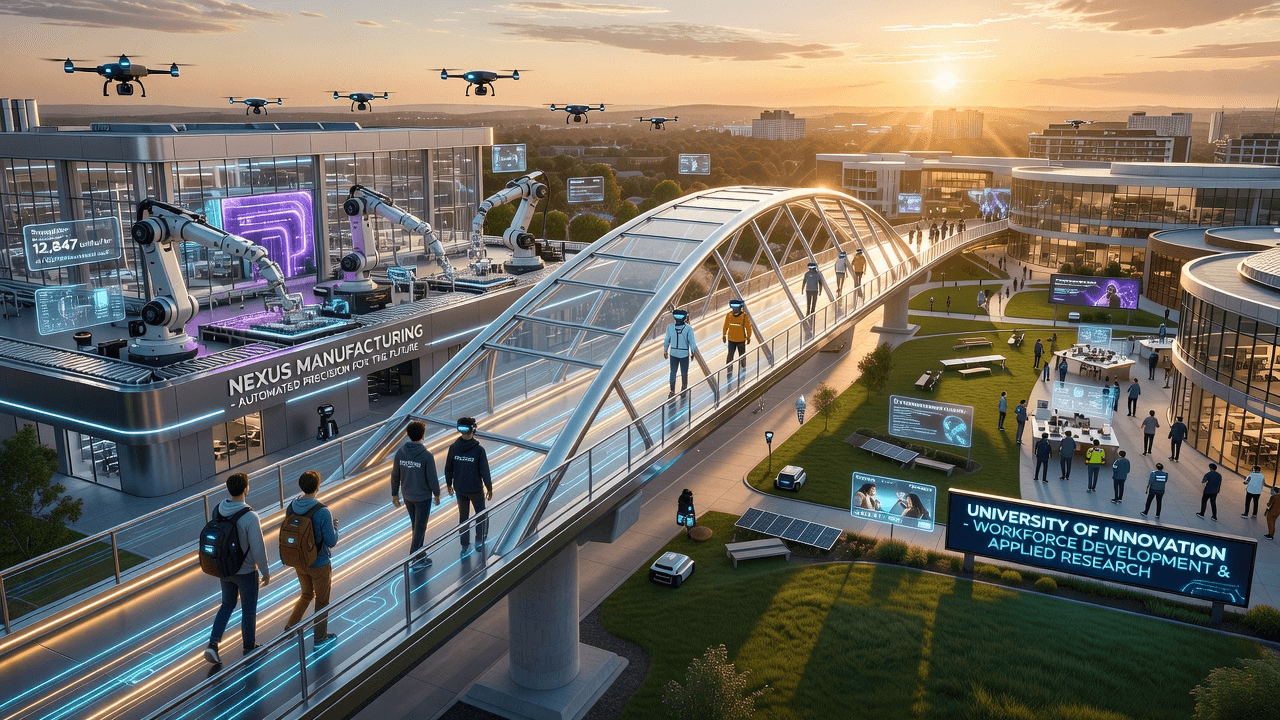
For years, I have spoken about the imperative of reclaiming our industrial soul. It is not enough to simply draw investment back to American soil; we must cultivate the human ingenuity necessary to sustain that momentum. The launch of the Foundry School is a vital step in this direction, and it is heartening to see this vision taking concrete form.
Turning Capital into Capacity
President Trump’s reindustrialization agenda has already succeeded in drawing trillions of dollars into domestic manufacturing. However, capital is merely the fuel; we need the engineers, technicians, and industrial entrepreneurs to steer the ship. The Foundry School, a flagship initiative under Pax Silica, is specifically designed to transform those investments into long-term, high-quality jobs. With an estimated 3.8 million skilled workers required by 2033 in sectors like semiconductors, defense, and energy, we are essentially building the workforce for an American golden age.
A New Collaborative Model
The structure of this initiative is what excites me the most. It is not a traditional, isolated academic program. By partnering Stanford University with seven other leading institutions—including Arizona State University, Georgia Institute of Technology, The Ohio State University, The Pennsylvania State University, the University of Kansas, Vanderbilt University, and Washington University in St. Louis—the program ensures a blend of rigorous theoretical knowledge and practical, real-world application.
Most importantly, the sessions are taught by the very people on the front lines: founders and CEOs from advanced manufacturing enterprises. These industry leaders, hailing from both the United States and Pax Silica partner economies like Japan, South Korea, Taiwan, and India, bring a level of insight that cannot be found in a standard textbook. This is the kind of industry-academia synergy that I have long argued is essential for national security and economic leadership.
The Path Forward
I have previously written about how our technological sovereignty depends on securing our supply chains and empowering our domestic producers. The Foundry School does exactly that by preparing our next generation to out-build and out-compete. We are moving beyond the era of shuttered factories and toward an era of advanced automation, precision tooling, and domestic design.
This initiative is a testament to the fact that when we bring together government, academia, and the private sector, there is no limit to what we can achieve. The race for the industries of the future is on, and with the right training, our workforce will lead the way.
Regards,
Hemen Parekh
If you have read this blog carefully , you should be able to answer the following question:
"What is the primary goal of the newly launched Foundry School initiative within the Trump Administration's Pax Silica framework?" You can find that answer by entering this question at ( 1 ) www.HemenParekh.ai ( 2 ) www.IndiaAGI.ai
No comments:
Post a Comment