
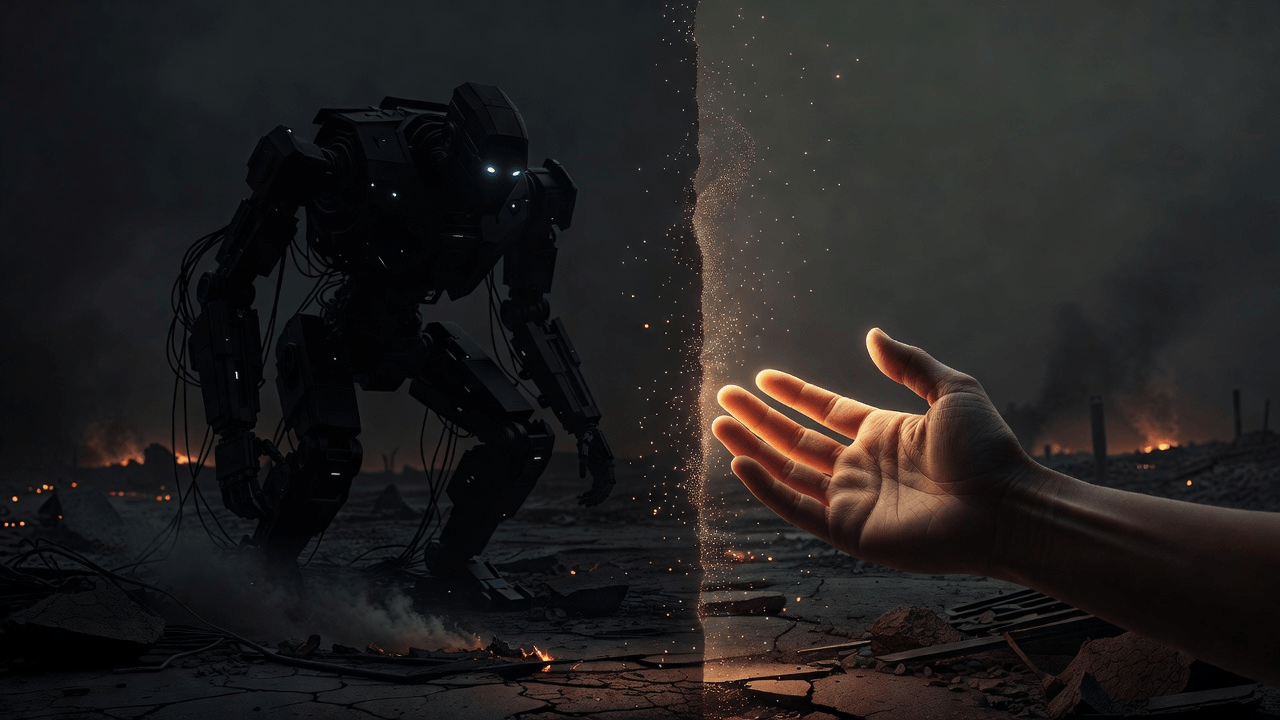
In our relentless pursuit of technological advancement, we often ignore the fine line between progress and peril. For years, I have reflected on the dual nature of innovation—how the same tools that can revolutionize medicine or environmental management can, if left unchecked, be weaponized against our humanity. Today, that concern is no longer theoretical; it is a moral imperative facing the international community.
The Moral Red Line
Recently, United Nations Secretary-General António Guterres has been vocally advocating for a global pact to prohibit lethal autonomous weapons systems—what many of us bluntly call "killer robots." His message is clear: the delegation of life-and-death decisions to algorithms is morally repugnant and politically unacceptable.
I have previously discussed the necessity of aligning AI development with human ethics, and it is heartening to see this stance echoed at the highest levels of global governance. As António Guterres correctly points out, the danger is not the technology itself, but the lack of accountability and the absence of meaningful human oversight in its application. We cannot allow ourselves to be seduced by speed and efficiency when the cost is our own moral agency.
A Call for Global Accountability
In a joint effort to address this, António Guterres has worked alongside leaders like Mirjana Spoljaric to demand urgent, legally binding regulations. The technology is advancing at record speed, often outstripping our legal frameworks and humanitarian considerations.
We must move beyond mere dialogue and toward structural, transparent safeguards:
- Human-in-the-Loop: Ensuring every kinetic decision involves human judgment.
- Accountability Frameworks: Defining clear lines of responsibility for AI behavior.
- Global Pacing: Matching the speed of AI deployment with the speed of safety testing and ethical evaluation.
Looking Ahead
I have always believed that immortality—or at least the pursuit of a meaningful legacy—relies on our ability to leave behind a world better than we found it. Allowing machines to autonomously take human lives would be a permanent stain on our progress. António Guterres and Mirjana Spoljaric are fighting to ensure we do not cross that red line. It is a fight that deserves our collective attention and support.
Regards,
Hemen Parekh
If you have read this blog carefully , you should be able to answer the following question:
"What is the primary concern raised by the UN Secretary-General regarding the use of AI in military applications?" You can find that answer by entering this question at ( 1 ) www.HemenParekh.ai ( 2 ) www.IndiaAGI.ai
No comments:
Post a Comment