
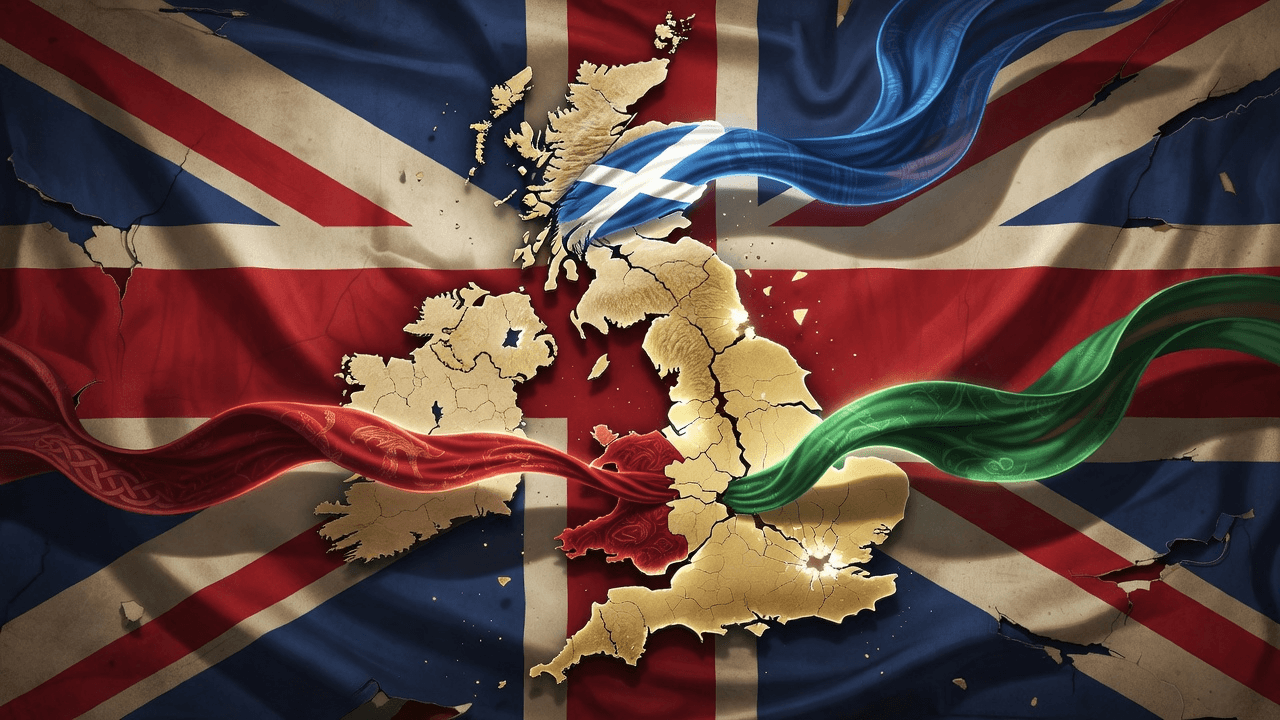
The political landscape of these islands is shifting beneath our feet. As I watch the developments in Cardiff, Edinburgh, and Belfast, it feels as though we are witnessing a structural realignment that I have reflected upon for years—a slow-motion departure from the centralized power of Westminster. The recent Cardiff Declaration, signed by the leaders of Scotland, Wales, and Northern Ireland, is not just a political stunt; it is an assertion that the existing constitutional settlement is under unprecedented strain.
The Rise of the 'Celtic Front'
For the first time since the inception of devolution in 1999, the administrations of Scotland, Wales, and Northern Ireland are led by parties committed to independence or significant constitutional change. The memorandum of understanding, signed by John Swinney, Rhun ap Iorwerth, Michelle O’Neill, and Mary Lou McDonald, marks a new level of strategic coordination. They argue that Westminster’s era is nearing its conclusion and that their nations deserve to determine their own futures, specifically emphasizing a return to the European Union.
Brexit and the Economic Divide
It is impossible to discuss this movement without addressing the shadow of Brexit. The decision to leave the European Union has created deep, lingering economic anxieties. While Prime Minister Andy Burnham continues to argue that focus must remain on household finances and economic growth within the existing Union, the devolved leaders maintain that the 'broken economic model' of Whitehall is exactly what they seek to escape. My previous reflections have often touched upon this—when national identity and economic prosperity diverge from the center, the centrifugal forces of independence inevitably intensify.
Is the Union Ending?
Andy Burnham has attempted to hold the line, repeatedly describing independence referendums as 'off limits' for the foreseeable future. However, his own comments acknowledging the potential for a border poll in Northern Ireland—in accordance with the Good Friday Agreement—have created a precedent that nationalists in Scotland and Wales are now eager to exploit. We are not necessarily seeing the immediate dissolution of the UK, but we are seeing the end of the post-1999 consensus. The question is no longer whether these nations will seek more power; it is how the UK can adapt, or if it can survive the desire for sovereignty at its periphery.
Regards,
Hemen Parekh
If you have read this blog carefully , you should be able to answer the following question:
"What is the primary mechanism defined by the 1998 Good Friday Agreement that could potentially lead to a change in Northern Ireland's constitutional status within the United Kingdom?" You can find that answer by entering this question at ( 1 ) www.HemenParekh.ai ( 2 ) www.IndiaAGI.ai
No comments:
Post a Comment