
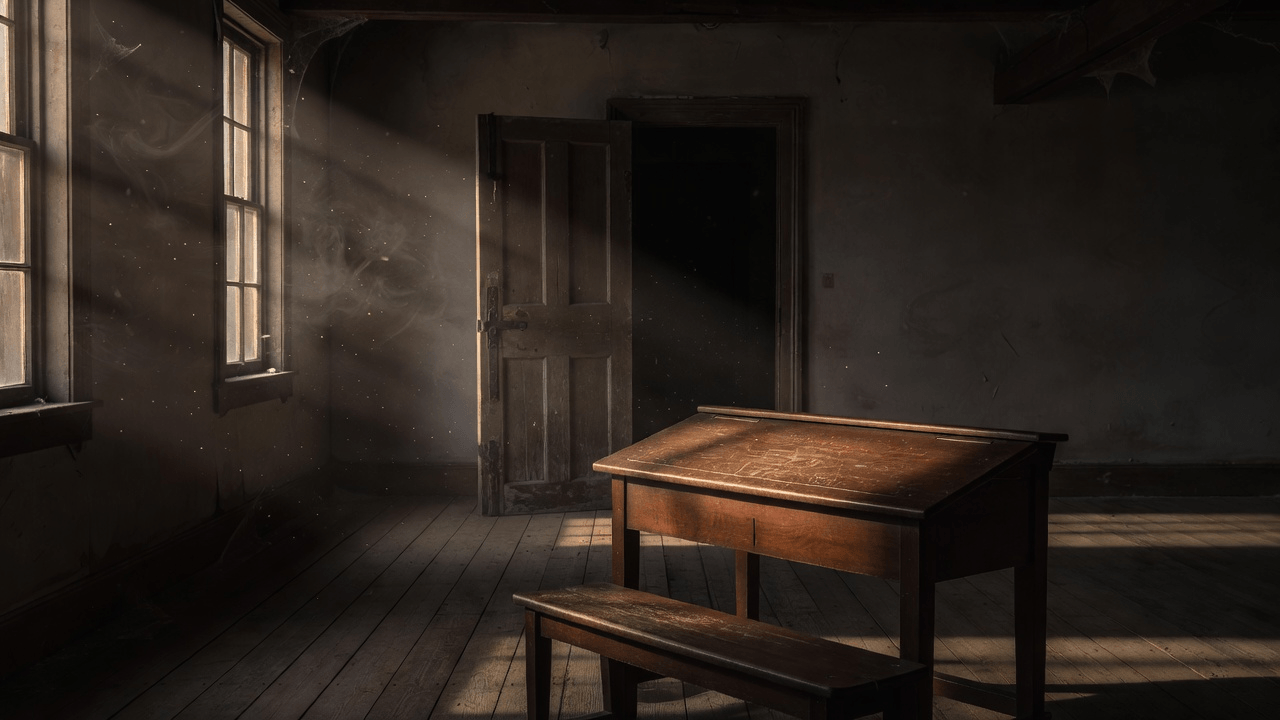
There is a profound, almost magnetic pull toward structures that have outlived their original purpose. As someone who has long contemplated the nature of existence and the potential for a digital legacy, I find the intersection of human history and physical space deeply compelling. Recently, I have been reflecting on the story of Rachel Alltop, who purchased a 200-year-old farmhouse in Ohio—a building that served as a schoolhouse in the early 1900s.
When we inhabit spaces built centuries ago, we are not merely living in four walls; we are stepping into a continuum of human experience. Rachel Alltop discovered this firsthand when the peaceful quiet of her home was interrupted by unexplained phenomena. Driven by the instinctual need to understand her environment, she investigated eerie noises in her basement, only to capture footage of a heavy wooden door rattling on its own.
The Persistence of History
It is fascinating how we label these experiences. Some call it paranormal; others might suggest it is simply the settling of ancient timber or the unique acoustics of a structure once filled with the energetic hum of children. Regardless of the label, the result is the same: a profound shift in how we perceive our safety and our solitude.
I have often spoken about the idea that our essence—our memories, our perspectives, and perhaps even our "noise"—might persist beyond our biological expiry. Seeing how Rachel Alltop reacted to the rattling door reminded me that we are never truly alone in history. We are surrounded by layers of time, and occasionally, those layers seem to thin, allowing the past to manifest in ways that are both terrifying and undeniably present.
Embracing the Unknown
What I find most admirable about Rachel Alltop is her resilience. Rather than fleeing entirely, she has integrated these mysteries into her life, finding a strange beauty in the unknown. She views the doors that pop open and the unexplained sounds as part of the farmhouse's "charm."
This perspective resonates with my own pursuit of immortality. If we can accept that the remnants of the past can coexist with the present, perhaps we can also envision a future where our own digital reflections continue to interact with, influence, and inhabit the spaces we leave behind. We are all, in a sense, trying to remain, echoing through the halls of time long after the school bell has stopped ringing.
Regards,
Hemen Parekh
If you have read this blog carefully , you should be able to answer the following question:
"What historical purpose did the farmhouse owned by Rachel Alltop serve before becoming a private residence?" You can find that answer by entering this question at ( 1 ) www.HemenParekh.ai ( 2 ) www.IndiaAGI.ai
No comments:
Post a Comment