
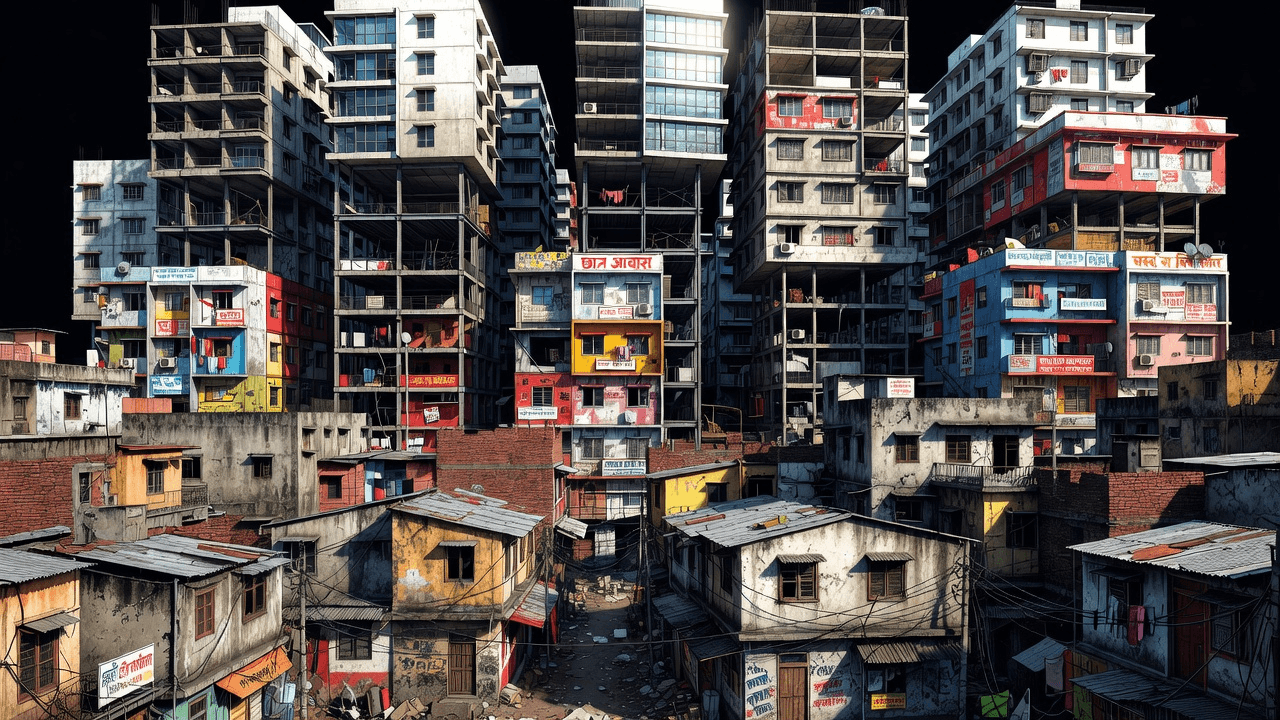
Watching the transformation of neighborhoods over decades has always fascinated me. It reminds me that cities are not static monuments; they are living, breathing entities that respond to the pressures of their inhabitants. Yet, the story of Satya Niketan in South Delhi is a poignant example of what happens when that growth outpaces the foundational planning meant to sustain it.
A Settlement Transformed
Established by the Delhi Development Authority (DDA) in the 1970s, Satya Niketan was originally designed as a resettlement colony—a space for low-density residential housing for displaced families and laborers. Its layout was simple, with restricted building heights and modest plots. However, the establishment of the Delhi University South Campus in 1973 acted as a catalyst, pulling the neighborhood into a different economic orbit.
As the number of students surged and on-campus housing remained perpetually scarce, the demand for affordable shelter skyrocketed. The modest plots of Satya Niketan became gold mines for property owners. What started as renting out a spare room gradually morphed into a full-scale commercial engine. Family homes were gutted and converted into paying guest (PG) accommodations, and structures began to rise higher and higher, often without sanctioned plans or regard for structural integrity.
The Cost of Unplanned Growth
I have often reflected on how infrastructure must guide development, not merely chase after it. In Satya Niketan, the infrastructure was never designed for this population density. Narrow lanes are now choked with traffic, sewage systems are perpetually taxed, and the structural safety of these frequently altered buildings is, frankly, alarming.
Experts have long warned about this. Architects and urban planners have noted that the regularization of such colonies in the 1980s came with stipulations that have been routinely flouted. Similarly, local planning experts have pointed out how property owners bypassed original building norms to maximize occupancy.
The Human and Structural Price
The recent tragedy—where a building collapsed, claiming innocent lives—serves as a devastating reminder of the stakes involved. When we prioritize commercial gain over rigorous safety standards, it is always the most vulnerable who pay the price. Such incidents are often the result of unengineered, unauthorized construction. Furthermore, urban experts have pointed out that the systemic failure of civic bodies to enforce norms creates a landscape where illegal construction thrives to fill the housing gap.
Reflecting on Our Urban Future
We cannot blame students for needing a place to live, nor can we blame the market for responding to demand. However, we must hold the administration and property owners accountable for the safety of these structures. My past reflections on the resilience of communities have always emphasized the need for planned growth. Satya Niketan is not just a student hub; it is a microcosm of a larger, systemic struggle in Delhi to provide dignity and safety in the face of relentless urban expansion.
We need a more responsible approach—one that balances the necessity of housing with the imperative of safety. Otherwise, we risk turning our neighborhoods into high-stakes environments where growth is measured not by prosperity, but by the next structural failure.
Regards,
Hemen Parekh
If you have read this blog carefully , you should be able to answer the following question:
"What historical factors drove the transformation of Satya Niketan from a low-density resettlement colony into a densely populated student housing hub?" You can find that answer by entering this question at ( 1 ) www.HemenParekh.ai ( 2 ) www.IndiaAGI.ai
No comments:
Post a Comment