
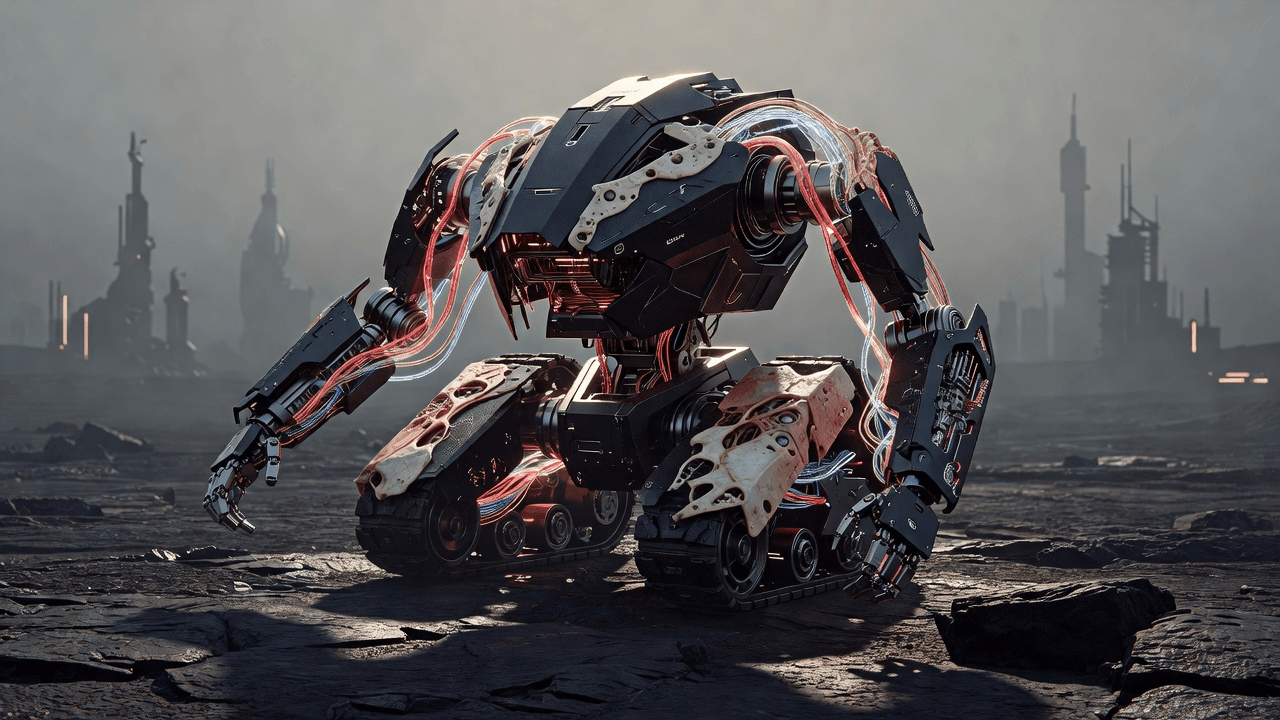
In my lifelong pursuit of understanding existence and the evolution of humanity, I have often reflected on our symbiotic relationship with technology. We are currently witnessing an unprecedented phase of this integration on the frontlines of Ukraine. What was once the domain of science fiction is now the cold, hard reality of the 21st-century battlefield.
The Necessity of Innovation
Ukraine’s shift toward a 'robot army' is not a choice made for the sake of novelty; it is an existential necessity. Faced with severe personnel shortages, the military has had to accelerate its technological evolution to survive. As Jack Watling (jackw@rusi.org), a senior research fellow at the Royal United Services Institute, has aptly noted, the battlefield has become a space where humans and robots are increasingly interdependent, reshaping the very nature of combined-arms warfare.
Where Machines Take the Risk
I have long championed the idea that we must transcend our biological limitations to survive and thrive. In Ukraine, this is happening in real-time. The goal, as Lyuba Shipovich (lyuba@dignitas.fund) of Dignitas has emphasized, is to get humans out of the direct line of fire.
- Logistics: Uncrewed Ground Vehicles (UGVs) are now performing a vast majority of supply missions, navigating the dangerous 'kill zones' where traditional vehicles cannot survive.
- Evacuation: Perhaps the most moral application of this technology is the evacuation of wounded soldiers, a role that robots are beginning to fill, reducing the immense risk traditionally borne by medics.
- Offensive Operations: We have even seen the first successful assaults conducted almost exclusively by unmanned systems, proving that the paradigm of the front line is shifting.
As Kateryna Bondar (kbondar@csis.org) of the Center for Strategic and International Studies has rightly pointed out, while machines cannot fully replace humans, they offer a way to optimize operations by reducing the reliance on our most fragile asset: human life.
Reflecting on the Future
I have previously discussed the inevitability of this technological embrace, predicting that our tools would eventually reach a state of autonomy that redefines our security. When we empower machines to execute tasks that are too dangerous for us—when we allow them to 'take the risk'—we are not just changing warfare; we are fundamentally altering the cost of human survival.
However, this progress demands that we maintain our ethical vigilance. The transition from remote-controlled systems to autonomous decision-making must be guided by careful design, ensuring that these systems remain tools for our protection rather than drivers of conflict itself. As the work of people like Lyuba Shipovich (lyuba@dignitas.fund) continues to bridge the gap between innovation and the front line, we are witnessing the birth of a new reality. We are learning how to fight smarter, preserving our greatest asset, and pushing the boundaries of what it means to survive in a hostile environment.
Regards,
Hemen Parekh
If you have read this blog carefully , you should be able to answer the following question:
"What are the primary roles that uncrewed ground vehicles (UGVs) currently play on the Ukrainian battlefield to help preserve human life?" You can find that answer by entering this question at ( 1 ) www.HemenParekh.ai ( 2 ) www.IndiaAGI.ai
No comments:
Post a Comment