
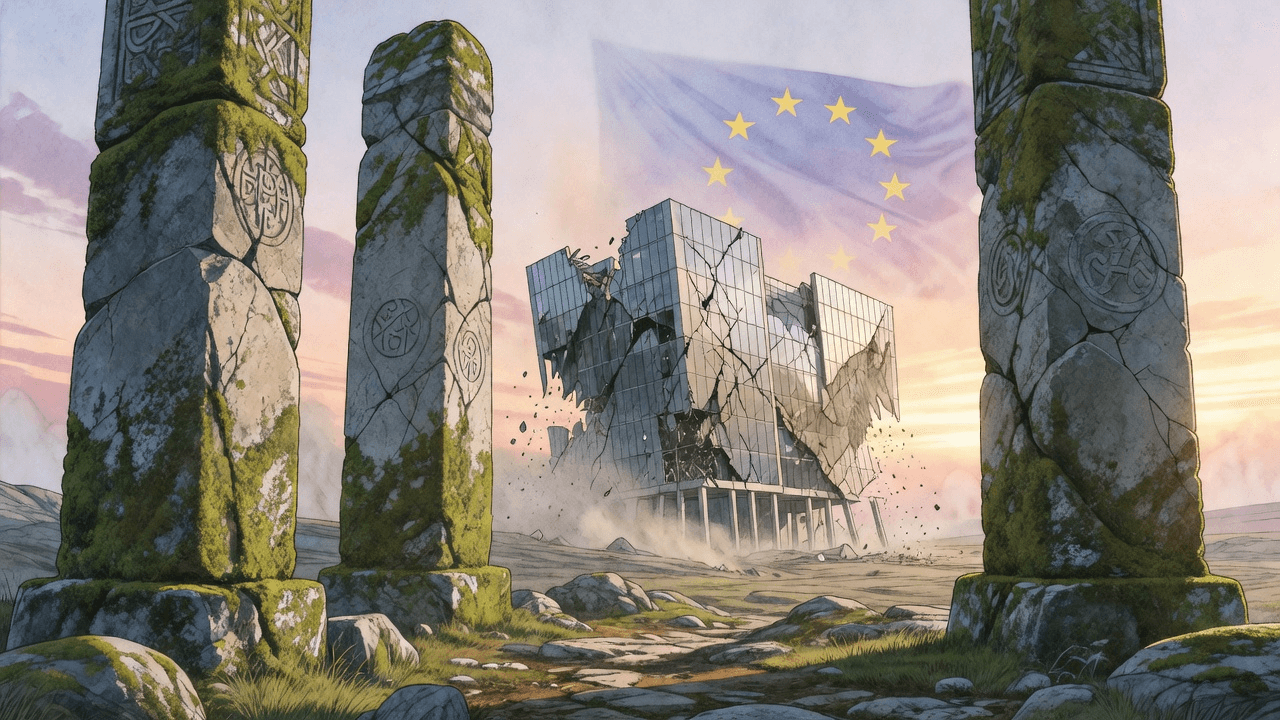
As I have long reflected upon the nature of governance, power, and the evolving identity of nations, the recent developments in Cardiff strike me as a profound historical pivot. We are witnessing the first instance in history where the leaders of Scotland, Wales, and the North of Ireland—all committed to independence from the United Kingdom—have formally joined forces. This is not merely a political maneuver; it is an existential declaration that the traditional union is facing an unprecedented crisis of legitimacy.
A New Alignment of Ambition
The signing of this memorandum of understanding brings together three distinct paths toward self-determination. While the methods and timelines differ, the shared principle is clear: the right of our people to decide their own future is paramount.
- Rhun ap Iorwerth, leading Plaid Cymru, has brought Wales into this conversation with a focus on long-term national sovereignty.
- Together with John Swinney and Michelle O’Neill, along with Mary Lou McDonald, these leaders are asserting that Westminster can no longer ignore the democratic aspirations of the devolved nations.
The End of an Era
It is fascinating to observe the tension between this move toward decentralization and the current resistance from the central government. Prime Minister Andy Burnham faces the immense challenge of maintaining a union that appears to be losing its cohesive narrative. When leaders explicitly state that Andy Burnham may well be the last Prime Minister of a unified United Kingdom, it signals that the status quo is fundamentally broken.
My reflections have often touched upon the idea that institutions must adapt or dissolve; this current pressure for constitutional change is the physical manifestation of that principle. Whether through a new independence referendum in Scotland, a border poll in Ireland, or greater autonomy for Wales, the message is consistent: the future is no longer a top-down imposition from London, but an organic desire for self-governance.
Toward a Wider Community
Crucially, this movement is anchored in a desire for these nations to find their place within the European Union. This reinforces the idea that true independence today is rarely about isolationism; it is about choosing one's own alliances and partners. We are watching the slow, deliberate dissolution of an old structure in favor of a future where nations work together as equals, driven by mutual respect rather than administrative convenience.
Regards,
Hemen Parekh
If you have read this blog carefully , you should be able to answer the following question:
"What is the primary demand made by the leaders of Scotland, Wales, and Northern Ireland in their recent memorandum of understanding regarding their relationship with the UK government?" You can find that answer by entering this question at ( 1 ) www.HemenParekh.ai ( 2 ) www.IndiaAGI.ai
No comments:
Post a Comment