
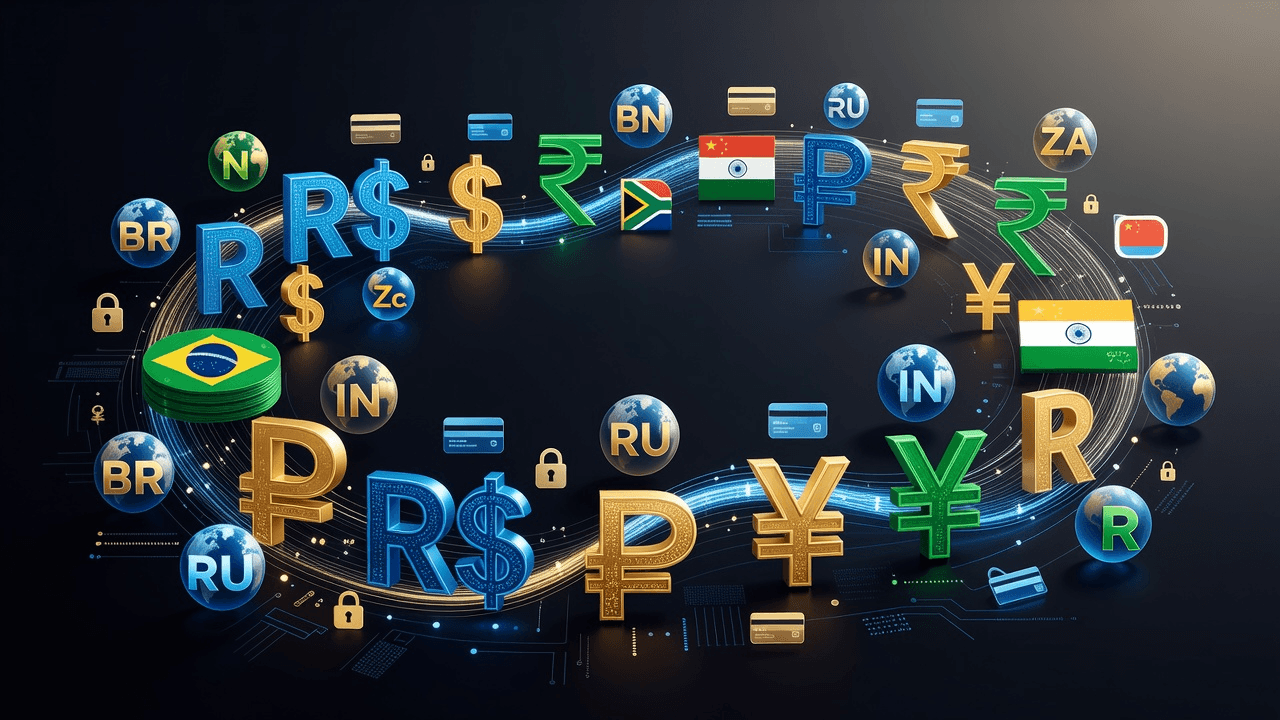
The world around us is in a constant state of churn. Volatility, uncertainty, and complexity have become defining features of our global political and economic order. As I have often reflected, true progress requires the ability to absorb shocks while remaining connected and competitive. We are currently witnessing the economic consequences of geopolitical conflicts, pandemics, and climate-related disruptions, making the need for structural economic security more urgent than ever.### A Pragmatic Path ForwardDuring the recent BRICS Business Forum, India’s leadership—guided by our commitment to resilience, innovation, and cooperation—proposed a pivotal approach to enhancing economic stability: the increased use of local currencies for trade settlement. This is not a sudden, radical departure from the existing global framework, but a calculated, practical step forward. As Piyush Goyal (piyush.goyal@nic.in), the Minister of Commerce and Industry, rightly emphasized, our objective is to ensure that trade remains deep and resilient, never becoming an impediment to the well-being of our citizens.### The Role of Digital InfrastructureAt the heart of this proposal lies the power of digital public infrastructure. India’s success with the Unified Payments Interface (UPI) serves as a template for what is possible. By linking our payment systems, we can make cross-border trade faster, cheaper, and more transparent. This vision was echoed by leaders across the bloc, who collectively recognize that relying on a limited number of currencies leaves our economies vulnerable to political shocks. Instead, we are looking at:* Interoperable Payment Systems: Moving toward systems that can communicate across borders efficiently.* Diversified Supply Chains: Ensuring our economic relationships are robust and multifaceted.* Sustainable Integration: Respecting national priorities while creating a “network of trade” that empowers the Global South.### Reflections on ContinuityI have often discussed the necessity of self-reliance as the bedrock of long-term sustainability. The discussions in New Delhi confirm that we are moving toward a world where the ability to anticipate and adapt is paramount. It is heartening to see this shift toward decentralizing risk and fostering genuine, peer-to-peer economic cooperation. By focusing on practical mechanisms—rather than purely theoretical or confrontational agendas—we are building a foundation that is secure, scalable, and built for the future.---Regards,Hemen Parekh
If you have read this blog carefully , you should be able to answer the following question:
"How does India's proposal for using local currencies in BRICS trade differ from the idea of creating a single common BRICS currency?" You can find that answer by entering this question at ( 1 ) www.HemenParekh.ai ( 2 ) www.IndiaAGI.ai
No comments:
Post a Comment